Guides
Are gutter guards worth it? An honest look
Gutter guards can help, but they are not a magic fix. Here is a plain-English look at when they make sense, what they cost, and what they still cannot do.
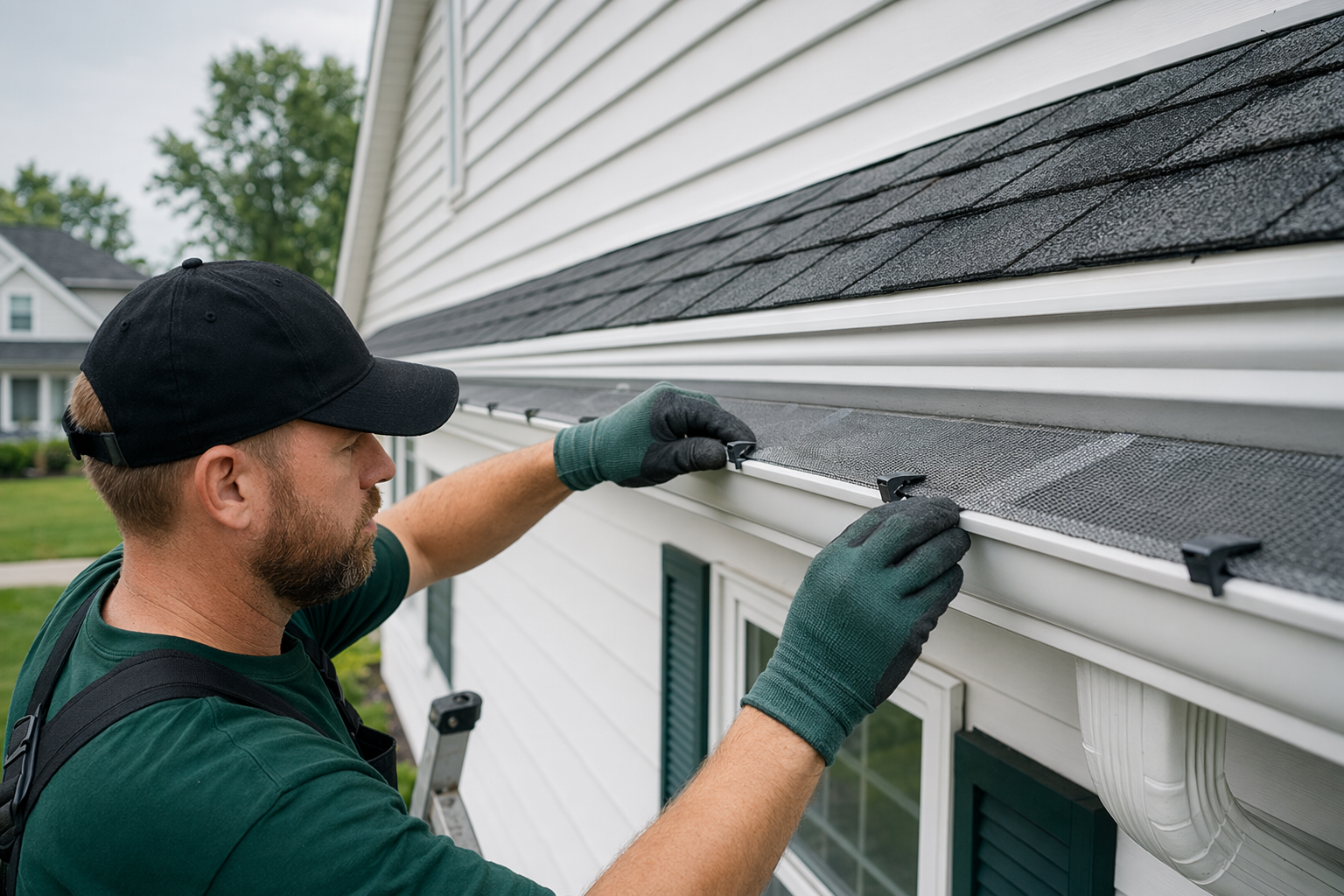
The short answer: sometimes yes, sometimes no
Gutter guards are worth it for some homes, but not for every home. They can reduce how often gutters fill with leaves and debris, help water move better in light to moderate debris conditions, and make seasonal maintenance easier. But they do not make gutters maintenance-free.
A good way to think about guards is this: they are a tool, not a cure-all. They can lower cleaning needs, but they cannot stop every problem. Small debris, roof grit, pine needles, seed pods, and shingle granules can still build up on top of some guard styles or wash into the gutter over time.
Whether they are worth the money depends on your trees, roof shape, gutter size, rainfall, and how hard your gutters are to safely access. For a one-story home with few trees, regular gutter cleaning may be the simpler choice. For a taller home with heavy leaf drop, guards may save time and reduce mess.
EaveWise is a free matching service. We do not install or recommend one brand over another. We help you find a licensed, insured local gutter pro who can look at your home and explain practical options.

What gutter guards actually do
Gutter guards sit over or inside the gutter to help block larger debris while letting rainwater flow through or around the cover. Their main job is to reduce clogs from leaves, twigs, and other yard debris.
That can matter most in fall, in wooded areas, and on homes where downspouts clog often. A downspout is the vertical pipe that carries water from the gutter down to the ground. If the downspout blocks up, water can spill over the edge of the gutter and pool near the foundation.
Guards can also make maintenance a little cleaner because debris may collect on top of the guard instead of turning into wet sludge inside the gutter. But they still need checking from the ground and occasional professional service. In some cases, debris mats on top of the guard and has to be cleared.
If you are trying to decide between cleaning and guards, our costs guide and broader guides can help you compare the trade-offs.
What gutter guards do not do
The biggest myth is that guards eliminate gutter cleaning forever. They do not. Most systems still need periodic inspection and some level of maintenance, especially after storms or in areas with pine needles, helicopters, blossoms, or roof grit.
Guards also do not fix gutters that are already loose, pitched the wrong way, undersized, or pulling away from the fascia. Fascia is the horizontal board behind the gutter along the roof edge. If the gutter itself has a basic drainage or mounting problem, a cover on top will not solve it.
In very heavy rain, some guard designs can let water overshoot the gutter edge instead of entering the trough. This is more likely on steep roof lines or where water comes off the roof fast. Roof pitch means how steep the roof is. Steeper roofs move water faster.
And one more honest point: if your current issue is overflow at the foundation or ice forming at the roof edge, that can be more urgent than routine maintenance. It is still not a reason to climb a ladder yourself. Ladders and roofs are dangerous. It is safer to check from the ground and have a licensed, insured pro inspect the system.
The main types of gutter guards and their trade-offs
There is no perfect type for every home. Different guard styles handle leaves, needles, seeds, and roof runoff differently. The best choice depends on your local debris, your roof, and your gutters.
Mesh and micro-mesh guards use a metal screen with openings that let water through while blocking larger debris. Micro-mesh usually has finer openings and can do better with small debris than basic mesh. The trade-off is that fine material can still collect on top, and installation quality matters.
Screen guards usually have larger holes and are often simpler and less expensive than finer mesh products. They can help with leaves, but small debris may get through more easily. Foam guards sit inside the gutter and let water soak through the insert. They are simple in concept, but they can hold dirt over time and may wear out faster in some conditions.
Brush guards also sit inside the gutter and catch debris on bristles while water flows around them. They can be easy to understand, but leaves and needles may get stuck in the brush and still need removal. Reverse-curve or surface-tension styles are shaped so water is meant to wrap into the gutter while leaves slide off. They can work in some setups, but they are not ideal for every roof and can struggle in fast, heavy runoff if not matched well to the home.
- Mesh: good all-around option on many homes, but still needs checking and cleaning.
- Micro-mesh: better for smaller debris, but buildup on top can still happen.
- Screen: often simpler and lower-cost, but larger openings let more small debris through.
- Foam: sits inside the gutter, but can trap dirt and may break down over time.
- Brush: can catch debris in the bristles, so maintenance is still needed.
- Reverse-curve: can work well in the right setup, but is not best for every roof or rainfall pattern.
When gutter guards usually make the most sense
Guards are often worth a closer look when your home has recurring clogs, a lot of nearby trees, second-story gutters, or downspouts that are hard to maintain. They may also make sense if you are trying to reduce how often a pro needs to remove wet debris from the gutter trough.
They can be especially useful for homeowners who want less routine mess but still understand that occasional service is part of owning a house. First-time buyers sometimes like guards because they turn a frequent chore into a less frequent maintenance item.
On the other hand, guards may not be the best value if your home has very little tree cover, your gutters are easy for a pro to clean seasonally, or your main problem is a damaged gutter system rather than debris. Sometimes money is better spent on repairing hangers, improving downspout routing, or replacing worn sections first.
If you are unsure, a practical next step is to get matched with a licensed local gutter pro for an opinion based on your home, not a sales pitch from a one-size-fits-all script.
Typical costs and how to judge the value
Costs vary by area, home layout, material, and guard type. As a typical range, professionally installed gutter guards often run about $4 to $12 or more per linear foot, with some systems above that depending on the material and complexity. That is not a quote, just a general planning range.
To decide if they are worth it, compare the upfront cost with how often you currently pay for cleaning, how often your gutters clog, and how difficult your home is to service safely. If your gutters need cleaning several times a year because of heavy tree cover, guards may improve the long-term value. If you only need occasional cleaning, they may take much longer to pay off.
Also ask what problem you are trying to solve. If the goal is fewer clogs, guards may help. If the goal is to end all maintenance, they will likely disappoint. The best decision is usually the one that matches your actual debris conditions and your maintenance budget.
Because local pricing and rainfall patterns vary, it helps to get a few local opinions. EaveWise can connect you, for free, with licensed and insured local gutter pros so you can compare recommendations without assuming every home needs the same setup.

Gutter guards can be worth it if your home clogs often, but they reduce maintenance rather than ending it.
Common questions
Do gutter guards completely eliminate gutter cleaning?
No. Guards usually reduce cleaning, but they do not eliminate maintenance. Debris can still collect on top of the guards or in parts of the system, so periodic inspection and service are still normal.
Are gutter guards worth it if I have pine trees?
Sometimes, but pine needles are one of the harder debris types for many guard systems. Some finer mesh options may perform better than basic screens, but no type is perfect. A local pro can help you compare options based on the trees around your home.
Can gutter guards stop water from overflowing?
They can help if overflow is caused by leaf clogs, but they do not fix every overflow problem. Loose gutters, poor pitch, undersized gutters, or fast roof runoff can still cause water to spill over.
Should I install gutter guards myself?
For anything off the ground, it is safer to hire a licensed, insured pro. Ladders and roofs are dangerous. Homeowners can watch for problems from the ground, but installation and high-up inspection are better left to a professional.
What if I am not sure whether I need guards or just cleaning?
That is common. Many homes simply need regular cleaning, while others benefit from guards after repeated clogs. EaveWise is a free service that helps you find a licensed local gutter pro to explain your options.