Services
Seamless gutter installation — new gutters that fit your home
Thinking about new gutters? This guide explains seamless gutter installation, common materials and sizes, typical costs, and how we help you find a licensed local gutter pro for your home.
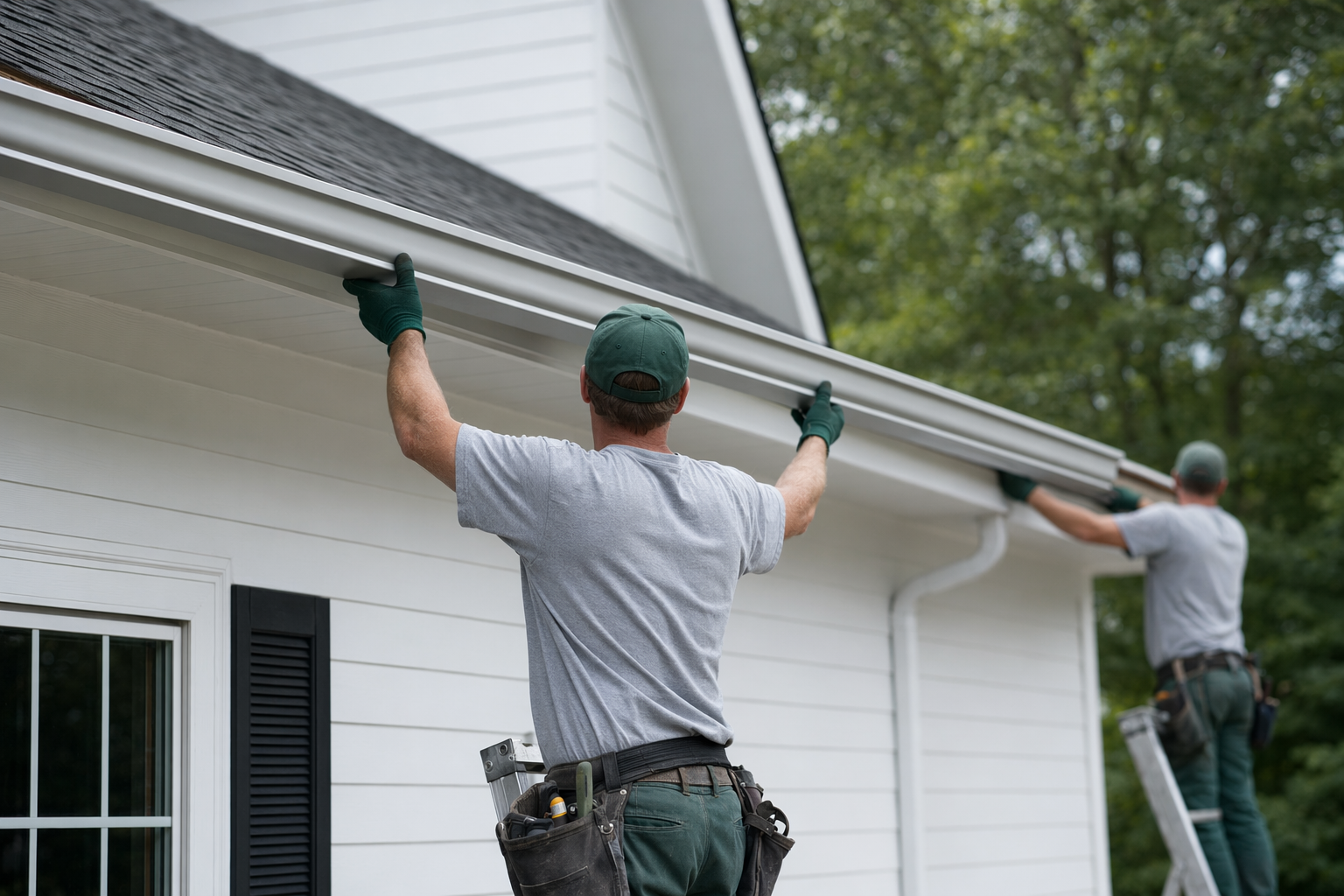
What seamless gutters are, in plain English
Seamless gutters are long gutter runs made to fit your house, with fewer joints than old-style sectional gutters. Fewer seams usually means fewer places for leaks to start. Most homes use seamless aluminum, but other materials may be available in some areas.
A local gutter pro typically measures your roofline, forms the gutter on site or to exact length, and installs it along the edge of the roof. The gutter catches rainwater and moves it to a downspout, which is the vertical pipe that carries water down and away from the house.
This is planned home maintenance, not something to panic about. But if water is already pouring near the foundation, pooling by walkways, or contributing to ice buildup in winter, it is smart to have a licensed, insured pro look at it soon.
EaveWise is not a gutter company, and we do not install anything ourselves. We provide general educational information and help you find a licensed local gutter pro at no cost to you.

Why homeowners choose seamless gutters
Many homeowners replace old gutters when they are leaking at joints, pulling away from the house, rusting, sagging, or simply too small for the roof area. Seamless gutters can give a cleaner look and may reduce the drip and staining that often happens around older seams.
Another common reason is better water control. A pro can check whether your current gutter size, slope, and downspout placement are working for your home. "Slope" or "pitch" here just means the slight angle that helps water move toward the downspouts.
New gutters can also be part of a larger exterior update. If you are painting trim, replacing fascia boards, or improving drainage around the home, it can make sense to look at the gutter system at the same time. Fascia is the horizontal board behind the gutter. Soffit is the material under the roof overhang.
Because ladders and roofs are dangerous, it is best to inspect from the ground and let a licensed, insured pro handle measuring and installation off the ground.
Materials, sizes, and styles you will hear about
Seamless aluminum is the most common choice because it is widely available, lighter than steel, and usually costs less than premium metals. Steel can be stronger, but it may be heavier and can rust if coatings fail. Copper is durable and attractive, but it is usually much more expensive. Availability and pricing vary by area.
Most homes use 5-inch or 6-inch gutters. In simple terms, a 6-inch gutter can handle more water than a 5-inch gutter. A pro may suggest larger gutters or more downspouts if your roof sheds a lot of water, your area gets heavy rain, or your current system overflows.
You may also hear terms like K-style and half-round. K-style is the more common shape on many US homes. Half-round has a rounded shape and may be chosen for appearance on some homes. The best fit depends on the home style, rain levels, and the condition of the fascia where the gutters attach.
Typical cost ranges for new seamless gutters
Costs are usually discussed by linear foot, which means the length of gutter needed along your roof edge. Exact pricing depends on material, size, home height, roof shape, number of corners, downspouts, old gutter removal, and local labor rates.
As a general educational range, seamless aluminum gutters often run about $7 to $15 per linear foot installed in many markets. Larger 6-inch systems, more complex layouts, and taller homes can cost more. Steel may run higher, and copper is often much higher than aluminum.
Downspouts, splash blocks, hangers, elbows, rerouting, and disposal of old materials can affect the total. If fascia wood behind the old gutter is damaged, repair may be a separate item. A gutter pro may also recommend adjustments to where downspouts discharge so water ends up farther from the foundation.
If you want a broader look at budgeting, visit our gutter cost guide. These are typical ranges, not quotes, and rules and prices vary by area.
Should you add gutter guards at the same time?
Sometimes yes, sometimes no. If your home has recurring leaf buildup, pine needles, seed pods, or hard-to-reach gutter lines, adding guards during a new installation can be worth considering. But guards reduce cleaning needs; they do not eliminate maintenance.
Different guard types have trade-offs. Basic screen guards are usually cheaper but can let smaller debris through. Mesh and micro-mesh can block finer debris better, but they may cost more and can still need cleaning on top. Foam and brush inserts are simple options, but they can trap debris and break down over time. Reverse-curve styles can work in some setups, but they are not right for every roof or debris type.
The honest question is not whether guards are "good" or "bad." It is whether a specific guard type matches your trees, roof design, rainfall, and budget. You can read more in Are gutter guards worth it?.
A local installer can explain what may work for your home, but no guard makes a gutter system maintenance-free.
How to compare installers and get matched for free
When you talk with a gutter company, ask simple questions. Are you licensed if my area requires it? Are you insured? What material and size do you recommend, and why? How many downspouts do you suggest? Will old gutters be removed and hauled away? Are fascia issues included or separate if found?
It also helps to ask what is actually included in the written estimate. For example: gutter length, downspout count, color options, hanger spacing, disposal, and any guard option if you are considering one. Clear details make it easier to compare bids fairly.
EaveWise is a free matching service. We do not do the installation, and we do not tell you what to buy. We help you connect with a licensed local gutter pro based on your ZIP code and project details. You can also explore our full range of gutter services if you are still deciding between repair, replacement, guards, or cleaning.
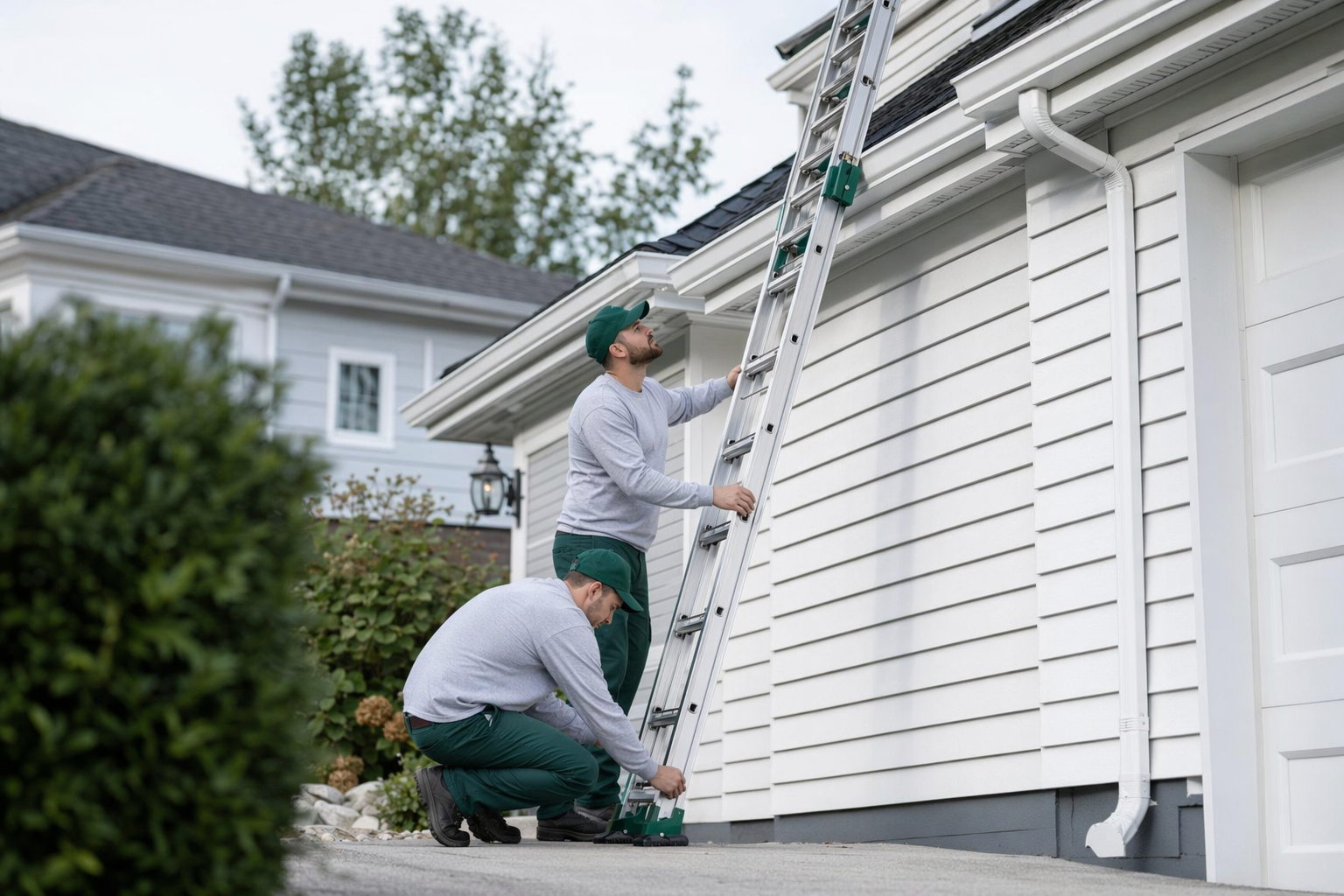
Seamless gutters are custom-fit gutters with fewer joints, and we help you find a licensed local pro to compare options, materials, and typical costs for your home.
Common questions
How do I know if I need new gutters or just a repair?
If the problem is limited to a small leak, a loose section, or a minor downspout issue, repair may be possible. If gutters are widely rusted, repeatedly leaking at many joints, sagging, or too small for the home, replacement may make more sense. A licensed local gutter pro can help you compare the options.
Are seamless gutters really leak-proof?
No gutter system is completely leak-proof forever. Seamless gutters have fewer joints, which can reduce common leak points, but corners, end caps, outlets, and age-related wear can still cause problems over time.
What size gutter does a typical home need?
Many homes use 5-inch gutters, while some homes need 6-inch gutters for better water handling. The right size depends on roof area, roof shape, rainfall, and downspout layout.
Do new seamless gutters come with guards?
Not automatically. Guards are usually an add-on option. They can reduce how often gutters need cleaning, but they do not stop maintenance completely.
What information do I need to get matched?
Usually just your contact details, ZIP code, and a short description of what is going on with your gutters. Optional details like photos, email, or preferred language can also help. We only collect project and contact details needed to help match you.