Guides
Gutters after a big storm
A big storm can move leaves, debris, and even loosen gutter parts. Here’s what to check on your gutters afterward, what’s urgent, and how we can help you find a licensed, insured local gutter pro—FREE.
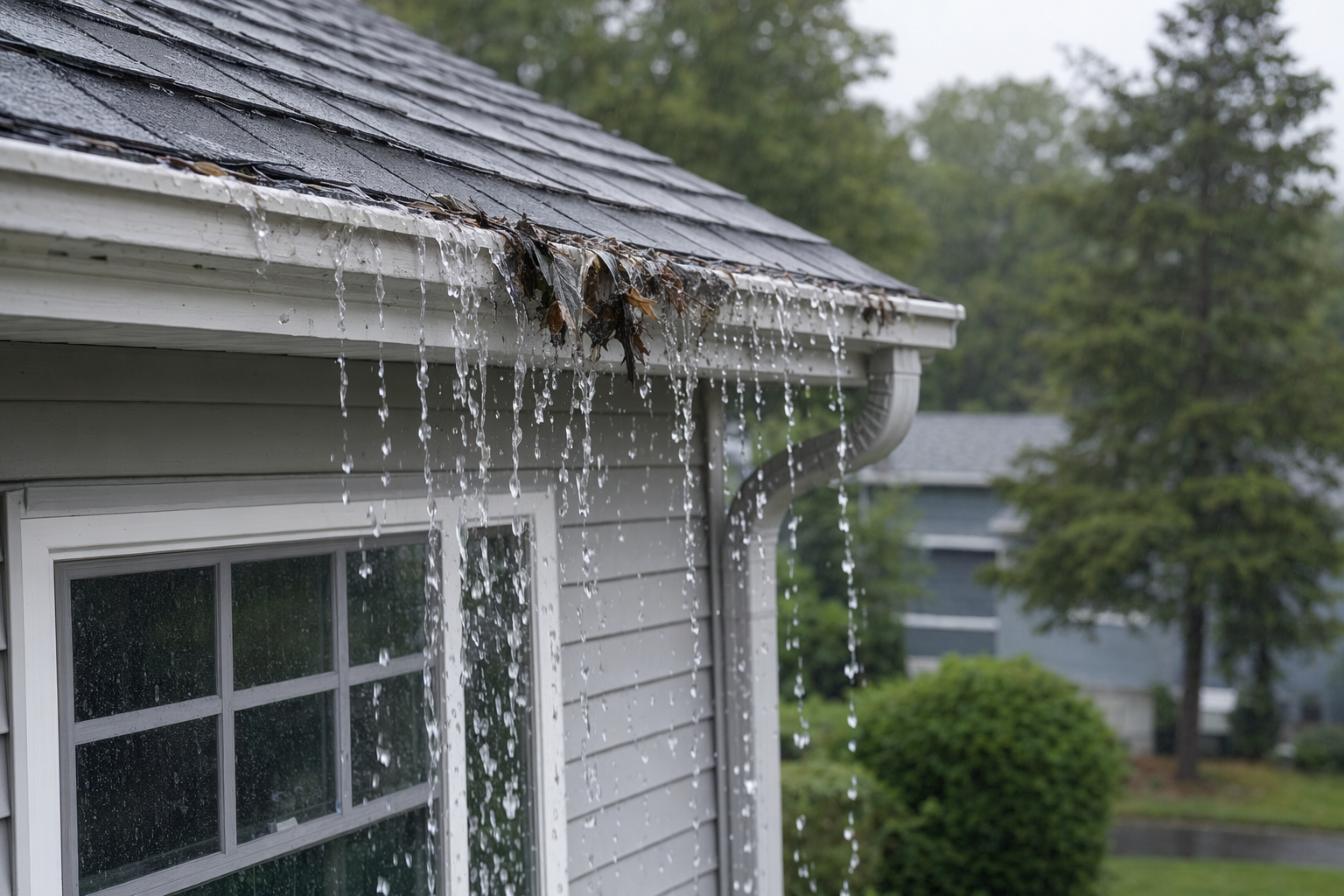
Start with a calm look: what storms commonly affect
After wind, heavy rain, hail, or melting snow, gutters can collect more debris than usual. They can also shift if the fascia (the board gutters attach to) was already worn, or if fasteners got stressed.
Most gutter issues after storms are manageable with normal maintenance—but some situations are more urgent, especially if water is getting where it shouldn’t.
If you want help, we can connect you with a licensed, insured local gutter pro for cleaning, leaf-guard / gutter-guard installation, downspout repair and rerouting, seamless gutter installation, and gutter repair / re-hanging. Get matched is FREE.

Check these gutter signs from the ground (no ladders)
You don’t need to climb to assess many common problems. From the ground, look for overflow paths, visible gaps, and downspout issues. If anything looks unstable or badly pulled away, stop and let a pro inspect it.
Here are the most common storm-related signs:
• Overflow during/after rain: Water spilling over the edge instead of flowing into the gutter.
• Dents or bends: Hail and impacts can deform sections. Even small dents can change how water drains.
• Sections pulled away or separating: You might see a bigger gap than normal between the gutter and the wall.
• Sagging: Gutters that look lower in one spot may be overloaded with debris or damaged at hang points.
• Downspouts that spill or back up: If water runs beside the downspout, it may be blocked, disconnected, or redirected wrong.
Overflow, ice, and foundation risk: what’s more urgent
In most homes, gutter problems show up as wet areas near the foundation or basement walls after rain. If you notice repeated overflow, pooling close to the house, or water entering places it shouldn’t, it’s worth addressing sooner rather than later.
Ice dams are a special case. If snow/ice is backed up at the roof edge and water is leaking indoors, that can be more urgent. While gutters may be part of the picture, the safest next step is to contact a qualified pro and follow their guidance—especially when the issue involves roof ice and elevated access.
If you’re unsure whether your situation is urgent, you can still start with a careful ground-level check and then get matched with a local gutter pro for an inspection.
Blocked downspouts and “why water isn’t draining”
A gutter system relies on a clear path from the gutter to the downspout and away from the home. After storms, downspouts can get clogged with leaves, grit, or storm debris.
Signs a downspout may be blocked include water that:
• overflows near the downspout area
• runs down the outside of the downspout instead of inside it
• seems to “collect” near the gutter outlet
• backs up during rain
A licensed, insured pro can also check whether the downspout is connected correctly, whether it needs rerouting, and whether the splash outlet is positioned to direct water away from the foundation.
Leaf-guard / gutter-guard basics: helpful, but not magic
Many homeowners ask about gutter guards after a messy storm season. Guards can reduce how often gutters need cleaning, but they don’t eliminate it.
Different types catch debris differently:
• Mesh, micro-mesh, and screen styles: These block many leaves but can still collect small debris (like seeds) and may require periodic maintenance.
• Foam or brush-like types: They can help reduce larger debris, but they may wear over time and still need cleaning depending on your trees and weather.
• Reverse-curve styles: Water flows over the curved surface into the gutter. Some styles can perform well in certain conditions, but they’re not one-size-fits-all.
If you’re considering guards, a good pro will talk about your roof edge, gutter shape, and local debris (what you see after storms). You should also ask what maintenance will still be required.
If you want to compare options, explore services and what’s typically involved.
When to call a pro (and why it matters)
Even if a problem looks small, storms can create hidden damage—fasteners may loosen, seams may separate, and water might be redirected in a way that’s not obvious from one angle.
Call a licensed, insured gutter pro if you notice any of these:
• repeated overflow during rain
• gutters sagging or visibly separating from the home
• multiple dents, holes, or warped sections
• downspouts that spill, disconnect, or can’t drain water properly
• water pooling near the foundation or wet spots that line up with gutter flow
Remember: ladders and roofs are genuinely dangerous. Avoid climbing and avoid walking on rooftops. A local pro can inspect safely from the ground and with proper equipment.
If you’d like, we can help you get matched with someone licensed and insured in your area. We can also point you to typical gutter costs so you can plan.

After a big storm, check from the ground for overflow, dents, pulled-away sections, and downspout backups—then use our FREE matching to connect with a licensed, insured gutter pro.
Common questions
I didn’t see overflow during the storm, but my gutters look dented. Should I still check them?
Yes. Dents can change how water flows and can cause overflow or splash in future storms. If the gutter also looks pulled away or sagging, it’s especially worth having a local pro inspect it.
Can I just rinse out my gutters with a hose after a storm?
You can remove loose debris carefully, but gutters and downspouts often need more than a quick rinse—especially if there’s a clog deeper in the system. If you see overflow, a sagging section, or separated hang points, it’s safer to have a licensed, insured pro check it.
What’s a downspout reroute, and why might I need one?
A reroute adjusts where downspout water flows from—often to better direct it away from the foundation or into an area that drains safely. A pro can also fix disconnected pieces or address poor outlet placement.
Do gutter guards stop me from ever cleaning gutters?
Usually no. Guards reduce the amount of debris that gets in, so cleaning is less frequent for many homeowners. But seeds, small debris, and nearby tree litter can still collect, so periodic maintenance is still typically needed.
How fast should I act if I’m seeing pooling near the foundation after rain?
If water is consistently pooling or getting into areas near the foundation, it’s worth addressing sooner rather than waiting months. While a gutter pro can help with the gutter-side of drainage, they may also recommend coordinating with other qualified professionals if the source appears to be beyond gutters.