Guides
How much does gutter cleaning cost?
Gutter cleaning prices vary, but you can usually estimate the cost by your home’s size, number of stories, and how many feet of gutters you have. We explain the common price ranges and what drives the total up—then help you get matched with a licensed local gutter pro for free.
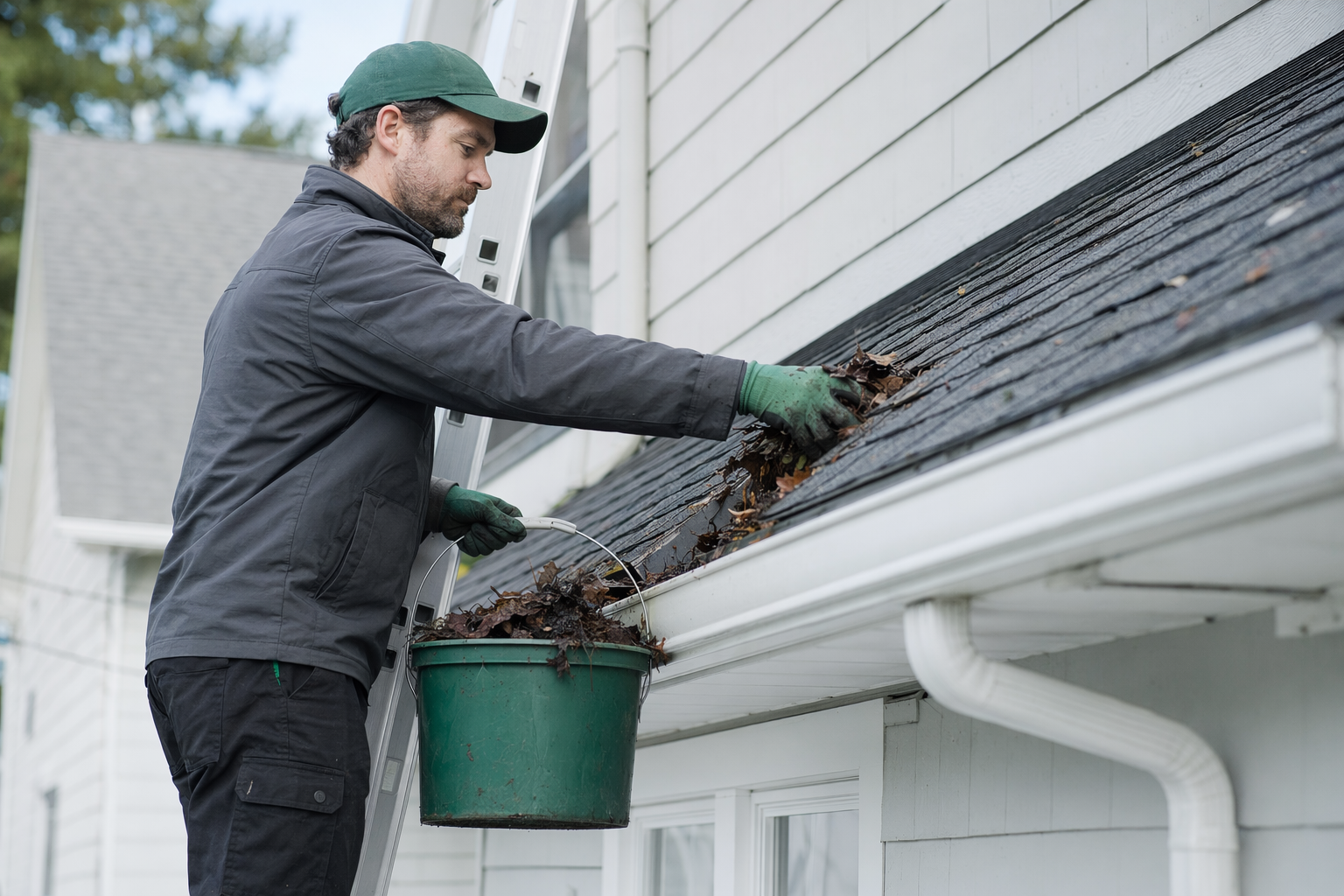
Typical gutter cleaning cost ranges (US homeowners)
Most homeowners pay for gutter cleaning based on gutter length, your home’s height (number of stories), and how much debris is built up.
As a general guide, many local gutter pros fall into ranges like these: small homes often land in the lower end, while larger homes or heavy debris tend to cost more. If you have multiple roof lines or long runs, the price may increase because there’s more gutter to access and clean.
Because every neighborhood and gutter layout is different, avoid assuming a “one price fits all” number. Instead, compare quotes that explain what’s included (for example, downspout cleaning, hand-cleaning vs. vacuuming, and how they handle tight spots).
- Cost is usually driven by gutter length + difficulty, not just “having gutters.”
- Heavy buildup and downspout clog checks commonly add time.

What makes gutter cleaning cost go up or down
Home size and gutter length are often the biggest factors. More linear feet of gutter usually means more labor time and more mess to remove.
Stories and access matter. A single-story home is typically easier and safer to clean than a two- or three-story home. Even when a pro uses the safest approach, additional height can mean extra time, extra setup, and stricter safety measures.
Debris level can swing the price. Light seasonal buildup is usually quicker than wet, matted leaves, seed pods, or debris stuck in corners and at downspout openings.
Downspouts also affect the total. Cleaning gutters often requires clearing at least the downspout entrances so water can flow. If a downspout is partially clogged, that can add time to the job.
- Multiple roof lines often increase the number of gutter runs to service.
- Wet debris, clogs, and hard-to-reach sections can add labor.
How to compare quotes (so you don’t overpay)
When you request quotes, ask for a clear breakdown of what the pro will do. You want plain-language answers about the scope, not vague promises.
In your questions, focus on inclusions like: whether they will clear downspout openings, how they remove debris (hand cleaning and/or vacuum), and whether they check for areas that commonly clog (corners, end caps, and where the gutter meets the downspout).
Also ask how they plan to handle cleanup. A reputable pro should explain how they protect nearby plants, patios, and driveways, and how debris is bagged or removed.
If you’re deciding between “cheap” and “complete,” be careful. A very low price can sometimes mean less time on the job or limited attention to downspout flow. The goal isn’t to pay the most—it’s to pay for the work you actually need.
- Ask what’s included: downspout clearing/check, debris removal, and cleanup.
- Prefer itemized, specific explanations over one-word estimates.
Do gutter guards change the price of cleaning?
Gutter guards (also called gutter screens or leaf guards) are designed to reduce how much leaves and debris enter the gutter. That can lower the frequency of cleanings for many homes.
But gutter guards don’t eliminate maintenance. Fine debris like seeds, pollen, and small particles can still collect on top of the guard or within the gutter system. You may also need periodic cleaning of the guard surface and re-checking water flow.
Guard type matters. Some styles block large leaves but can still allow smaller debris through. Mesh and micro-mesh designs can reduce leaf entry, but they may still require cleaning and can be less forgiving if debris becomes packed. Screen-style guards can help, while foam and brush-style inserts may trap debris in different ways. Reverse-curve designs can shed some water and debris, but homeowners still often need seasonal checks.
If you’re exploring guards, our general advice is to think in trade-offs: fewer cleanings versus the possibility of slower water flow changes, debris buildup on top, or the need for occasional maintenance anyway.
- Guards reduce cleaning—not always to zero.
- Different guard types handle debris differently; ask for pros and cons for your setup.
When gutter cleaning feels urgent (and when it’s not)
For most homes, gutter cleaning is planned seasonal maintenance—usually before heavy fall leaf drop and again after winter storms, depending on your area.
However, if you see active overflow near the foundation, standing water around the basement, or signs of water intrusion, that can be more time-sensitive. If you’re dealing with ice-related issues in colder climates, water management can be more urgent too.
Even when it feels urgent, it’s still smart to stay calm and make safe choices. Ladders and roofs are genuinely dangerous. A licensed, insured gutter pro can assess the situation safely from an appropriate approach and tell you what the next steps should be for your gutters and downspouts.
If you’re not sure how urgent your situation is, you can start by describing what you’re seeing when you request help.
- Overflow at the foundation can be more urgent—handle it sooner.
- For anything off the ground, hire a licensed, insured pro.
Get matched with a local gutter pro (FREE) and request the right quote
EaveWise is a FREE service that helps you find and connect with a licensed, insured local gutter pro for gutter cleaning, leaf-guard / gutter-guard installation, downspout repair and rerouting, seamless gutter installation, and gutter repair / re-hanging.
When you use our matching form, focus on the basics: your ZIP code, how many stories your home has, roughly how many feet of gutters you think you have (or describe the number of roof lines), and what’s going on (for example: overflowing, slow draining, leaves buildup).
Then ask the matched pros to explain what they’ll do and what’s included in their gutter cleaning scope. If you’re considering guards, ask them to discuss guard options and trade-offs for your home’s shape and debris type.
If you want to learn more about planning and season timing, browse our gutter cleaning services overview or our practical gutter cleaning guide.
- We help you get matched with licensed, insured pros—at no cost to you.
- Use our matching form to describe your home so you can request clearer quotes.

Gutter cleaning usually costs based on gutter length, home height, debris buildup, and downspout clearing—so compare quotes carefully and we can help you get matched with a licensed local pro for free.
Common questions
How much does gutter cleaning cost for a one-story house vs. a two-story house?
In general, two-story homes cost more because access is harder and work usually takes more time. The final price depends on gutter length, debris level, and whether downspouts need extra clearing.
What’s included in a typical gutter cleaning—do they clean the downspouts too?
Many gutter cleaning visits include clearing the downspout entrances so water can flow, but not every quote includes full downspout cleaning. When you request a quote, ask what’s included and whether they will check for clogs.
Why is one quote much higher than another?
Big differences often come from how much debris is present, how many feet of gutter runs there are, the number of roof lines, and the difficulty of access. Ask both pros to describe their scope in plain language.
Do gutter guards eliminate the need for gutter cleaning?
No. Guards can reduce leaves getting into gutters, which often lowers how often you clean, but you still may need seasonal maintenance because small debris can collect on top of guards or inside the gutter system.
Is it safe to clean gutters myself to save money?
DIY gutter work can be risky. Ladders and roofs are dangerous, and falls are common. For safety, it’s usually best to hire a licensed, insured pro—especially for anything above ground.