Guides
How often should you clean your gutters?
Most homes need gutter cleaning at least once or twice a year, but the right schedule depends on your trees, roof, and weather. Here is a simple, plain-language way to plan it without guesswork.
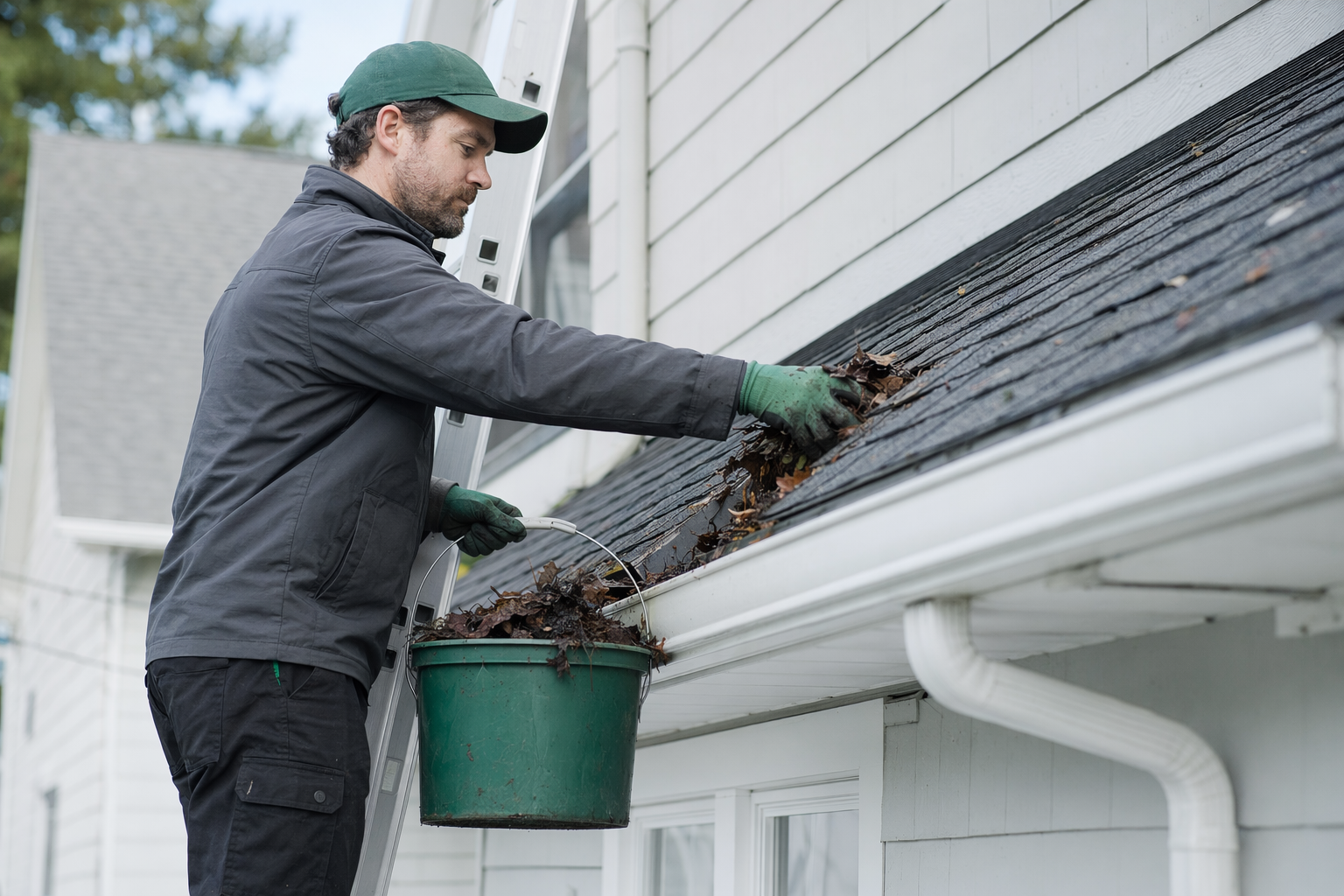
The short answer: most homes need cleaning in spring and fall
For many homeowners, a good starting schedule is once in late spring and once in late fall. Spring cleaning helps clear seed pods, blossoms, and small debris. Fall cleaning helps remove leaves before winter.
That said, there is no single schedule that fits every home. A house with few trees nearby may need less attention. A home under pine, oak, maple, or heavy tree cover may need more frequent service.
Gutter care is usually planned, seasonal maintenance. It is not something to panic about. But if water is spilling near the foundation, or if you are getting ice buildup at the roof edge in winter, it is smart to have a licensed, insured local gutter pro take a look soon.

What changes how often your gutters need cleaning
The biggest factor is nearby trees. Homes with tall trees hanging over the roof often collect leaves, twigs, seeds, and roof grit faster than homes in open areas. Pine needles are especially tricky because they can build up often and clog narrow openings.
Your region matters too. In places with strong fall leaf drop, frequent wind, heavy spring pollen, or summer storms, debris can collect faster. Snow and freezing weather can also make clogged gutters more noticeable because trapped water may contribute to ice dams along the roof edge.
Roof shape can also affect buildup. Valleys, lower roof edges, and areas where two roof sections meet may wash more debris into the gutters. Long gutter runs and downspouts with bends can also hold clogs more easily.
If you are not sure where your home fits, a simple ground-level check after major seasonal changes is usually enough to decide whether it is time. You can also learn more about common maintenance timing in our gutter cleaning guide or ask us to match you with a local pro for an opinion.
A practical cleaning schedule by home type
If your home has very few trees nearby, once a year may be enough in some areas. Many homeowners in that situation choose late fall, after most leaves have dropped, or spring if winter left behind roof grit and small debris.
If your home has moderate tree cover, twice a year is a practical plan. One cleaning in spring and one in fall works well for many houses. This is the most common schedule because it covers the two biggest debris seasons.
If your home has heavy tree cover, pine trees, frequent storms, or recurring overflow, you may need cleaning three or even four times a year. That does not mean something is wrong with your house. It usually just means your gutters collect debris faster than average.
If you recently moved in and do not know the pattern yet, start with spring and fall. Then adjust based on what you see from the ground over the next year.
Signs it is time to clean sooner
You do not have to wait for your scheduled month if your gutters are showing clear signs of buildup. Watch from the ground during or right after rain. If water pours over the sides instead of moving to the downspouts, that usually means the gutters or downspouts need attention.
Other common signs include plants growing in the gutter, visible debris over the edge, staining on the siding, or water pooling near the foundation. You may also notice one downspout that drips weakly while another runs normally, which can point to a clog.
In winter, large icicles or ice buildup at the roof edge can be a warning sign that water is not draining well. Ice dams can have several causes, including attic insulation and ventilation issues, so this is not just a gutter question. But if drainage is poor, it is worth having a licensed local gutter pro inspect the gutter system.
Because ladders and roofs are dangerous, the safest approach is to check from the ground and hire a licensed, insured pro for anything off the ground.
Do gutter guards mean you can clean less often?
Usually yes, but not never. Gutter guards can reduce how much debris gets into the gutter trough, which often means fewer cleanings. But guards do not eliminate maintenance. Small debris, roof grit, pollen, pine needles, and shingle granules can still collect on top of or inside some systems.
Different guard styles have trade-offs. Basic screen guards are common and can block larger leaves, but smaller debris may still get through. Micro-mesh can filter finer material better, but it may still need brushing or rinsing on top in some conditions. Foam inserts are simple, but they can trap debris over time. Brush-style inserts can catch leaves and needles inside the bristles. Reverse-curve designs can work well in some situations, but they are not ideal for every roof and can still need upkeep.
If you have guards, many homes still benefit from periodic inspection and occasional cleaning. The right timing depends on the guard type, nearby trees, and local weather. If you want help comparing options before you decide, our guides can help, and we can connect you with a local gutter pro for a real-world opinion.
How to plan the work without overthinking it
A simple schedule is enough for most people. Put a reminder on your calendar for spring and fall. After big wind or rain events, do a quick visual check from the ground. If everything is draining normally, great. If not, it may be time to schedule service.
If you are budgeting, typical cleaning costs vary by home size, height, access, and how much debris is present. Homes with steep roofs, second stories, or hard-to-reach areas may cost more. You can review typical ranges on our costs page, but local pricing varies.
EaveWise is a free matching service. We are not a gutter company, and we do not clean or repair anything ourselves. We help you find a licensed, insured local gutter pro for planned maintenance, guard questions, downspout issues, or other gutter concerns.

Most homes should plan on gutter cleaning in spring and fall, then adjust based on trees, storms, and whether water is flowing properly.
Common questions
Is once a year enough for gutter cleaning?
Sometimes. Homes with little tree coverage may be fine with yearly cleaning, but many homes do better with spring and fall service. If you have frequent debris or overflow, you may need more often.
Should gutters be cleaned before or after fall leaves drop?
Usually after most leaves have dropped. That helps you remove the biggest seasonal buildup in one visit. In very leafy areas, some homeowners need one cleaning during fall and another after the season ends.
How often should gutters be cleaned if I have pine trees?
Often more than twice a year. Pine needles can build up quickly and may clog gutters and downspouts, especially around narrow openings or guards. A licensed local gutter pro can help you set a realistic schedule for your property.
Do gutter guards mean I never need cleaning?
No. Guards can reduce cleaning, but they do not eliminate maintenance. Debris can still collect on top, around openings, or inside the system depending on the guard type and nearby trees.
Can I check my gutters myself?
Yes, from the ground. Look for visible debris, sagging sections, or water spilling over during rain. For anything on a ladder or roof, it is safer to hire a licensed, insured pro.