Guides
Preventing ice dams before winter
Ice dams often start with a mix of snow, heat loss, and poor drainage. This guide explains how clogged gutters can add to the problem, what helps before winter, and when to have a licensed local gutter pro take a look.
Why ice dams happen
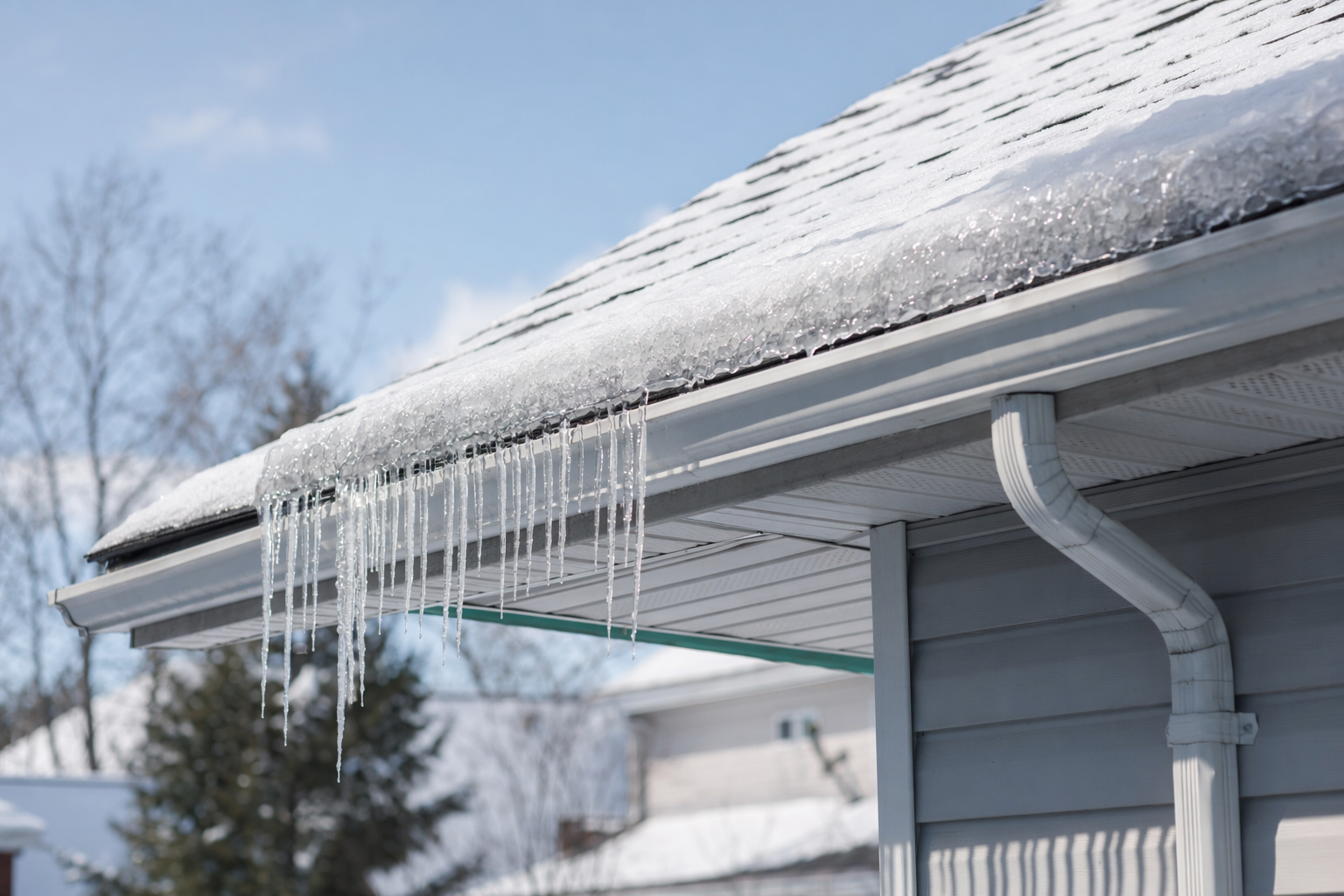
An ice dam is a ridge of ice that forms near the edge of a roof. Snow higher up melts, runs down, and then freezes again at the colder roof edge or in the gutter area. That ice can slow drainage and cause water to back up.
Gutters are only one part of the picture. Warm air escaping from the house, uneven roof temperatures, attic insulation problems, and winter weather patterns also matter. We do not give roofing or structural advice, but it helps to know that gutters can make a bad drainage situation worse when they are full of leaves, packed with debris, or already holding water before a freeze.
The practical takeaway is simple: gutter care can support better winter drainage, but it is not a complete cure for every ice dam problem. Think of it as one part of planned fall maintenance.
How clogged gutters can feed winter drainage problems
When gutters are clogged in late fall, water cannot move out through the downspouts the way it should. A downspout is the vertical pipe that carries water from the gutter down to the ground. If the gutter is blocked, water can sit in the trough and freeze sooner during cold weather.
That frozen buildup can make it harder for later meltwater to drain away. In some homes, that means more ice collecting along the roof edge and around the gutter line. If a downspout empties too close to the foundation, winter runoff can also pool where you do not want it.
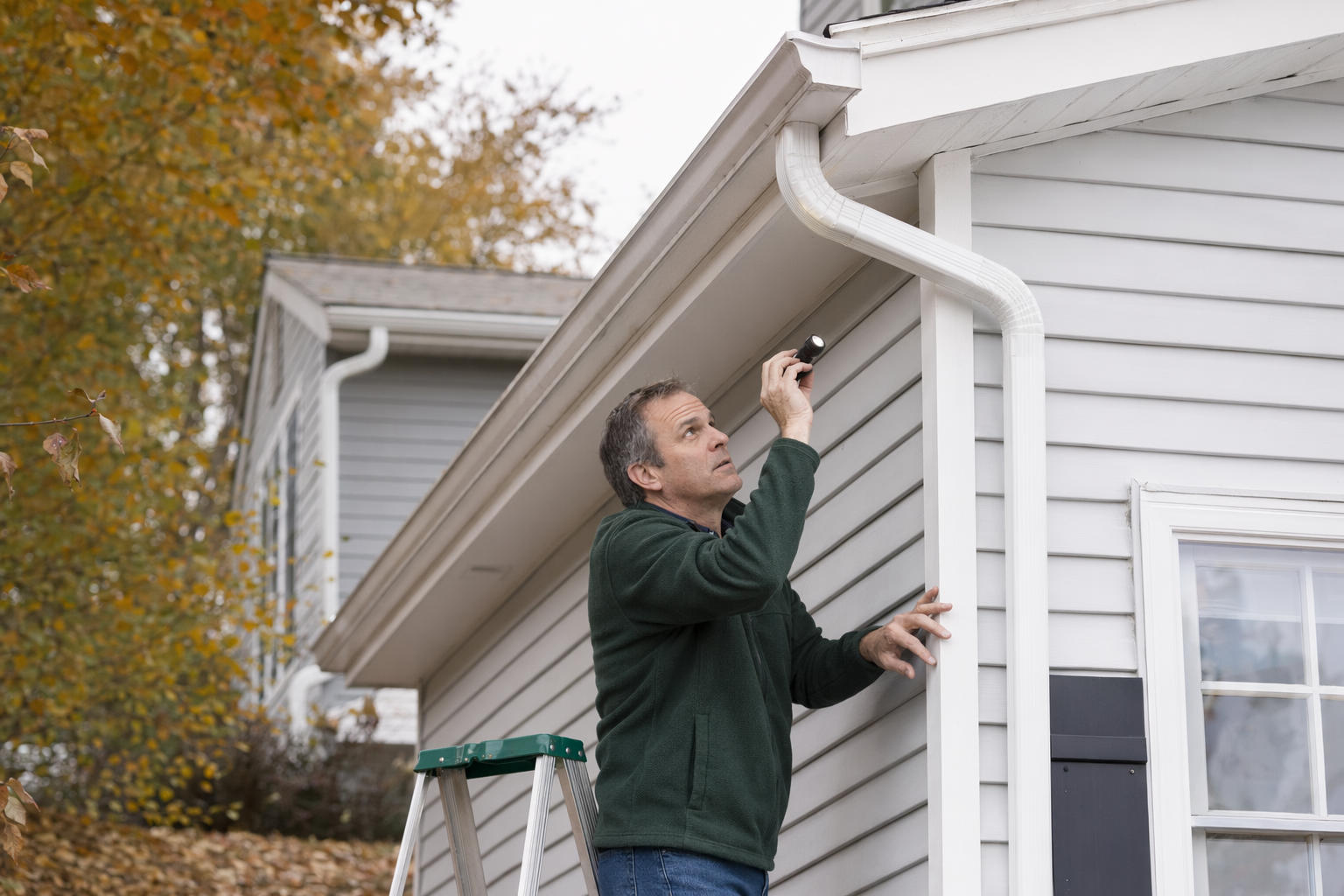
From the ground, look for signs like sagging gutters, plants growing in the gutter, water marks under the gutter line, disconnected downspouts, or splashy overflow during rain before winter sets in. Those are good reasons to schedule seasonal service. If you want help, we can match you with a licensed, insured local gutter pro.
What genuinely helps before winter
The most helpful gutter step before winter is simple: make sure the system is clean, attached well, and draining properly. That usually means removing leaves and debris, checking that water can flow to the downspouts, and fixing loose sections or poor slope. Slope, sometimes called pitch, is the slight angle that helps water move toward the downspout instead of sitting in the gutter.
It also helps to make sure downspouts discharge away from the house. In some homes, a pro may suggest a downspout extension or rerouting so water is carried farther from the foundation. That does not stop ice dams by itself, but it can improve overall drainage around the home.
If your gutters are older, leaking at seams, or pulling away from the fascia, the board behind the gutter, a pro may recommend repair or replacement. Seamless gutters can reduce leak points because they have fewer joints, but they still need cleaning and inspection like any other gutter system.
If you are not sure where to start, our guides can help you understand the basics, and we can connect you with a local pro for an on-site opinion.
What gutter guards can and cannot do
Gutter guards can reduce the amount of debris that gets into the gutter. In the right home, that can support better flow going into winter. But guards do not eliminate maintenance, and they do not solve every cause of ice dams.
Different guard types have trade-offs. Basic screens can block larger leaves but may let smaller debris through. Mesh and micro-mesh guards can filter more debris, but they still need inspection and can struggle if the system is not pitched well or if debris collects on top. Foam inserts are simple but can wear out and hold moisture. Brush-style guards can catch leaves on top and inside the bristles. Reverse-curve designs can work in some setups, but they are not right for every roofline or debris type.
The honest view is that guards may reduce cleaning frequency for some homes, especially in leafy areas, but they are not a magic shield against winter ice. If you are comparing options, a licensed local gutter pro can explain what fits your roof shape, tree cover, and climate. We can help you find one, and you can also review typical costs before you decide.
What not to do once cold weather starts
Ladders, icy walkways, and roofs are dangerous. Once freezing weather arrives, it is not a good time for a homeowner to climb up and try to chip away ice or inspect the roof closely. Check conditions from the ground only. If you see large icicles, heavy overflow near the foundation, or visible ice buildup along the roof edge, that is a reason to call a licensed, insured pro.
Winter roof work may involve roofing or attic issues beyond the gutters. We do not provide roofing, structural, electrical, or legal advice, and EaveWise does not do the work itself. We are a free service that helps you find a local gutter pro for seasonal drainage concerns, cleaning, guard discussions, downspout issues, and gutter repairs.
If water is actively overflowing near the foundation during a thaw, or if ice buildup is causing repeated backup at the roof edge, it can be more urgent to have a professional assess the drainage situation. Calm, early planning is still the best approach, ideally before the first hard freezes.
A practical fall checklist
Before winter, it helps to think in terms of maintenance, not panic. A clean, secure gutter system gives water a better path out of the house drainage system before freezing weather complicates things.
For many homeowners, the safest move is to have a pro handle anything off the ground. If you want, we can connect you with someone local for gutter cleaning or a broader drainage check before winter.
- Look from the ground for sagging gutters, loose downspouts, and stains from past overflow.
- Schedule fall cleaning if leaves, needles, or roof grit are likely blocking flow.
- Ask whether repairs, re-hanging, or better downspout discharge would help.
- If you are considering guards, ask about trade-offs instead of expecting zero maintenance.
- Plan before freezing weather arrives, not during an icy week.

Clean, properly draining gutters can help reduce winter drainage problems, but they are only one part of preventing ice dams, and winter roof work is best left to a licensed pro.
Common questions
Can clogged gutters cause ice dams by themselves?
Not always. Ice dams usually involve several factors, including roof temperature differences and winter weather, but clogged gutters can make drainage worse and add to ice buildup near the roof edge.
Will gutter guards prevent ice dams?
They may help reduce debris and improve flow in some homes, but they do not prevent every ice dam. Guards still need maintenance, and they do not fix attic heat loss or every roof design issue.
Is this something I should try to fix myself before a freeze?
For anything off the ground, the safer choice is to hire a licensed, insured pro. Ladders and roofs are risky even in good weather, and they are much more dangerous around ice.
When should I schedule gutter service for winter prep?
Usually in fall, after most leaves have dropped but before regular freezing weather starts. The exact timing depends on your trees, climate, and how quickly debris builds up.
How can EaveWise help?
We are a free matching service. We help you find a licensed, insured local gutter pro for cleaning, repairs, downspout drainage issues, or guard discussions, and participating gutter companies pay a flat fee to be matched.