Guides
Spring gutter clean-out: what to check
Spring is a good time to look over your gutter system after winter debris, wind, and freeze-thaw weather. You can do a safe ground-level check, then we can help you find a licensed local gutter pro for anything off the ground.
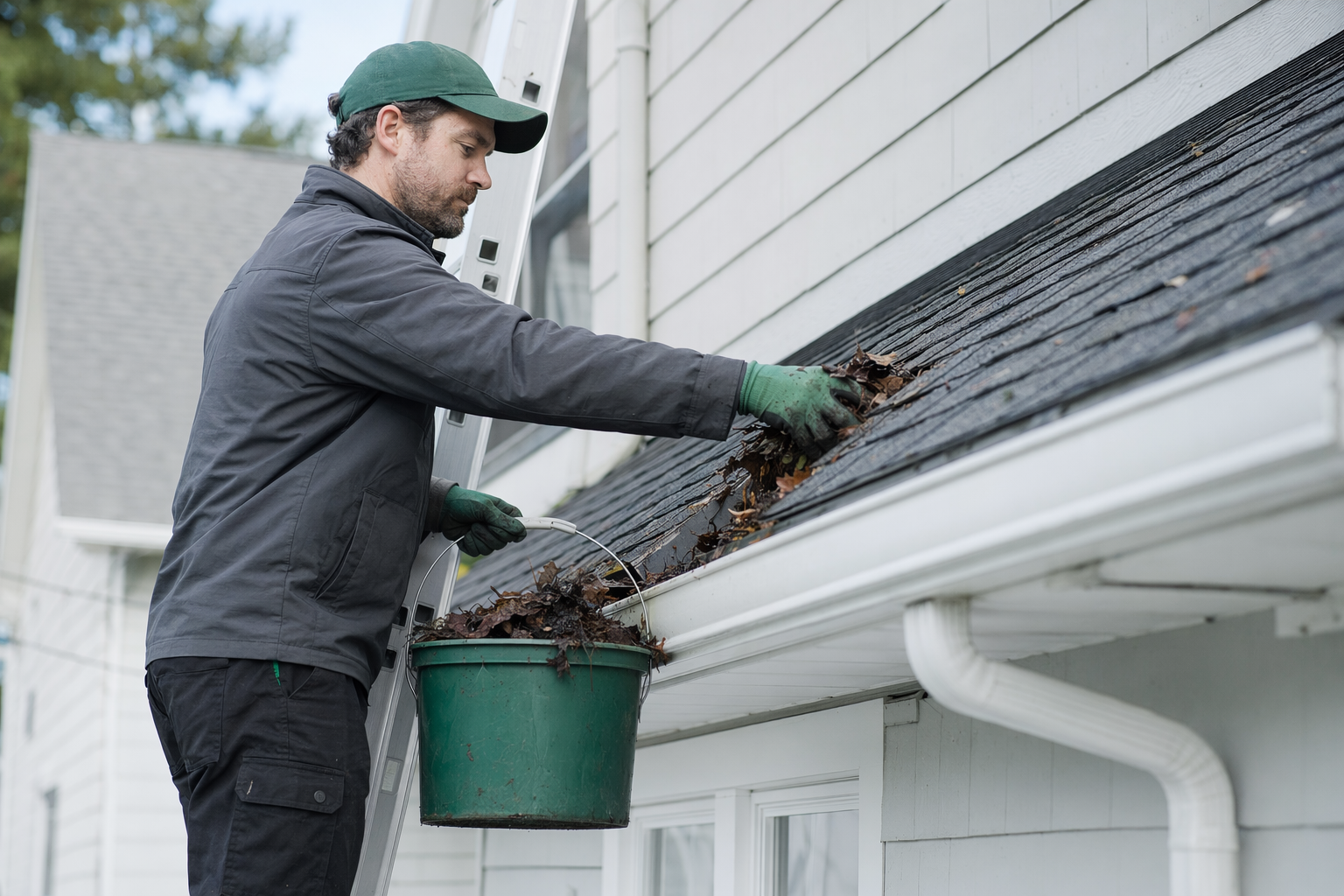
Why spring is the right time to check
Winter can leave behind more than leaves. Small twigs, seed pods, roof grit, and pieces of old shingles often collect in gutters over the colder months. Snow and ice can also loosen fasteners, shift downspouts, or pull a section slightly out of line.
A spring check is not about panic. It is routine seasonal maintenance. The goal is simple: make sure water can move from the roof edge into the gutter, through the downspouts, and away from the house.
Most homeowners can do a useful first look from the ground. If you see clogs, sagging, separated joints, or water near the foundation, it may be time to get matched with a licensed, insured local gutter pro. EaveWise is a free matching service. We do not clean or repair gutters ourselves.

What you can safely check from the ground
Walk around the house slowly and look up at the full length of the gutters. You are looking for obvious trouble spots, not trying to inspect every inch. Binoculars can help if you already have them, but a simple visual check is still useful.
Look for gutters that appear bent, tilted, or pulled away from the fascia. The fascia is the long board behind the gutter at the roof edge. Also look for downspouts that seem loose, disconnected, dented, or pointed in the wrong direction.
After a rain, or during a steady drizzle, check how water behaves. Water should move through the gutter and out the downspout. If you see water spilling over the sides, dripping from seams, or pooling near the foundation, that usually means a clog, a pitch problem, or a loose connection. Pitch means the slight angle that helps water flow toward the downspout.
If you want a broader overview of basic care, our guides can help you understand common gutter terms and what local pros usually look for.
Common spring problems to watch for
The most common spring issue is a simple clog. Wet leaves, pine needles, blossoms, and winter grit can block water flow. Overflow at one corner does not always mean the whole system is failing. It often means one area needs cleaning or one downspout is backed up.
Another common issue is re-hanging. That means the gutter is still usable, but parts of it have come loose and need to be secured again. You may notice a section that sags in the middle or a gap between the gutter and the fascia. If the gutter cannot hold the right slope, water may sit instead of draining.
Seams and joints can also open up after cold weather. Older sectional gutters have more connection points, which means more places for small leaks to show up. Seamless gutters have fewer joints, but they can still develop issues at corners, end caps, and downspout connections.
Watch the area around the bottom of each downspout too. If water is dumping right next to the house, the downspout may need repair, a new extension, or rerouting. Water collecting near the foundation is more urgent than routine debris because it can keep soaking the same area.
How to tell if gutter guards are helping
If your home already has guards, spring is still a good time to see how they are performing. Guards can reduce cleaning, but they do not eliminate maintenance. Debris can still collect on top of guards, in valleys where roof sections meet, or inside the gutter if small material gets through.
From the ground, look for plant growth, visible piles of wet debris, or water jumping over the front edge during rain. Those are signs the system may still need service. A guard system that worked well in fall leaves may behave differently with spring blossoms, seed pods, pine needles, or roof grit.
Different guard styles have trade-offs. Mesh and micro-mesh can do a better job with smaller debris, but they can still collect buildup on top and may need brushing off by a pro. Screen styles are simple, but larger openings can let in smaller debris. Foam and brush inserts are easy to understand, but they can trap debris over time and still need cleaning or replacement. Reverse-curve styles can work in some setups, but water can overshoot in certain conditions, and they are not a perfect fit for every roof and rain pattern.
If you are thinking about adding guards, it helps to compare the system with your tree cover, roof type, and maintenance expectations. Our costs page covers typical price ranges, and we can help you find a local pro to explain options for your home.
When to call a local gutter pro
Anything off the ground is best left to a licensed, insured professional. Ladders and roofs are dangerous, and spring conditions can be slippery. A pro can clean the system, flush downspouts, re-hang loose sections, reseal joints, and tell you whether a repair is enough or if a section should be replaced.
It is smart to call for help if you see overflow in more than one area, gutters pulling away from the house, repeated leaks at seams, standing water in the gutter, or downspouts that are crushed or disconnected. If there was a winter storm and you suspect hidden damage, a local pro can inspect it more closely.
Most spring service calls are routine. Some situations deserve faster attention, though. If water is repeatedly pouring next to the foundation, or if winter ice damming left obvious bending or separation, it is worth scheduling sooner rather than later.
If you need help, EaveWise can help you find a licensed local gutter pro at no cost to you. If the main need is clearing debris, you can also read more about gutter cleaning before requesting a match.
What to expect from spring maintenance
A typical spring visit may include removing debris, checking water flow, clearing downspouts, looking at hangers and seams, and noting problem areas such as low spots or splashback near the house. If repairs are needed, the pro may explain whether the issue is minor, such as re-securing a section, or larger, such as replacing damaged parts.
Costs vary by home size, height, layout, and how much debris has built up. Cleaning is often priced by the scope of the job, while guard installation is commonly discussed per linear foot. These are typical ranges, not quotes, and local prices can differ.
The useful part of a spring check is clarity. You learn whether you just need routine cleaning this season, whether a downspout needs to be rerouted, or whether a worn section should be repaired before the next heavy rain.
EaveWise is here to make that next step easier. We are not a gutter company, and we do not perform the work. We connect homeowners with licensed, insured local gutter pros for planned seasonal maintenance and repair needs.

In spring, check your gutters from the ground for clogs, sagging, leaks, and poor drainage, and hire a licensed local pro for anything off the ground.
Common questions
How often should gutters be checked in spring?
A ground-level check once in spring is a good habit for most homes. Homes with lots of trees may also need another look after heavy blossoms, seed drop, or storms.
Can I just wait until I see a problem?
You can, but small issues are easier to handle when found early. Spring checks help catch clogs, loose sections, and drainage problems before repeated rain sends water where you do not want it.
Do gutter guards mean I can skip spring cleaning?
Usually no. Guards can reduce the amount of debris that gets into the gutter, but they do not make the system maintenance-free. Some debris can build up on top, and small material can still collect over time.
What is the difference between a gutter problem and a roof problem?
From the ground, it is not always possible to tell. If you see overflow, leaks at gutter joints, or a loose downspout, that often points to the gutter system. EaveWise does not give roofing or structural advice, but we can help you find a licensed local gutter pro to inspect the gutter side of the issue.
How does EaveWise work?
Tell us your contact and project details, such as your name, phone, ZIP, and what is going on. We then help connect you with a licensed, insured local gutter pro. The matching service is free to homeowners.