Guides
Types of gutter guards, compared
Gutter guards can reduce how often gutters clog, but they do not eliminate maintenance. Here’s a plain-English comparison of the main types so you can choose with clearer expectations.
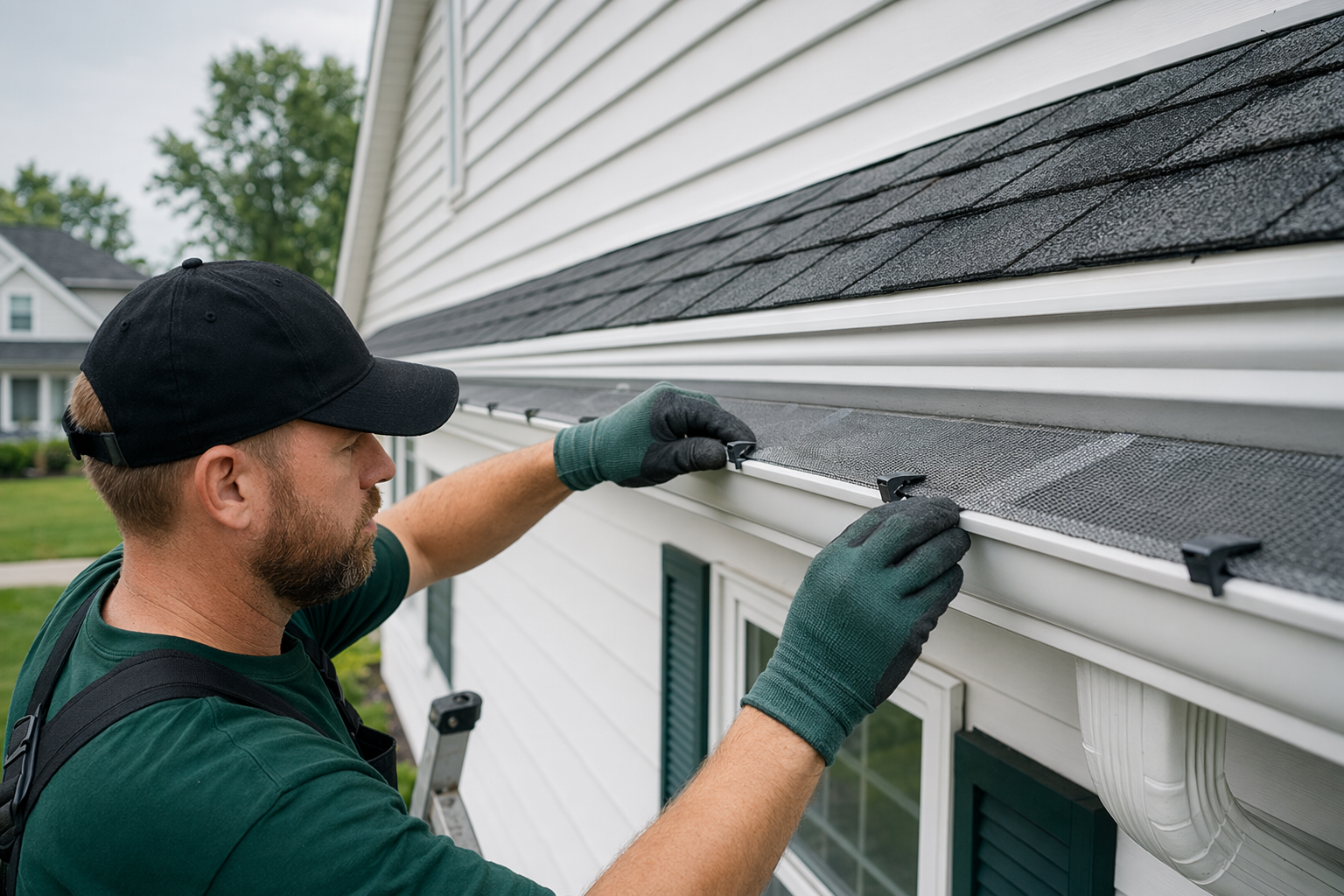
What gutter guards do — and do not do
Gutter guards are covers or inserts that help keep leaves and debris out of your gutters. They can make seasonal upkeep easier, especially if your home has trees nearby.
They do not make gutters maintenance-free. Small debris, shingle grit, and seeds can still get in, and most systems still need occasional cleaning and inspection.
If you want to understand how guard choices fit into overall upkeep, see our gutter guides and gutter cleaning service overview.

Mesh and micro-mesh guards
Mesh guards use a metal or plastic screen with small openings. Micro-mesh uses much finer openings, so it can block smaller debris like pine needles and shingle grit better than basic mesh.
Pros: good at filtering small debris, widely used, and often a stronger choice for homes with mixed tree cover. Cons: finer openings can clog on top with pollen, seeds, or roof grit, so they still need cleaning from time to time.
Typical cost is often quoted by linear foot, and micro-mesh usually costs more than standard mesh. Exact pricing varies by roofline, access, and local labor.
Screen and perforated guards
Screen guards have larger openings than micro-mesh. They are usually more affordable and can be a practical option for homes with mostly larger leaves.
Pros: simple, common, and often lower cost. Cons: smaller debris can pass through, and buildup on top may still need to be brushed or rinsed away.
For many homeowners, screen guards are a middle-ground option when the goal is to reduce, not eliminate, cleaning.
Foam and brush inserts
Foam inserts sit inside the gutter and let water pass through while blocking larger debris. Brush guards look like big bottle brushes laid in the gutter; debris catches on top while water flows around them.
Pros: usually easy to place in existing gutters and often less expensive up front. Cons: both can hold moisture and debris, and they may need more frequent checking than some metal guard types.
These options can work in some situations, but they are not always the best long-term fit in areas with heavy leaf fall or lots of fine debris.
Reverse-curve and solid-surface guards
Reverse-curve guards use the shape of the cover to guide water into the gutter while leaves fall away. Some solid-surface styles use a similar idea with a smooth top edge.
Pros: they can handle heavy water flow well when installed correctly. Cons: they can be more visible, may cost more, and small debris can still stick or wash over the edge in certain conditions.
These systems are often sold as premium options, but they still need periodic attention. No guard works perfectly for every roof, tree type, and weather pattern.
How to compare cost, upkeep, and fit
When comparing guard types, look at more than the sticker price. Ask how well the system handles your kind of debris, how often it may need cleaning, and whether it fits your roofline and gutter style.
Common cost ranges are usually discussed per linear foot, but the total depends on home size, height, and access. If you want a rough local estimate for your situation, we can connect you with a licensed gutter pro at no cost.
For any work that requires a ladder or roof access, hiring a licensed, insured pro is the safe choice. Homeowners can often do a visual check from the ground, but climbing is genuinely risky.
When guards make sense
Guard systems are often worth considering if you have mature trees, want to reduce seasonal cleanings, or have had repeat clogs. They can also help if you want a more hands-off routine between inspections.
They may be less useful if your gutters already clog from roof grit, if your roof sheds heavy debris in unusual ways, or if you expect a zero-maintenance solution. The best choice depends on your home and your local climate.
If you are weighing guard options against cleaning and repairs, a local pro can explain what usually works in your area. EaveWise is free to use, and we help you find a licensed, insured local gutter pro.

Different gutter guards block different kinds of debris, but none are maintenance-free, so the safest choice is the one that fits your home, your trees, and your budget.
Common questions
Do gutter guards stop all gutter cleaning?
No. Guards can reduce cleaning, but they do not eliminate it. Most homes still need occasional checking and maintenance, especially after storms or during heavy leaf season.
Which gutter guard type is best?
There is no single best type for every home. Mesh and micro-mesh often handle finer debris better, while screen, foam, brush, and reverse-curve systems each have trade-offs in cost, upkeep, and performance.
Are expensive gutter guards always better?
Not always. Premium systems can help in some homes, but they still have limits and can still need maintenance. The right choice depends on your roof, trees, debris type, and budget.
Can I install gutter guards myself?
Some products are marketed for DIY use, but roof and ladder work is dangerous. For anything off the ground, it is safer to hire a licensed, insured gutter pro.