Quick answers
Are gutter guards worth it with pine trees?
Pine trees are tough on gutters because long needles can slide through or sit on top of many guard styles. Guards can still help, but only some types handle pine debris reasonably well, and none make gutters maintenance-free.
Short answer: sometimes yes, but only with the right guard
If your home has pine trees nearby, gutter guards may be worth it when they reduce how often gutters clog and make seasonal cleanup easier. The key is choosing a guard type that deals with long, thin needles, not just broad leaves.
Pine needles are different from maple leaves or oak leaves. They can slip through wide openings, collect in small gaps, or form a mat on top of the guard. That means a guard that works well in one yard may do poorly in a pine-heavy yard.
In many cases, finer guards do better than wide-hole guards around pines. But even good guards still need checking and occasional cleaning from a licensed, insured local gutter pro. We can help you find one for free if you want local advice.
Why pine needles are harder on gutter guards
Pine needles are light, narrow, and plentiful. Wind can blow them into gutters from a surprising distance. They also tend to fall over a long season instead of all at once.
Because needles are long and stringy, they can bridge across openings, poke through slots, or gather at roof edges. On some guard systems, they stay on top until rain washes them away. On others, they stick and slowly build up.
The shape and pitch of the roof also matter. "Pitch" just means how steep the roof is. On steeper roofs, water moves faster, and some guard designs may handle flow better than others. On flatter roof edges, needles may settle and sit longer.
Which guard types usually do better with pine needles
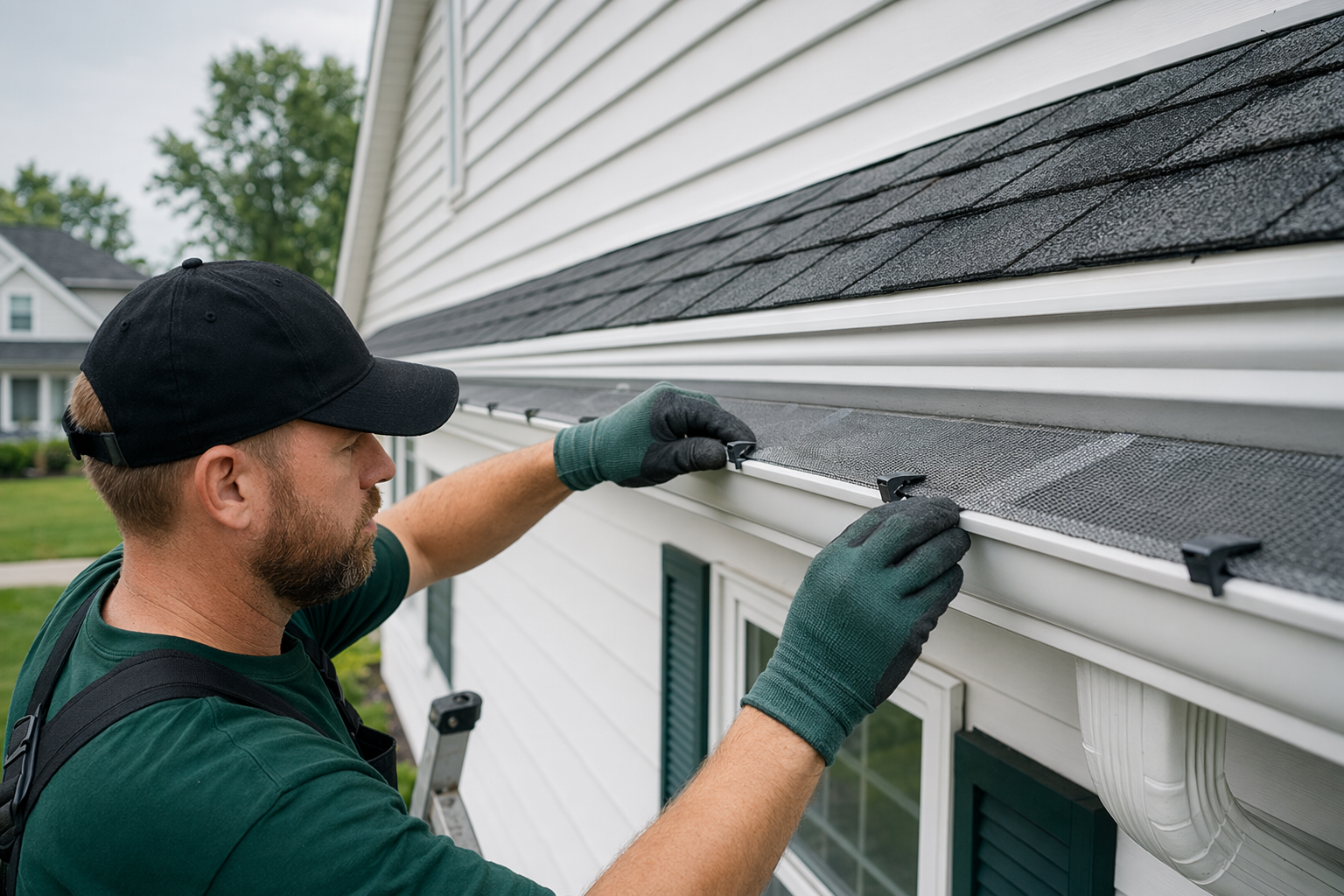
Micro-mesh and some fine-mesh guards usually perform better than basic screens in pine-heavy areas. The small openings can keep out more needles while still letting water pass through. But the surface can collect a layer of needles and shingle grit, so the top may still need brushing or rinsing by a pro from time to time.
Reverse-curve styles can work in some situations, especially when installed carefully and matched to the roof edge. But they are not automatically the best answer for pines. Needles can collect on top or around the front edge, and performance can vary a lot by roof shape, rainfall, and installation details.
Basic screens with larger holes often struggle most with pine needles. Needles can poke through, get stuck, and create clogs below. Foam inserts and brush-style guards are usually the least appealing around pines because needles can lodge in them, making cleaning messy and frequent.
If you want help sorting through options, our gutter guard guide explains the trade-offs in plain English, and we can connect you with a licensed local gutter pro for a no-cost evaluation.
Trade-offs by guard type
No guard is perfect, especially under pine trees. The honest question is not "Will this end all gutter cleaning?" It is "Will this reduce clogs and reduce maintenance enough to be worth the cost in my yard?"
Mesh and micro-mesh guards: Usually the strongest starting point for pine needles. They block smaller debris better than wide screens. Trade-off: the top surface can still collect needles, and very fine mesh may need periodic professional cleaning to keep water flowing well.
Screen guards: Usually lower-cost, but larger openings often let pine needles in or let them get trapped halfway through. They may help with big leaves, but many homes with pines need something finer.
Foam guards: They sit inside the gutter and let water pass through the material. Around pines, needles and grit can collect on top and inside the foam. They are often a weaker fit for long-term pine debris.
Brush guards: These look like large bottle brushes placed in the gutter. Pine needles can catch in the bristles. They may be easy to understand, but they often create a debris-catching comb in pine areas.
Reverse-curve guards: These use surface tension to pull water into the gutter while sending debris over the edge. They can do well in some homes, but they are not magic. Needles may still collect on top, and installation details matter a lot.
When gutter guards are worth it around pine trees
They are often worth considering if your gutters clog several times a year, if downspouts keep backing up, or if you are paying repeatedly for cleaning because needles refill the system quickly. A "downspout" is the vertical pipe that carries water from the gutter down to the ground.
They may also be worth it if your home is hard to service safely from the ground, or if you want to reduce the amount of debris sitting in gutters between routine visits. Guards can be a maintenance reducer, not a maintenance eraser.
They may be less worth it if the pine trees are directly over the roof and drop heavy debris year-round, especially if the wrong guard type is used. In those homes, a homeowner sometimes pays for guards and still needs regular cleanup. That is why a local opinion matters.
If water is already overflowing near the foundation, or if winter ice dams are forming, do not ignore it. That can be more urgent than routine maintenance. We can match you with a licensed, insured local gutter pro to assess the setup.
Cost and what to ask before you decide
Guard costs vary by material, guard type, roofline complexity, and local labor rates. As a typical range, gutter guards are often priced per linear foot, and many homeowners see broad ranges from about $4 to $25+ per linear foot depending on the product and installation conditions. Those are not quotes. Your area and home can differ.
Before you decide, ask what type of debris the guard is meant to handle, how it performs with pine needles specifically, and what maintenance is still expected. Also ask whether your existing gutters are in good enough shape to support guards. If gutters are loose, leaking, or pulling away, repair may need attention first.
It also helps to ask about water flow in heavy rain, how valleys or roof edges affect the design, and whether the downspouts need cleaning or rerouting. You can read more about typical costs or start with our general help center.
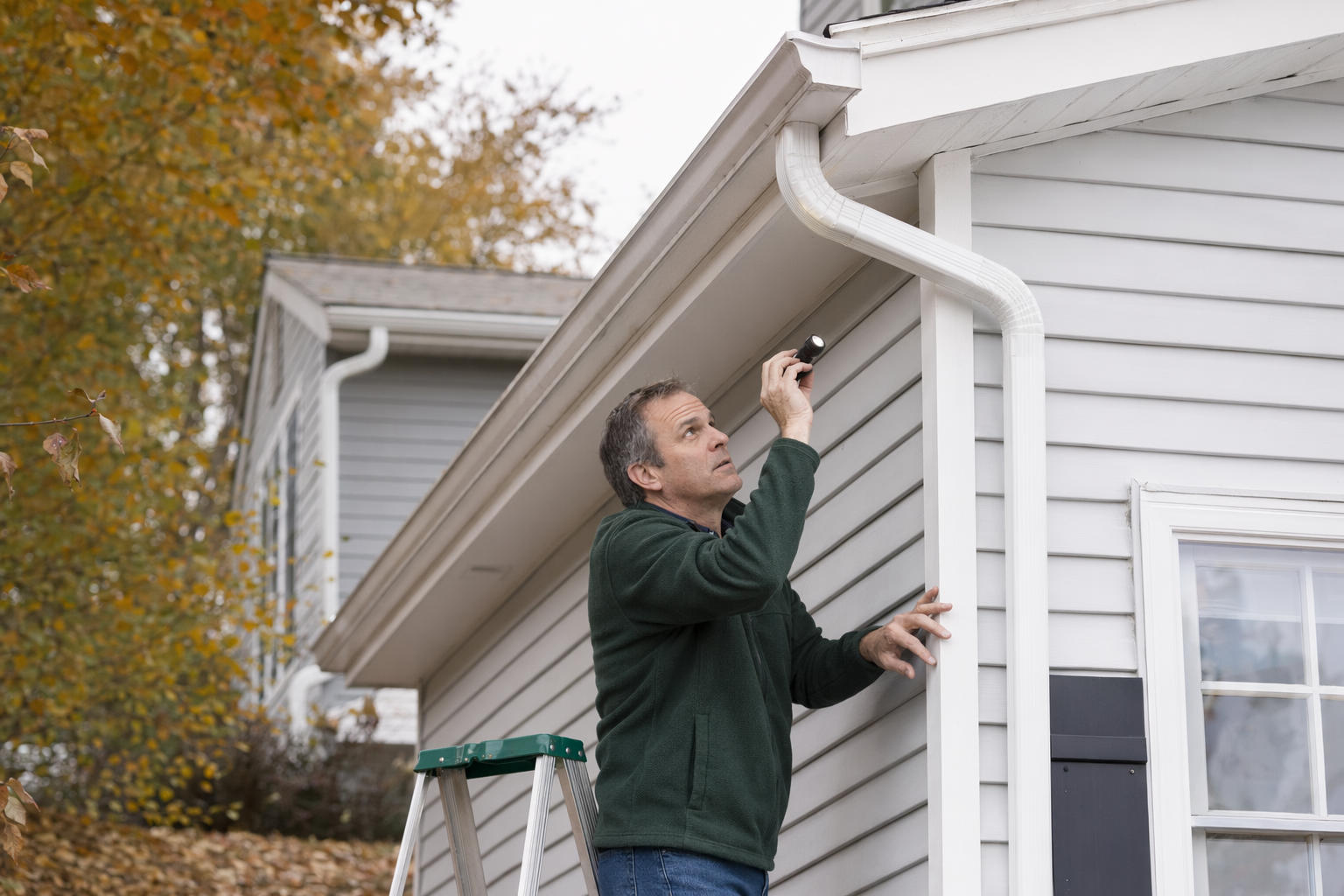
For anything off the ground, it is safer to have a licensed, insured pro inspect it. Homeowners can look from the ground for overflow, sagging gutters, or needles spilling over the edge, but ladders and roofs are dangerous.

With pine trees, gutter guards can be worth it if you choose a guard that handles needles well, but no guard makes gutter cleaning disappear.
Common questions
Do gutter guards stop pine needles completely?
No. Some guards reduce pine needle buildup a lot better than others, but none stop all debris or eliminate maintenance. Pine-heavy homes still need occasional inspection and cleaning.
What is usually the best gutter guard for pine needles?
Fine-mesh or micro-mesh guards are often the best starting point because their openings are smaller. But the best fit still depends on your roof edge, rainfall, gutter condition, and how close the pine trees are.
Are cheap screen guards good enough under pine trees?
Often no. Wide-hole screens may help with large leaves, but pine needles commonly slip through or get stuck in them. In pine-heavy yards, homeowners often need a finer option.
Will I still need gutter cleaning if I install guards?
Yes, usually less often, but not never. Guards reduce maintenance; they do not make gutters self-cleaning.
Can EaveWise tell me which guard brand to buy?
We do not sell or install gutter guards, and we do not give brand-specific recommendations. We share general educational information and can connect you, at no cost, with a licensed local gutter pro who can look at your home.