Quick answers
How much do gutter guards cost?
Gutter guards can help reduce how often you need cleaning, but the cost varies by guard type and your home. Here’s a plain overview of typical price ranges, what affects the total, and when guards may be worth it.
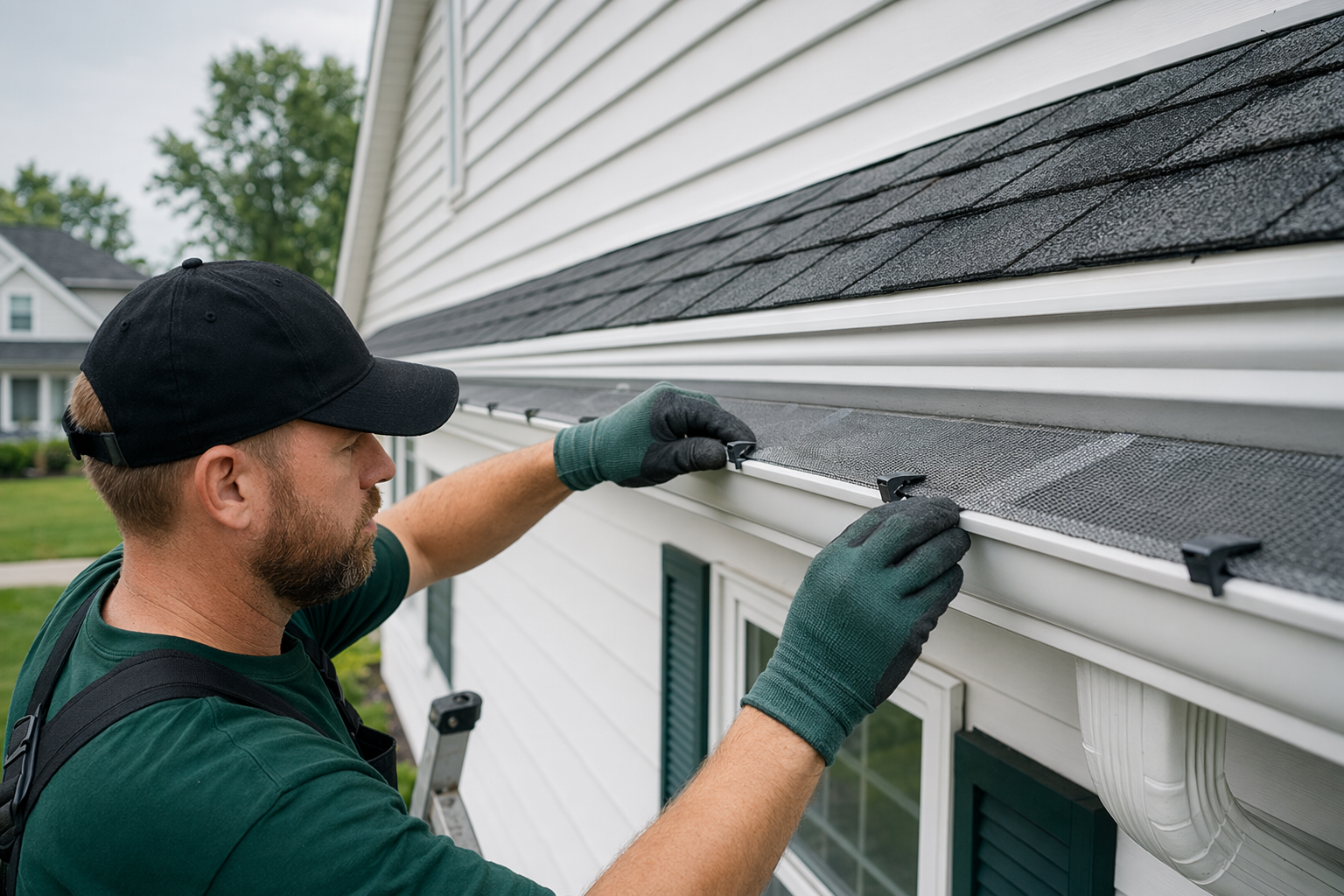
Typical gutter guard cost per linear foot (by type)
Most homeowners ask about cost “per linear foot” because guards are sold based on how much gutter you have. Your total price can still change based on roof height, access, and how complex your layout is.
Below are common US ranges you may see for materials and installation together (local costs vary). When you request estimates, ask for a breakdown by linear foot and any add-ons.
- Mesh screens: Often a mid-range option.
- Micro-mesh: Usually costs more than standard mesh because the holes are smaller.
- Reverse-curve (water-shedding) guards: Can be higher because the shape is designed to guide water while limiting debris.
- Foam/brush/other light-coverage types: Often lower upfront, but performance can vary and some still need periodic cleaning.
Because pricing varies widely, the safest approach is to get a couple of local, licensed, insured quotes—then compare the exact guard type and installation details. If you want, get matched with a licensed gutter pro at no cost to you through EaveWise, so you can understand options for your home.

What drives the final price (even if guards are “per foot”)
Two homes with the same gutter length can get very different totals. The installer may base labor and materials on factors like these.
1) Roofline complexity. More corners, valleys, dormers, and multiple stories can take longer and may require extra sections or special measurements.
2) Roof height and access. Taller homes and hard-to-reach areas usually increase labor. Ladders and rooftops are genuinely dangerous—use a licensed, insured pro rather than trying to inspect or install yourself.
3) Gutter condition. If your gutters are sagging, leaking, or poorly pitched, a guard install may need fixes first. Ask whether the quote includes addressing gutter hangers, re-hanging, or small repairs.
4) Drainage parts. Downspouts and elbows may affect how well guards manage flow. If downspouts need repair or rerouting, that can change the total.
5) Waste removal and clean-up. Some bids include hauling debris; others list it separately.
If you’re comparing estimates, look for a clear description of the guard model, the method of attachment (without getting overly technical), and whether any gutter repair work is included.
Do gutter guards pay off? (A realistic way to think about it)
Gutter guards usually aren’t a one-time “set it and forget it” solution. They’re meant to reduce how often you need cleaning and how quickly debris builds up.
Here’s a practical way to estimate payoff: compare (1) the typical cleaning schedule you were following before guards versus (2) the schedule you expect after guards. Even with guards, homeowners often still need occasional inspection or light clean-up—especially after storms, wind events, or seasonal leaf drop.
Whether cost pays off depends on your situation:
- Many trees nearby and lots of leaf fall can make reduced cleaning valuable.
- Heavy seed/pollen seasons may still require maintenance.
- If your gutters already drain poorly due to pitch or blocked downspouts, addressing those issues matters more than guard brand.
If you’d like help planning your next steps, read are-gutter-guards-worth-it for a balanced checklist before you shop.
Trade-offs by guard type (so you can choose with your eyes open)
All guard types aim to block leaves while letting water pass. But “block debris” is never perfect—so it helps to know the trade-offs.
Mesh and micro-mesh: These can reduce leaves well, but finer debris (like small seeds) may collect on top and still need periodic cleaning. Micro-mesh generally allows smaller particles to be blocked better, but it can be more expensive.
Screen-style or perforated designs: They can work well when properly installed, but water flow performance depends on fit and how they handle fast rain.
Reverse-curve (water-shedding) guards: These are designed to help water sheet over while sending debris away. They often look more “structural,” but they can be sensitive to exact placement and gutter alignment.
Foam/brush types: They’re often lower cost, but performance can vary by climate and debris type. Some homeowners still end up cleaning because debris can lodge in or around the material over time.
If you’re unsure which type suits your roof and debris sources, help us answer your questions in plain language—then we can connect you with a licensed local gutter pro to review your setup.
How to get accurate estimates without surprises
Before you compare prices, prepare a few details. This helps local pros price the job correctly and reduces back-and-forth.
What to have ready:
- Your ZIP code (costs vary by area)
- Approximate gutter linear footage (or photos so they can estimate)
- Number of stories and any steep roof areas
- What’s causing the problem (leaves, clogs, overflow during rain)
- Any known gutter issues (sagging, loose sections, leaks)
A good estimate should explain what guard type is being quoted, what’s included in installation, and whether gutter repairs or downspout work are separate line items. Avoid bids that are vague about the guard model or that skip discussing existing gutter condition.
Need to start? EaveWise is a free service that helps you get matched with a licensed, insured local gutter pro. You stay in control, and there’s no cost to use our matching support.

Gutter guard prices vary by type and your home’s setup, and while guards reduce cleaning they don’t eliminate it—use local, licensed estimates to compare options.
Common questions
How much do gutter guards cost per linear foot?
Typical US ranges vary by guard type, but many bids land in a broad per-linear-foot range when materials and installation are included. The best way to get a realistic number for your home is to request local, licensed, insured estimates and compare the exact guard type quoted.
Are gutter guards worth it if I only need cleaning once or twice a year?
They can still help, but the “payoff” depends on how much debris you deal with and how clean you want your gutters to stay between services. Even with guards, many homeowners still do occasional inspection or light clean-up.
Do gutter guards stop clogs completely?
No. Guards reduce the amount of debris entering gutters, but they can’t block everything. Fine debris, seeds, pollen, and storm debris may still build up and require periodic maintenance.
Why does one estimate cost much more than another for the same linear footage?
Higher totals can reflect differences in guard type (mesh vs micro-mesh vs reverse-curve), installation method, access difficulty, and whether any gutter repairs or downspout adjustments are included. Ask for a clear line-item breakdown so you’re comparing apples to apples.
Is it safe for me to install gutter guards myself?
Working on ladders and roofs can be dangerous. For anything off the ground, it’s safest to hire a licensed, insured pro who can install the guards properly and safely. EaveWise helps you connect with local pros for installation options at no cost to you.