Quick answers
How do I get gutter water away from the foundation?
Getting gutter water away from your foundation usually comes down to a few practical steps: making sure downspouts drain correctly, adding extensions, and using splash blocks or rerouting where needed. We can help you find a licensed local gutter pro for guidance and installation—at no cost to you.
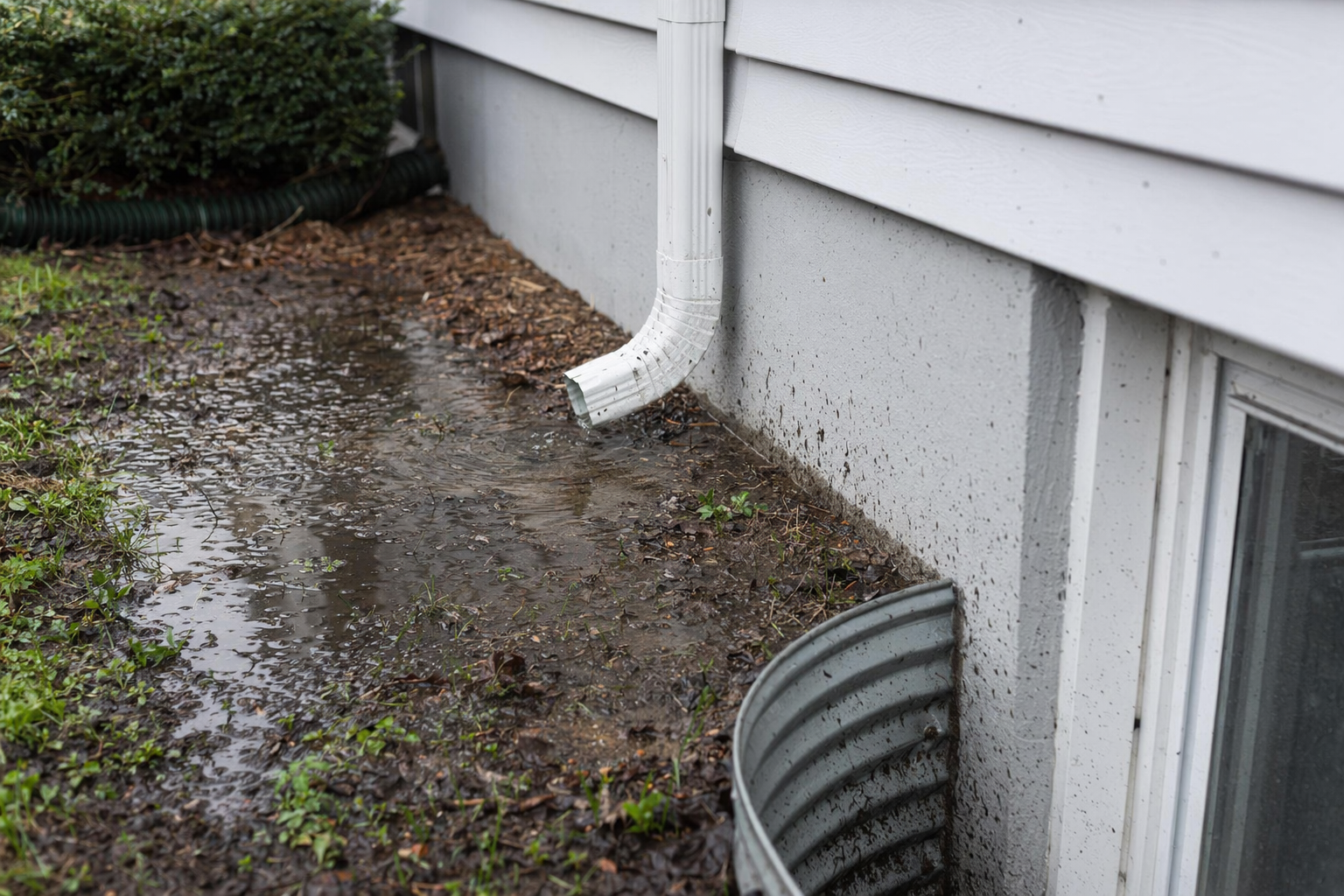
Start with the goal: keep water from pooling near the foundation
Gutters collect rainwater from your roof and send it to your downspouts. If water ends up too close to the foundation, it can increase the chance of problems like wet basements, damp crawl spaces, or soil erosion around the home.
A good target is simple: water should flow away and not dump right next to the foundation. Because every home’s layout is different (yard slope, landscaping, walkways, and the location of downspouts), the best plan is usually a mix of small fixes and seasonal checks.
If you’re not sure where the water is going, you can observe from the ground during or after a rain. Look for splashing that lands near siding, puddles that linger, and downspouts that end too close to the house.

Common fixes that help move water away (and what they do)
Here are the most common gutter-related options homeowners use to keep water farther from the foundation. These are generally educational overviews, not a guarantee that they’ll solve every situation.
Downspout extensions: These are pipes that carry water farther away from the house. They can be helpful when the current downspout discharges into a spot that’s too near the foundation.
Splash blocks: These are flat, impact-resistant pieces placed under the downspout outlet. They help reduce splashing and spread water across the ground more evenly.
Rerouting: Sometimes the most effective approach is moving the path of the downspout discharge. A gutter pro can assess where the water should go based on your yard and drainage patterns.
If you’re seeing water pooling right at the foundation, it’s worth addressing calmly but promptly. Overflow at the foundation or major ice buildup can be more urgent, but routine gutter care is still typically planned for the right seasons.
Check your downspouts first (they’re the main “exit” for gutter water)
Most foundation-water issues begin at the downspout outlet—where the gutter system releases water. Start by checking, from the ground, whether the downspouts are open and directing water away.
Watch for obvious signs: downspouts that end too close to the house, outlets that dump onto a walkway, and downspouts that splash up onto siding. Also look for stains or drips near the downspout connections.
If you suspect clogs, a licensed, insured gutter pro can inspect safely. Since ladders and roof work are risky, it’s best not to climb. You can ask the pro to explain what they found and show you where water is currently going.
Add extensions or splash blocks—when they make sense
Downspout extensions and splash blocks are often used together. Extensions carry the water farther; splash blocks help reduce concentrated impact at the discharge point.
Whether this is enough depends on your yard. If the ground slopes toward the house, extensions alone might not solve pooling. If landscaping or hardscaping changes the flow, rerouting may be a better match.
A gutter pro can also consider how the discharge interacts with nearby features like grading, flower beds, and paths. Rules and installation methods can vary by area, so it’s smart to ask what’s typical where you live.
What about gutter guards? They reduce cleaning, not the need for drainage solutions
Gutter guards (also called gutter-guard systems) can reduce how often you need gutter cleaning by blocking leaves and debris. But they do not eliminate maintenance entirely.
There are different types: mesh, micro-mesh, screens, foam, brush, and reverse-curve designs. Many homeowners choose them for convenience, especially in fall, but trade-offs exist. Some guards filter debris well yet still allow fine material to collect over time. Others need periodic inspection because smaller debris may get through.
Even with guards installed, you still need downspouts that drain properly. If water is being released too close to the foundation, a guard won’t automatically fix the discharge location. For a full plan, ask a local gutter pro to review both the gutter flow and the downspout discharge route.
If you want to compare options before you decide, see Are gutter guards worth it?.
How we help you get matched with a local, licensed gutter pro (free)
EaveWise is a free service that helps you find and connect with a licensed, insured local gutter professional. We’re not a gutter company and we don’t do the work ourselves—but we can help you reach the right pro for gutter cleaning, leaf-guard / gutter-guard installation, downspout repair and rerouting, seamless gutter installation, and gutter repair / re-hanging.
If you tell us what’s happening (for example: “water pools near the foundation after rain” or “downspout dumps on a walkway”), we’ll match you with local options so you can ask questions and move forward at your pace.
Start here: Get matched. If you’d like to understand typical project costs first, visit Gutter costs. For general homeowner tips, explore Gutter help.

To keep gutter water away from your foundation, make sure downspouts discharge farther using extensions, splash blocks, or rerouting—and we can help you find a licensed local pro for a free match.
Common questions
How can I tell if my downspouts are causing foundation water problems?
After a rain, look for where water lands at the downspout outlet. If you see splashing near the foundation, puddles that linger close to the house, or damp staining near downspout connections, the discharge location may be contributing.
Will adding gutter guards automatically keep water away from the foundation?
No. Gutter guards mainly affect how much debris gets into the gutters and how often you clean them. They don’t change where the downspout discharges unless you also modify extensions or reroute the downspout system.
Do downspout extensions always fix pooling near the foundation?
Extensions can help by carrying water farther away, but the yard’s slope and drainage still matter. If the ground slopes toward the home or water can’t disperse, a pro may recommend splash blocks, rerouting, or another discharge approach.
Is this an emergency?
It’s usually a planned, seasonal maintenance topic. However, if you’re dealing with overflow at the foundation, significant standing water, or urgent winter conditions like major ice concerns, it’s smart to ask a licensed pro for timely help.
Why should I hire a licensed, insured pro for rerouting or installing downspout pieces?
Downspouts often connect to gutters and must be routed correctly to move water safely. Because ladder and roof work can be dangerous, working with a licensed, insured professional helps ensure the system is installed and adjusted safely.