Quick answers
How do I know if my gutters need replacing?
Gutters usually last years, but sometimes they’re beyond patching. Learn the common signs your gutters may need replacement, and what cleaning or repairs can—and can’t—fix.
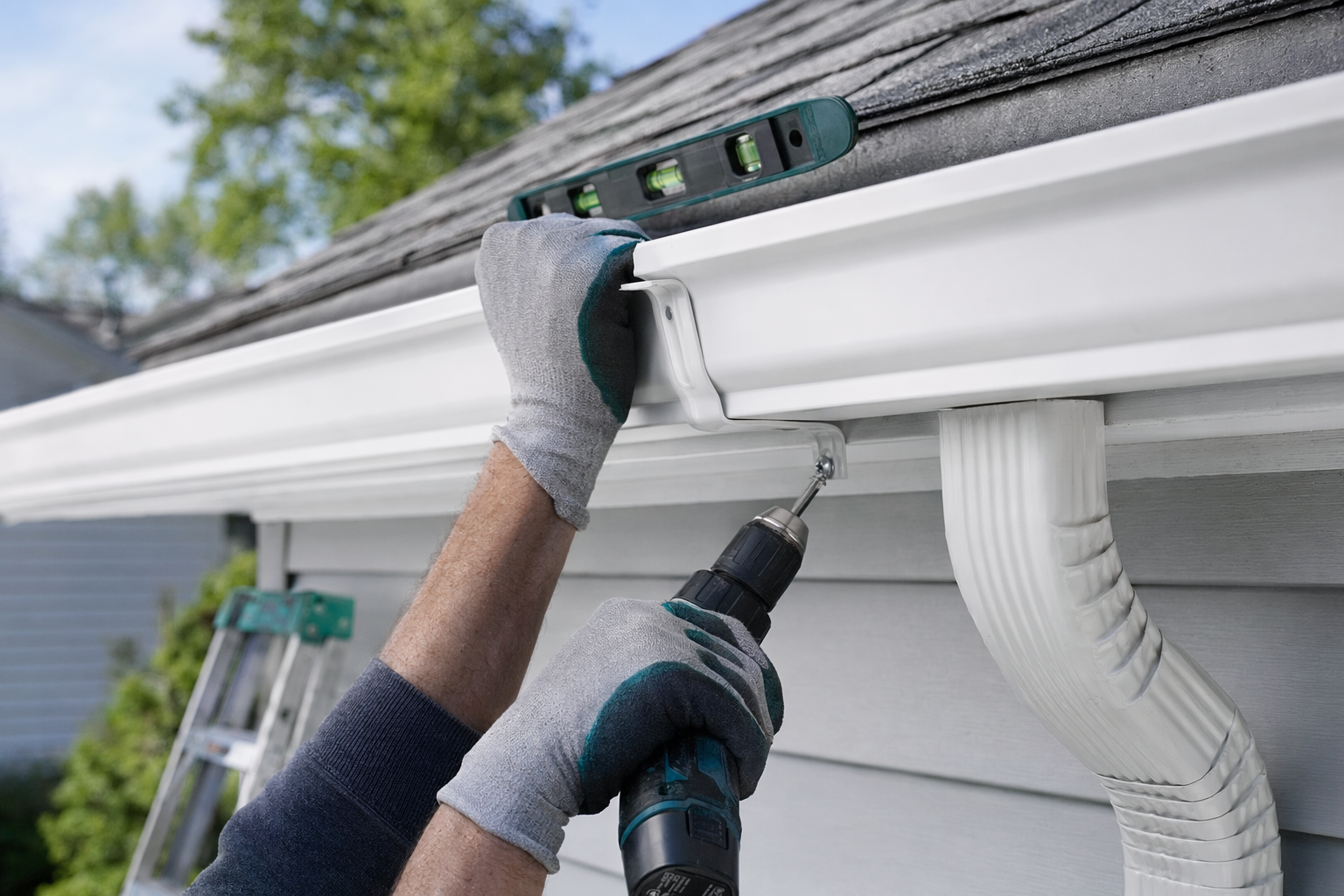
First, know what “replacement” really means
Gutters can fail in different ways. Some problems are fixable with cleaning, sealing a leak, re-hanging, or repairing sections.
Replacement is usually considered when the gutter system is worn out overall, damaged in multiple places, or the shape no longer works (so water can’t flow correctly). A licensed, insured gutter pro can compare what’s salvageable versus what needs a full swap.
If you want help, EaveWise is a FREE service. We help you find and match with a licensed local gutter pro for gutter cleaning, leaf-guard/gutter-guard installation, downspout repair and rerouting, seamless gutter installation, and gutter repair or re-hanging: /get-matched/.

Signs your gutters may be past repair
Look for patterns, not just one problem spot. A few small issues can sometimes be repaired, especially if the rest of the system is still solid. But if you see several of the signs below, replacement may be the safer long-term option.
If you’re not comfortable getting close to the gutters, check from the ground using binoculars or a phone camera zoom. Ladders and roofs are genuinely dangerous—hire a licensed, insured pro if you need an up-close inspection.
Common red flags include rust that’s spreading, cracks that keep opening, sagging sections, and gutters pulling away from the home.
Here are the typical “replacement” signs homeowners notice:
- Rust, holes, and soft metal: Small rust spots can be treated depending on the material and severity, but widespread corrosion or visible holes often indicates the gutter has weakened.
- Cracks and splits along the gutter line: One hairline crack might be patchable, but multiple cracks (or cracks that reopen after repair) are a sign the gutter is failing.
- Sagging or “pulling away”: Gutters should sit level or with proper slope. If a section droops or separates from the fascia (the board under the roof edge), water can pool and overwhelm the system.
- Separated joints and gaps: Many gutters are made in sections with seams. If joints keep separating, the gutter can leak and lose its flow.
- Chronic overflow near the foundation: If water consistently spills at the downspouts or runs over the front edge, it may be a capacity or slope issue—not just a cleaning problem.
How cleaning or repair can help (and when it won’t)
Cleaning is often the first step in gutter care. Leaves, twigs, and debris can block flow, causing overflow, stains, and water backing up toward soffit and fascia. If your gutters are clogged but the metal is still intact and properly attached, cleaning and downspout clearing may be enough.
Repairs can also solve specific issues:
- Fixing small leaks: A pro may reseal a joint or replace a small damaged portion if the surrounding gutter is still structurally sound.
- Re-hanging or adjusting slope: Sometimes the gutter is installed a bit off, or it shifted over time. Correcting slope can restore proper water movement.
- Repairing downspouts: Downspouts can crack, detach, or discharge water in the wrong spot. Redirecting them can reduce splashback and soil erosion.
But if the gutter is widely corroded, badly deformed, or separating in multiple locations, repair may be a temporary patch. In those cases, replacement usually lasts longer and reduces the chance of repeated breakdowns.
If you’re unsure what your situation is, we can help you get matched with a local gutter pro to evaluate it: /help/.
Watch for “water damage clues” around your home
Gutters protect siding and the area near your foundation by moving water away from the building. When they aren’t working, you may see clues that point to gutter performance problems.
These signs don’t automatically mean replacement, but they can support the case for upgrading or replacing:
- Water marks or staining on the fascia/soffit: Staining near the roof edge can happen when water overflows.
- Rust streaks or peeling paint: Water running where it shouldn’t can accelerate wear.
- Siding damage near downspouts: If downspouts leak or discharge too close, you may see deterioration.
- Basement/crawlspace moisture (where applicable): In some homes, poor drainage can contribute. This can be more urgent if you notice active leaks.
If you’re seeing water near the foundation, don’t wait too long. While this is still generally a maintenance topic, active foundation-area overflow can be more time-sensitive than a typical clogged-gutter issue.
What to know about gutter guards (they reduce cleaning, not all of it)
Gutter guards (also called leaf-guard or gutter-guard systems) can help reduce debris buildup, so you clean less often. But no guard eliminates maintenance in every home and every season.
Trade-offs depend on the guard type. For example:
- Mesh/micro-mesh/screens: These can block many leaves, but small debris like seeds and pine needles may still collect.
- Foam/brush types: Some households like the look and reduced debris, but they can trap debris on top, and performance varies.
- Reverse-curve designs: They can shed many leaves, but heavier debris and certain roof-to-gutter conditions can still lead to buildup.
Also, guards may require more inspection if water still overflows. In some cases, a guard won’t “fix” an underlying gutter issue like sagging, broken joints, or poor slope.
If you’re comparing options, our guide can help: Are gutter guards worth it?.
A safe way to decide: what to ask a local pro
Before you replace anything, you want an honest diagnosis. A good gutter pro will explain what they see, what can be repaired, and why replacement may be recommended.
When you contact a pro (or when EaveWise matches you), you can ask:
- “Is this mainly a clog/slope issue or a structural failure of the gutter itself?”
- “Are there specific sections that can be replaced, or is the whole run worn out?”
- “Do you see problems at joints, hangers, fascia connection points, or downspout routing?”
- “If we install guards, which type matches my roof and debris pattern?”
We’re here to help you get connected—not to perform the work ourselves. If you’d like local options, tell us what’s going on and we’ll connect you with a licensed, insured gutter pro in your area at no cost to you: /get-matched/.
To understand typical budgeting considerations for cleaning, repairs, or replacement, see: /costs/.

If your gutters show rust, cracks, sagging, or leaking joints across multiple spots, replacement may be the best fix—cleaning and repairs can help only when the gutter is still structurally sound, so we’ll help you match with a licensed local pro for an on-site evaluation.
Common questions
Can I just repair my gutters instead of replacing them?
Often, yes—if the gutter is mostly intact and the problem is limited to a leak, a small damaged section, or a downspout issue. If you’re seeing widespread rust, multiple cracks, sagging, or joints that keep separating, replacement may be the more durable fix.
How do I tell if my gutters are sagging?
From the ground, look for sections that sit lower than the rest or where water appears to pool along the gutter line. Sagging usually affects slope and can cause overflow, even if the gutters aren’t visibly broken.
If my gutters overflow, does that always mean I need new gutters?
Not always. Overflow can happen from clogged debris, blocked downspouts, or incorrect slope. Replacement becomes more likely when the gutter system is structurally failing (for example, it’s corroded, cracked in multiple places, or pulling away).
Do gutter guards mean I never have to clean?
No. Guards can reduce how often you clean, but they don’t eliminate debris entirely. Depending on the guard type and your tree/roof situation, you may still need periodic maintenance and inspection.
When should I contact a pro sooner?
If you’re seeing active overflow near the foundation, frequent leaks, or significant separation from the fascia, it’s a good idea to schedule an inspection promptly. For typical seasonal clogs or minor issues, planned maintenance is usually enough.