Quick answers
Seamless vs sectional gutters — which is better?
Seamless and sectional gutters both move rain away from your home. The best choice depends on your budget, your roofline, and how much future maintenance you want to deal with.
The simple difference
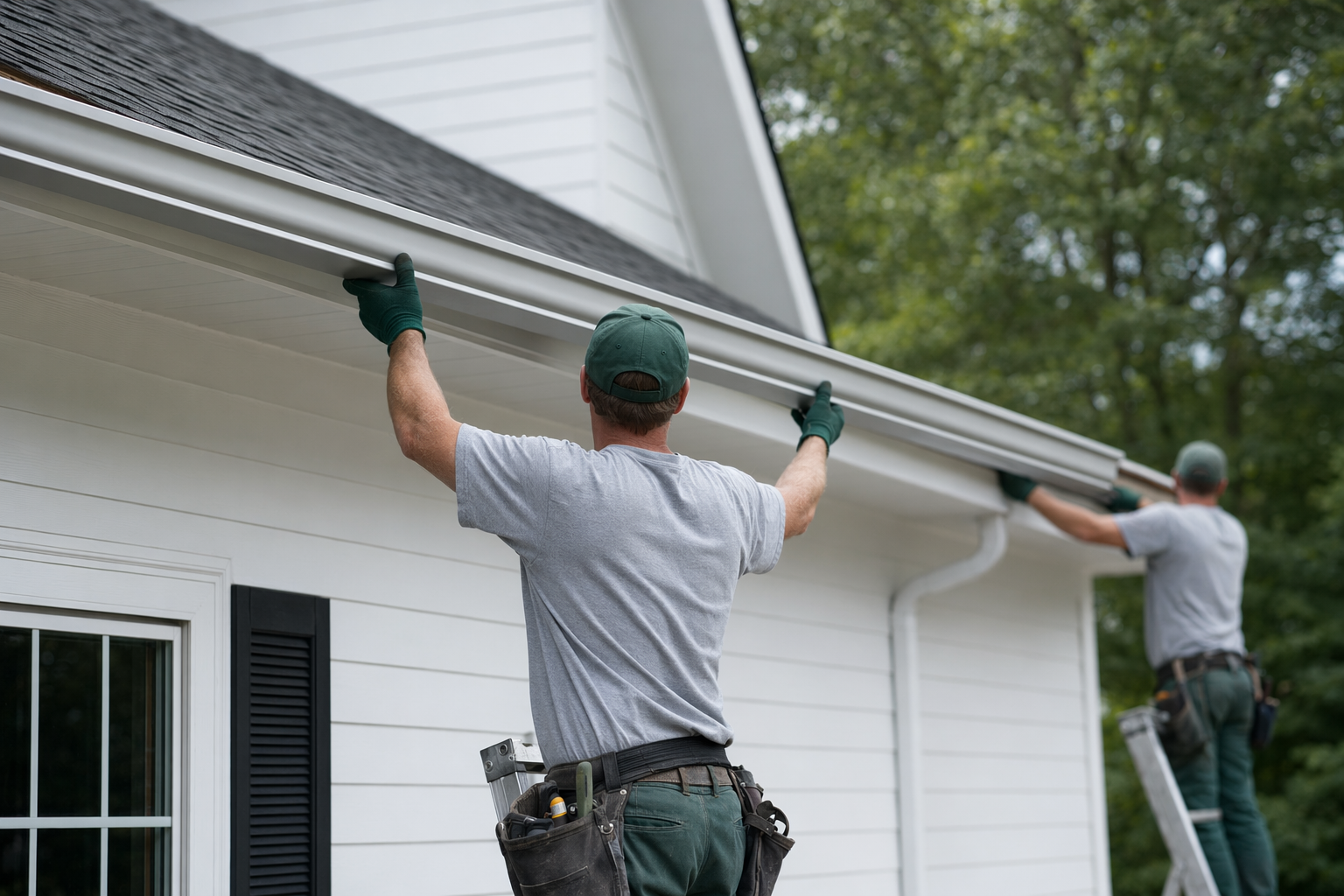
Sectional gutters come in pre-cut pieces that are joined together during installation. Seamless gutters are made from one long piece for each run, with seams mainly at corners and downspout outlets.
That sounds like a small detail, but it matters. More seams usually means more places where water can drip, debris can catch, and sealant can wear out over time. Fewer seams usually means a cleaner look and less upkeep.
For many homes, seamless gutters are the more popular choice today. But sectional gutters still make sense in some situations, especially when keeping upfront cost lower is the main goal.
Why many homeowners choose seamless gutters
The biggest advantage of seamless gutters is fewer joints. With fewer connection points, there are fewer common leak spots. They also tend to look neater because each straight run is custom-made to fit the home.
Seamless systems are usually formed on-site by a local gutter pro with special equipment. That custom fit can help with drainage and appearance, especially on longer roof edges. If you plan to stay in the home for years, the lower maintenance can be worth the higher initial cost.
Another practical benefit is fewer places for leaves and grit to snag. That does not mean seamless gutters stay clean on their own. They still need seasonal checks and cleaning, especially near trees.
Because they are custom-made, seamless gutters are not usually a do-it-yourself project. For anything off the ground, the safe move is to hire a licensed, insured pro. We can match you with a local gutter pro if you want to compare options.
When sectional gutters can still be a good choice
Sectional gutters usually cost less upfront. If you need a basic replacement and want to keep the project affordable, they can be a reasonable option. They are also easier to replace in small sections if one part gets damaged.
For a smaller home, garage, shed, or a short-term budget fix, sectional gutters may be enough. A good installer can still do solid work with them. The key is proper slope, secure fastening, and careful sealing at the joints.
The trade-off is maintenance. Joints and seams tend to be the first places to leak or collect debris. Over time, those connection points may need more attention than a comparable seamless system.
Cost: what is the usual price gap?
In many US markets, sectional gutters are the lower-cost option, while seamless gutters cost more because they are custom-fabricated and installed by a pro. Exact pricing varies by material, home size, number of corners, height, and local labor rates.
As a very general range, standard aluminum sectional gutters may run around $5 to $10 per linear foot installed, while aluminum seamless gutters often fall around $8 to $16 per linear foot installed. Premium materials like copper can cost much more.
Those are typical ranges, not quotes. Add-ons like larger downspouts, extra downspout rerouting, fascia repairs, or gutter guards can change the total. If you want a clearer local picture, our cost guide can help you understand what affects pricing.
It also helps to think beyond the install price. A cheaper system that needs more sealing, more cleanup, or earlier replacement may not stay cheaper over time.
What about gutter guards with seamless or sectional gutters?
Gutter guards can work with both seamless and sectional gutters. They reduce how much debris gets inside, but they do not eliminate maintenance. That is important to know before spending extra money.
Different guard types have different trade-offs. Basic screens are simple and affordable, but small debris can still get through. Micro-mesh can block finer debris better, but it may cost more and still needs periodic inspection. Foam and brush inserts are easy to understand, but they can trap debris or break down over time. Reverse-curve styles can work in some setups, but performance depends a lot on roof shape, water flow, and installation quality.
If your main concern is reducing clogs, seamless gutters plus a well-chosen guard can be a practical combination. But no guard makes a gutter maintenance-free. A local pro can explain what tends to work in your climate and tree conditions. You can also read more in Are gutter guards worth it?.
Which is better for most homes?
For many homeowners, seamless aluminum gutters are the better all-around choice. They usually offer a nicer appearance, fewer leak points, and less routine trouble than sectional gutters. If your budget allows it and you want a long-term option, that is often the direction people choose.
Sectional gutters are still a valid choice when budget matters most, when the layout is simple, or when you only need a practical solution for a smaller structure. Better does not always mean best for every situation.
A good way to decide is to think about three things: your budget now, how long you expect to stay in the home, and how much future maintenance you want to take on. If you are not sure, we can help you find general information and connect you with a licensed local gutter pro to compare options for your home.
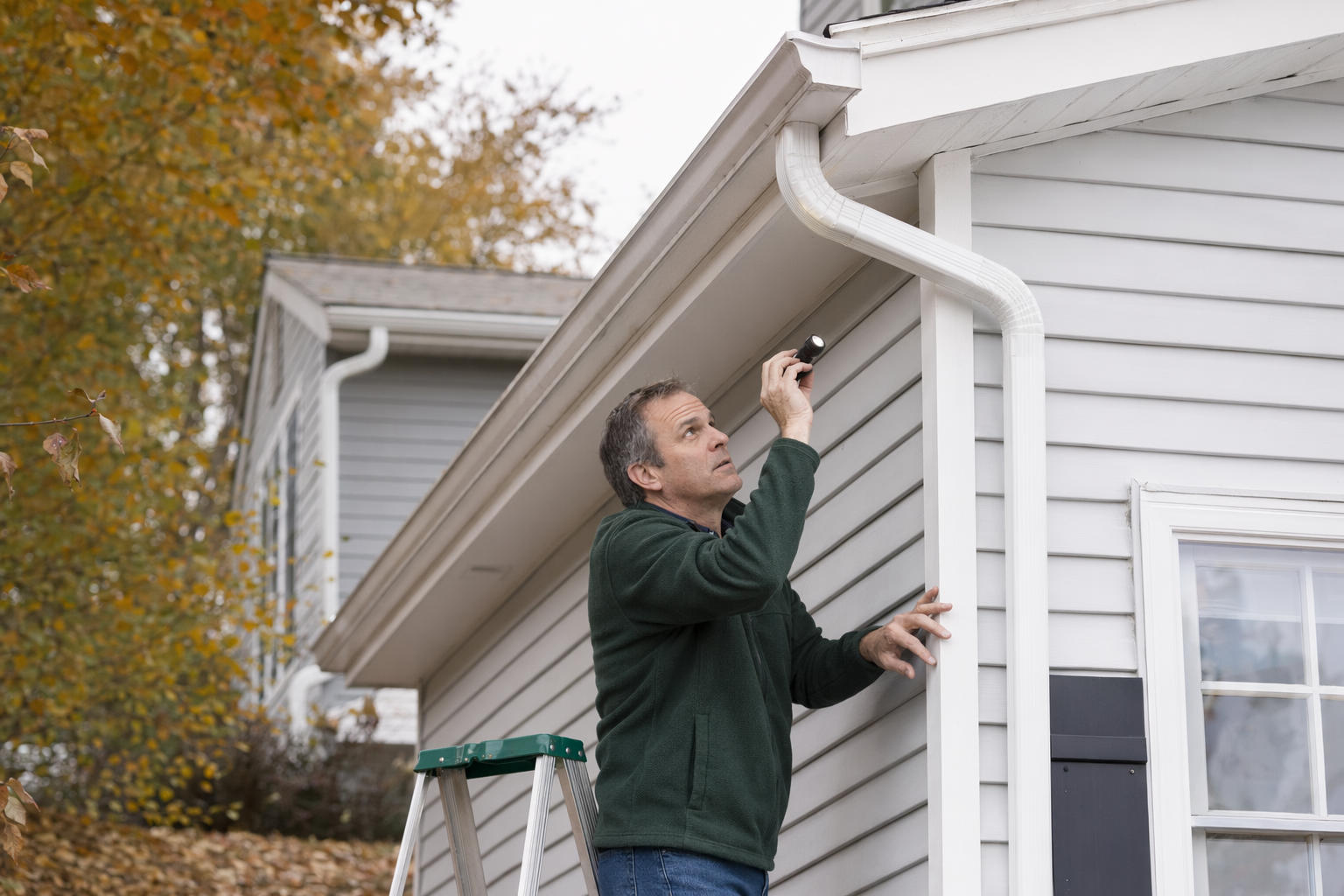
From the ground, you can look for obvious signs like sagging sections, visible seam drips, or overflow near entry paths and foundations. If water is spilling close to the foundation or winter ice dams are forming, it is smart to have a pro take a closer look soon.

Seamless gutters cost more upfront but usually mean fewer leaks and less maintenance, while sectional gutters are cheaper now but often need more attention later.
Common questions
Do seamless gutters never leak?
No. Seamless gutters usually have fewer leak points because they have fewer joints, but they can still leak at corners, end caps, outlets, or damaged sections.
Are seamless gutters worth the extra money?
Often, yes, if you want a cleaner look and less maintenance over time. But sectional gutters can still be a practical choice when keeping upfront cost lower is the priority.
Can I add gutter guards later?
Usually, yes. Many homes add guards after the gutters are installed, but the best type depends on the gutter shape, nearby trees, roof layout, and local weather.
How do I know if my current gutters should be replaced instead of repaired?
From the ground, watch for repeated leaks at seams, sagging runs, frequent overflow, rust, cracks, or sections pulling away from the house. A licensed, insured local gutter pro can tell you whether repair or replacement makes more sense.