Quick answers
What are fascia and soffit?
Fascia and soffit are parts of your home’s roof system that protect the wood under the roof. When gutters don’t do their job, water can reach these areas and cause rot—here’s what to look for and why pros ask about them.
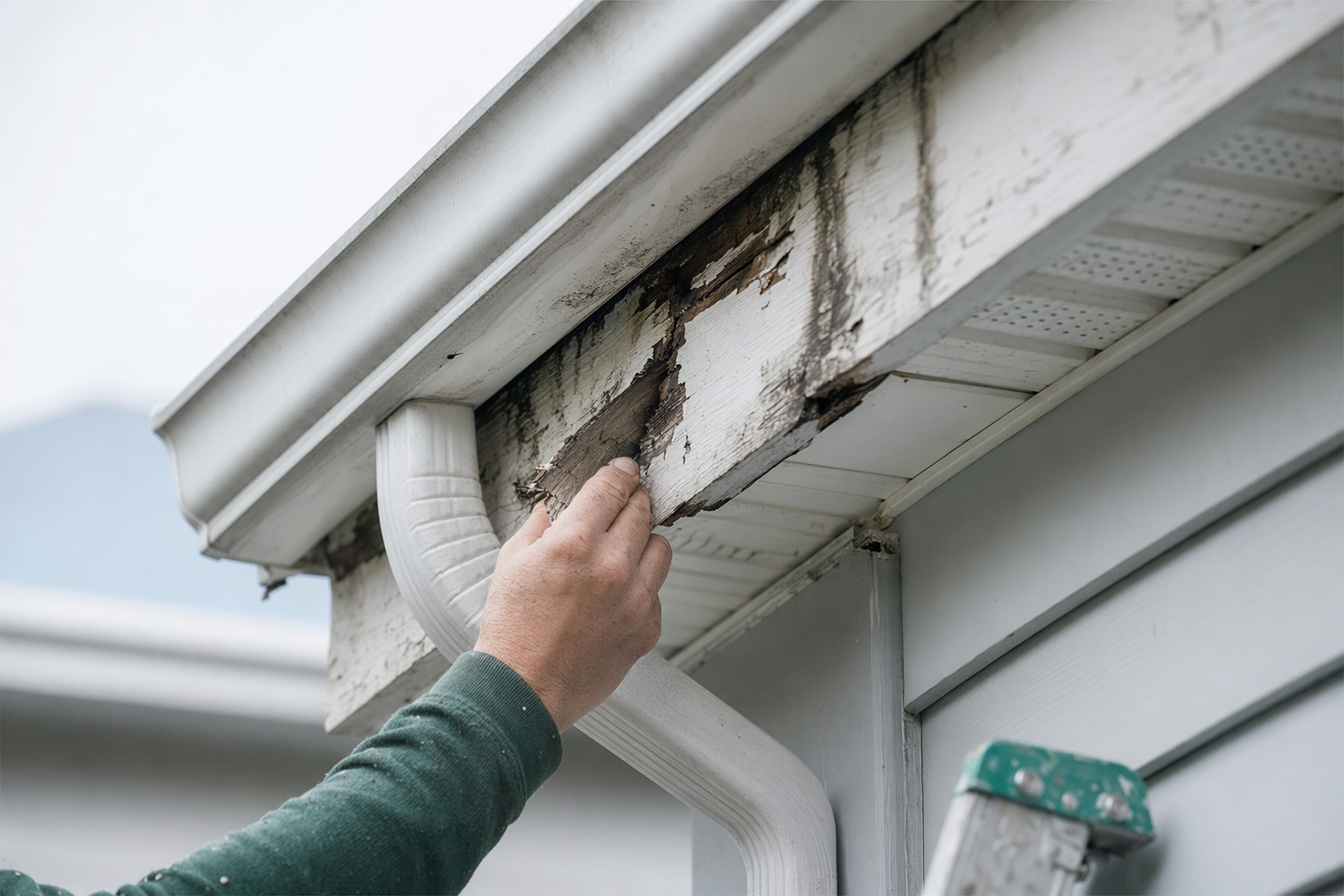
Fascia: the board gutters attach to
Fascia is the vertical board (or boards) along the edge of your roofline. If you look under the gutter, you’ll often see fascia behind or directly supporting the gutter hardware.
Because gutters sit along the fascia, fascia takes on a lot of “water exposure.” In good working condition, gutters carry rain away. When gutters overflow, leak, or clog, water can run onto the fascia instead—especially during heavy rain or melting snow.
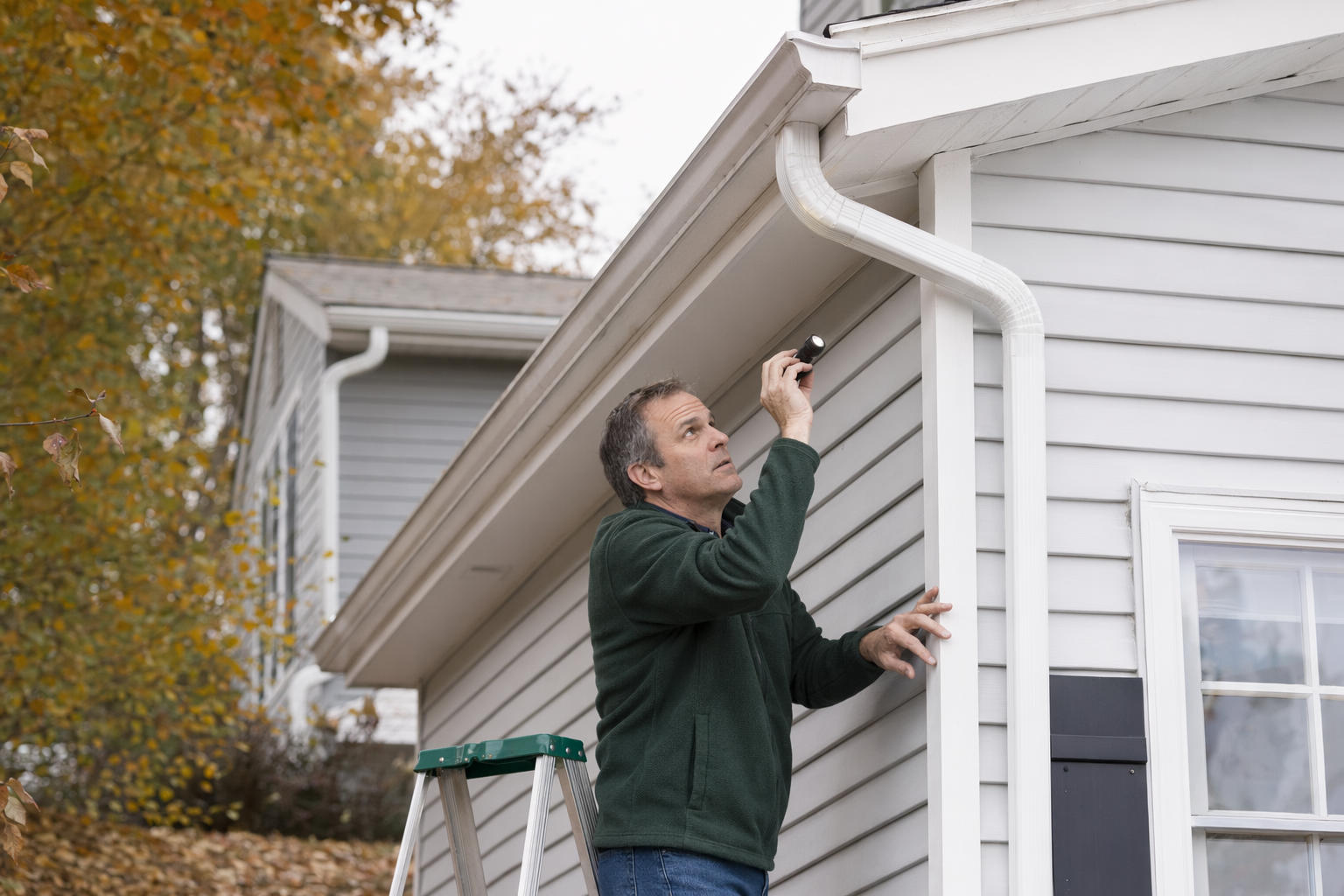
Soffit: the ventilated underside under the roof edge
Soffit is the material under the roof overhang, usually between the fascia and the home’s outer wall. It can be vented (with small openings) to let air move into the attic area.
Why airflow matters: proper ventilation helps reduce moisture buildup in the attic. If soffit gets wet repeatedly or ventilation is blocked, moisture can linger. That can contribute to problems like damaged wood, insulation issues, or unpleasant odors—depending on your home.
What can go wrong when gutters fail
When gutters are clogged, mis-sloped, loosely mounted, or missing sections, water may overflow near the roof edge. That overflow water can soak the fascia and then travel into joints and seams.
Water can also sneak behind gutter sections or under flashing when water backs up. Over time, constant wetting can lead to soft wood, crumbling edges, peeling paint, or dark staining along the roofline. These symptoms don’t always mean “emergency,” but they are a sign that gutter performance needs attention.
Common signs homeowners notice from the ground
You don’t need to climb a ladder to spot many warning signs. During daylight and in safe conditions, look along the roof edge from the ground.
Watch for peeling or bubbling paint along the fascia, sagging gutter sections, rusting fasteners, visible separation between gutter and fascia, water stains on exterior walls near downspouts, or puddling near the foundation after rain.
If you have an unusually wet smell in the attic or you see visible rot at the soffit vents (or blocked vents), that’s a strong reason to bring in a licensed, insured local gutter pro for an on-site look—especially because some issues can overlap with roof and ventilation concerns.
Why gutter pros ask about fascia and soffit
Even though EaveWise is not a gutter or construction company, we often hear homeowners say: “Why do they keep mentioning fascia and soffit?” The practical answer is that these parts help explain where water goes and where it may be backing up.
For a licensed gutter pro, fascia and soffit are part of the “water path.” A pro may check whether the gutter is properly supported, whether downspouts are routed correctly, and whether water is being directed away from the fascia and the home.
If you’re unsure what to ask, you can start with general questions about gutter function and whether the current system is likely causing water to spill near the roof edge. If you want help finding a pro, get matched at no cost.
Gutter guards: helpful, but not a full fix for every home
Many homeowners ask about gutter guards to reduce cleaning. Guards can help slow down leaves and debris, but most types still require occasional maintenance.
Different guard styles have trade-offs. Mesh and micro-mesh can reduce clogs but may collect fine debris over time. Screen styles can help with larger leaves, but smaller debris can still build up. Foam and brush types may trap debris differently and can wear out depending on weather and age. Reverse-curve designs can shed debris well, but even they may need periodic checking and clearing.
If you want a plain-language comparison, see are gutter guards worth it?. And remember: whether or not you use guards, gutters must be installed and maintained correctly to protect fascia and soffit from overflow.
How to get the right help safely
Ladders and roofs are genuinely dangerous. Even careful homeowners can slip or fall, especially on wet days or icy edges. For anything above ground level, it’s safer to hire a licensed, insured gutter pro.
A good first step is to describe what you’re seeing and when it happens. Is it after storms? During heavy rain? After snowmelt? Does water appear to track toward soffit vents or down near downspouts?
If you’re figuring out what gutter help might cost in your area, review typical costs. To get connected with a licensed local gutter pro for cleaning, gutter-guard / leaf-guard installation, downspout repair and rerouting, seamless gutter installation, or gutter repair / re-hanging, use get matched.
- If gutters overflow at the foundation, or if ice dams are forming, it can be more urgent—still, avoid DIY on ladders or roofs.
- If you notice rot or damaged ventilation areas, ask the pro to explain what they can help with versus what may require other specialists.

Fascia is the board along your roof edge that gutters attach to, and soffit is the underside under the overhang—both can get wet and damaged when gutters overflow, so a licensed local gutter pro can help you fix the water path.
Common questions
Where exactly are fascia and soffit on my house?
Fascia is along the roof edge, usually the vertical board the gutter attaches to. Soffit is the underside of the roof overhang, typically between the fascia and the outer wall, often with vent openings.
Do fascia and soffit problems always mean I need gutter replacement?
Not always. They can be damaged by years of overflow from clogged or poorly draining gutters, but the needed fix might be cleaning, re-hanging, downspout rerouting, or repairing the gutter system first. A licensed, insured gutter pro can assess the water path on-site.
How can I tell if my gutters are causing water to reach fascia or soffit?
Look for signs after storms: overflow spots near the roof edge, sagging or separating gutter sections, water staining along the fascia or near soffit vents, and puddling near downspouts. If you can safely observe from the ground, note what happens during heavy rain.
Will gutter guards stop fascia and soffit from rotting?
Guards can reduce how often debris clogs gutters, which can reduce overflow. But they do not eliminate maintenance, and they won’t fix incorrect slope, poor downspout routing, or existing damage. You may still need periodic checking and clearing.
Is it okay to inspect from the ground, or do I need to go on the roof?
In most cases, you can spot many clues from the ground and photos from safe angles. Going on a ladder or roof is risky, so for anything elevated, it’s better to hire a licensed, insured pro to inspect and explain options.