Quick answers
Why are my gutters overflowing?
Gutters usually overflow for a few common reasons: buildup, poor slope, clogged downspouts, or parts that are too small for the roof. The good news is that most overflow problems can be found and fixed with calm, planned maintenance.
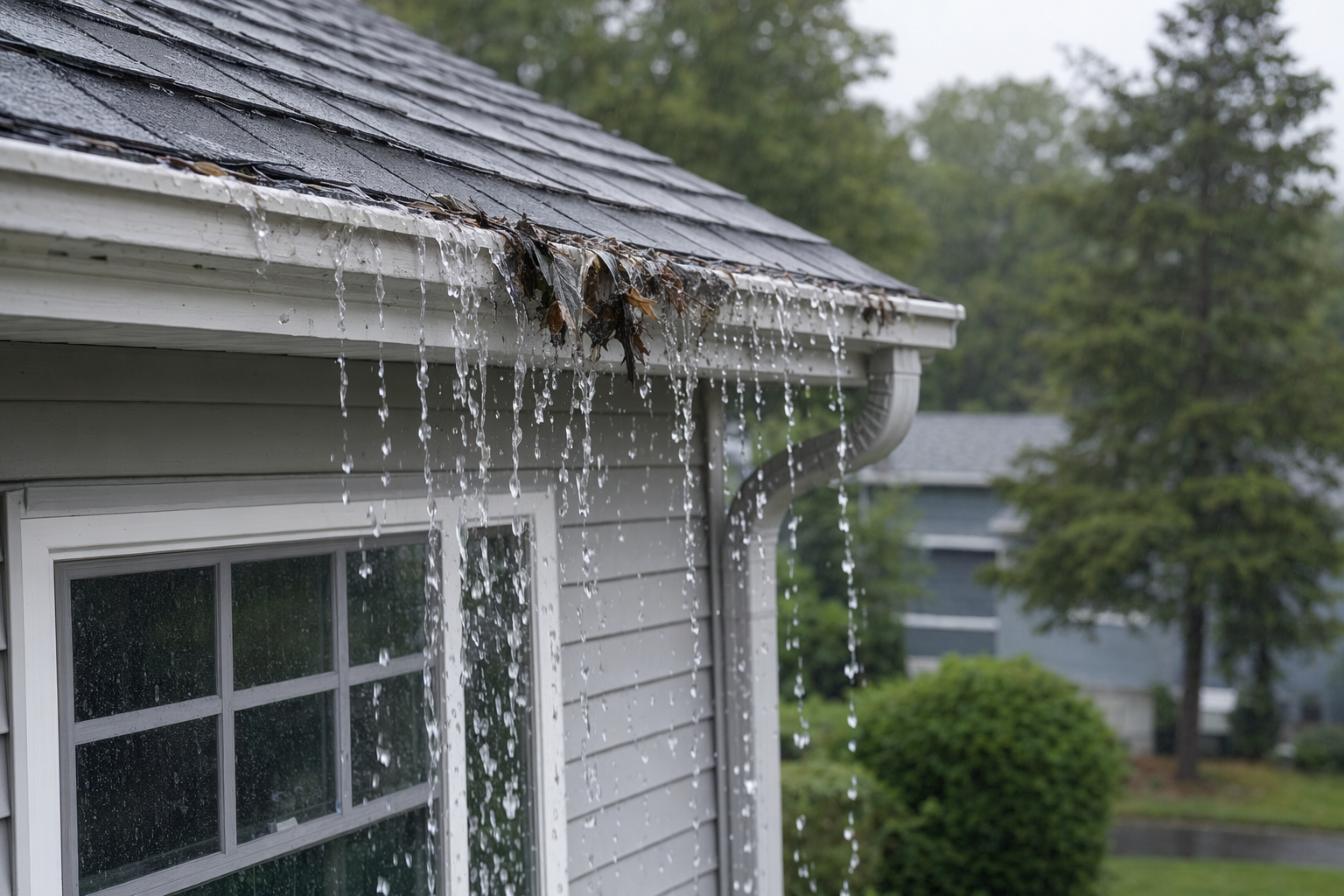
The most common reason: a clog somewhere in the system
When rainwater spills over the front or sides of a gutter, the first thing many pros look for is a blockage. Leaves, pine needles, roof grit, seed pods, and even small nests can slow the flow of water. If water cannot move fast enough to the downspout, it rises and spills out.
The clog is not always in the open gutter trough. It may be packed into the outlet hole where the gutter meets the downspout, or lower down inside the downspout itself. That is why one section may overflow even if the rest of the gutter looks fairly clear from the ground.
For homeowners, the safest approach is to check from the ground during or right after a normal rain. Look for water pouring over one spot, dripping from seams, or shooting out near an elbow in the downspout. If anything needs ladder work, we recommend hiring a licensed, insured local gutter pro. We can help you find one at no cost.

Sometimes the gutter is sloped the wrong way
Gutters are supposed to have a slight pitch, meaning a gentle slope that guides water toward the downspout. If the pitch is too flat, or if part of the gutter has sagged over time, water can pool instead of draining. Once enough water collects, it can spill over the edge even when there is no major clog.
You may notice this from the ground if water seems to sit in one section long after the rain stops. Another clue is overflow happening near the middle of a run instead of near the downspout. Loose fasteners, aging hangers, or a section that has pulled away from the fascia can all affect drainage. The fascia is the long board behind the gutter along the roof edge.
This is usually a repair or re-hanging job, not a crisis. But if water is repeatedly spilling next to the foundation, entry steps, or basement area, it is worth scheduling service sooner rather than later. A local pro can check the pitch and secure the gutter correctly.
Downspouts may be clogged, too few, or too small
A downspout is the vertical pipe that carries rainwater from the gutter down to the ground. Even if the gutter itself is open, the system can overflow when the downspout cannot move enough water away fast enough. That can happen because of a clog, a crushed section, too many sharp turns, or a downspout layout that is undersized for the roof area.
Homes with long gutter runs sometimes need more than one downspout. In other cases, the downspout location is not ideal, so water travels too far before it can exit. Heavy rain can expose these design limits. A gutter pro may suggest clearing the blockage, adding another downspout, upsizing a section, or rerouting the discharge point.
If you see water dumping near the foundation, that can be more urgent than overflow alone because repeated pooling next to the house is not ideal. It still is not a reason to panic. It is a practical reason to have the drainage setup checked and improved.
Overflow can also mean the gutter system is undersized or damaged
Not every overflowing gutter is dirty. Some systems are simply too small for the roof and local rain intensity, especially on steep roof sections or valleys where a lot of water concentrates quickly. A valley is the inside angle where two roof slopes meet. Those areas can send a surprising amount of water into one short section of gutter.
Damage matters too. Seams can leak. Corners can separate. Sections can twist, dip, or pull loose. If the front lip of the gutter is bent inward or outward, water may overshoot in a hard rain. Older systems may have several small issues at the same time, which is why the problem can seem inconsistent from storm to storm.
A licensed local gutter pro can tell the difference between a simple cleaning and a design problem that needs repair or replacement. If you want help sorting that out, we can connect you with a licensed, insured local pro for cleaning, repair, re-hanging, downspout changes, or seamless gutter installation.
Will gutter guards stop overflow?
Gutter guards can help reduce leaf and debris buildup, but they do not eliminate maintenance and they do not fix every overflow problem. If the real issue is bad pitch, too few downspouts, storm water from a roof valley, or a damaged gutter, guards alone may not solve it.
Different guard types have different trade-offs. Basic screens are often affordable, but larger debris can sit on top and finer material may still get through. Micro-mesh can block smaller debris better, but it may cost more and still needs occasional cleaning on top. Foam and brush styles are simple in concept, but they can trap debris over time and are not a fit for every climate or tree type. Reverse-curve systems can work in some setups, but they are not a cure-all and may still need maintenance.
That is why it helps to start with the cause of the overflow, not just the product. If you are comparing options, our guide on whether gutter guards are worth it explains the common types in plain language.
What to do next, safely and realistically
Start from the ground. During the next rain, note where the water goes over the edge, whether one downspout seems slow, and whether water is collecting near the foundation. Photos or short videos can help a pro understand the pattern. You do not need to diagnose every detail yourself.
Because ladders and roofs are dangerous, anything off the ground is best left to a licensed, insured professional. We are not a gutter company, and we do not do the work ourselves. We provide free educational help and match you with local gutter pros who can inspect the system and explain your options.
Typical costs vary by area and by the size and condition of the home. Cleaning is often priced by home size and access. Repairs, re-hanging, extra downspouts, or new guards change the range. You can read more on our costs page or browse more plain-language help if you are still figuring out what kind of service you need.

Most overflowing gutters need cleaning, pitch correction, downspout work, or repair—not panic—and we can help you find a licensed local pro for free.
Common questions
Is an overflowing gutter an emergency?
Usually no. It is often a maintenance issue that can be scheduled calmly. If water is pouring next to the foundation, icing at walkways, or backing up in a way that could cause more damage, it is smart to arrange service sooner.
Can gutters overflow even if they look clean?
Yes. Wrong pitch, sagging sections, clogged downspouts, loose hangers, or gutters that are too small for the roof can all cause overflow. A system can look fine from the ground and still drain poorly.
Should I just add gutter guards?
Maybe, but only after the real cause is checked. Guards can reduce cleaning, but they do not eliminate maintenance and they do not correct slope, damage, or undersized drainage.
How can I tell if the downspout is the problem?
From the ground, you may notice water backing up near one outlet, spilling from the gutter before it reaches the corner, or little water coming out below during a rain. A licensed pro can confirm whether the downspout is clogged, damaged, or undersized.
Can EaveWise send someone to look at it?
Yes. EaveWise is a free matching service, not a gutter contractor. We can help you find a licensed, insured local gutter pro for cleaning, repair, downspout work, guards, or replacement options.