Warning signs
Gutters leaking at the joints or seams
If your gutters leak at corners, joints, or seams, it’s usually a common fit-and-seal issue—not an emergency. Learn what typically causes the drips, what resealing may involve, and when seamless gutters can help—then we’ll help you find a local licensed pro at no cost.
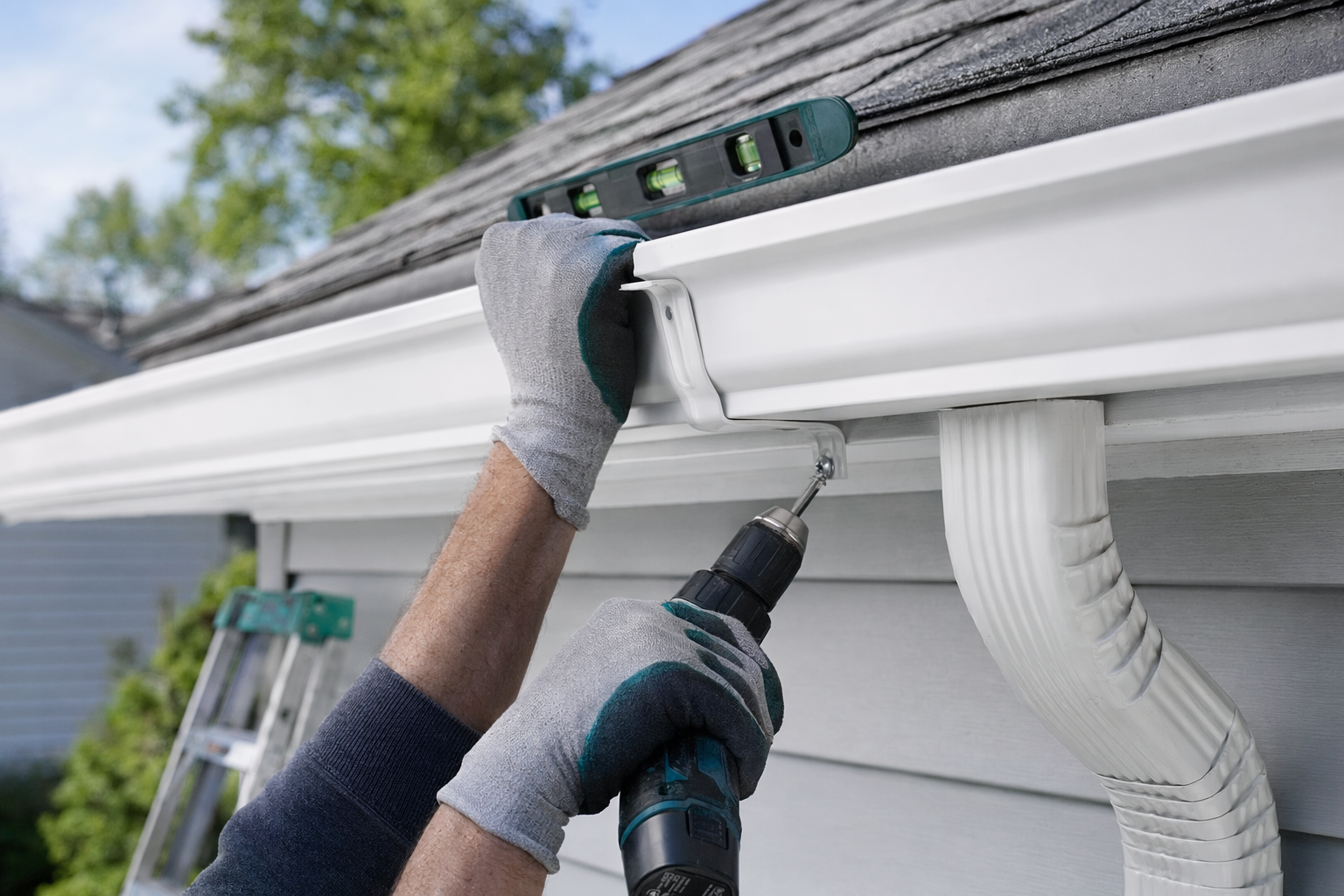
Common signs of leaking at gutter joints or seams
You might notice water dripping from the small connections where gutter sections meet—especially at corners, end caps, or where a downspout connects.
Sometimes the leak shows up only during a heavy rain, or you may see staining on fascia (the board under the roof edge) or damp areas near the garage/entryway.
Because gutters are part of a system—slope, hangers, seams, and downspouts—two homes can look similar, but the cause may be different. A local pro can spot the exact source by checking from the ground and observing how water flows.

Why leaks happen at joints: the usual causes
1) Sealant that has dried out or cracked. Many gutter seams are assembled with sealant. Over time, heat, cold, and expansion/contraction can make it fail.
2) Gutter misalignment or shifting. If the gutter sections don’t line up perfectly, water can find a path through the gap. This can happen after wind, impacts from falling branches, or as the house settles.
3) Sagging or incorrect slope. Gutters should drain toward the downspout. If a section has low spots, water can pool and increase pressure at the seams.
4) Loose hangers or fasteners. If the gutter is pulling away slightly, the joint seal may open.
5) Old materials or workmanship issues. Some older sectional systems may be more prone to leaking simply because the parts and seams are aging.
If you’re seeing leaks near corners, end caps, or long runs with multiple joints, the cause is often the seam or connection itself—but it’s still worth checking the drainage path.
What “resealing” typically involves (and what to ask about)
Resealing is the process of addressing seam leaks by cleaning the area, then applying the right sealant and/or replacing failed materials at the joints. A licensed, insured gutter pro will usually confirm the water path first, so they don’t just seal the symptom.
In many cases, resealing includes steps like: inspecting the joint, removing failing sealant where needed, checking the alignment and hangers, and then applying new sealant at the seam in a way that matches the gutter material.
Important questions to ask:
- Will you also check the gutter pitch (slope) and hanger tightness, not just the seam?
- Are the downspouts and overflow paths clear so water isn’t backing up?
- If the joint is repeatedly failing, what does that suggest—alignment, hardware, or the type of system?
No two leaks are identical. If the gutter section is sagging or the joint keeps opening, resealing alone may not hold long term.
When seamless gutters may make sense
Seamless gutters are made in long continuous sections measured to your home, so there are fewer joints along the run where leaks often start. If your leak is happening at multiple seams across a long stretch, fewer joints can reduce the number of potential leak points.
That said, seamless gutters aren’t “leak-proof.” There are still end caps, corners, and connections to downspouts—areas where water can still escape if the system isn’t installed with correct slope and secure attachments.
If you’re considering a switch, ask a pro to explain what will be reduced (fewer seams) and what will still need to be correct (pitch, hangers, downspout routing, and proper connection sealing). If you want to estimate projects and typical budgets, see our guide on gutter costs.
Gutter guards: do they stop seam leaks?
Gutter guards can reduce how often you need cleaning, but they don’t automatically stop leaks at joints. If water is escaping at a seam, guards usually won’t fix the underlying connection problem.
Trade-offs vary by type:
- Mesh / screen / micro-mesh: Often do a good job reducing leaves, but small debris can still get through, and they may need periodic inspection.
- Foam / brush / “foam-like” inserts: May reduce some debris, but they can clog depending on tree type, roof overhang, and airflow.
- Reverse-curve (hood-style): Designed to guide water into the gutter while letting some debris slide off, but performance depends on installation quality and your local conditions.
If guards are part of your plan, a good approach is: resolve seam/leak issues first, then choose the guard type that fits your home and climate. This is also safer for you—because anything off the ground should be handled by a licensed, insured pro.
Fixes can be seasonal—except when it’s more urgent
For most joint leaks, this is planned maintenance. It’s still best to handle it before repeated rains cause more damage, like staining on fascia or damp landscaping.
However, some gutter-related situations can be more urgent. If you’re seeing overflowing that’s pooling near the foundation, or ice buildup causing abnormal backup during cold weather, that may need faster help. In those cases, focus on getting the right inspection and safer options from a pro.
As a general rule, avoid climbing ladders or walking on roofs to “check quick.” Gutters and roof edges can be slippery, and the risk isn’t worth it. Instead, we can help you get matched with a licensed, insured local gutter pro who can inspect from the ground and discuss the best next step.

Drips at gutter joints are often from sealant failure, misalignment, or poor slope—so get a licensed local pro to inspect, and we’ll help you find one for free.
Common questions
Is a small seam drip during rain “normal,” or should I fix it?
A small drip usually isn’t ideal, even if it’s not causing flooding. Many seam drips get worse as sealant fails and water pressure increases. Getting an inspection sooner can help prevent staining and follow-up issues.
Do sectional gutters usually leak more than seamless gutters?
Sectional systems can have more joints along the run, and joints are common leak points. That said, seamless gutters can still leak at corners, end caps, and downspout connections if pitch and installation details aren’t right.
Will resealing the seams fix the problem permanently?
Resealing often solves seam leaks when the main issue is failed sealant or minor gaps. If there’s sagging, wrong slope, loose hangers, or repeated shifting, resealing alone may not last—ask the pro to check alignment and drainage.
Can clogged gutters cause leaks at the joints?
Yes. If water can’t flow freely due to buildup, it may back up and overflow at joints or corners. That’s why a good inspection also checks the downspout flow path, not just the visible drip point.
Should I install gutter guards before fixing leaking seams?
Usually it’s better to fix the leak first and then consider guards as a maintenance upgrade. Guards can reduce cleaning needs, but they don’t replace correct pitch, secure hangers, or proper seam/connection sealing.