Warning signs
Ice dams on the roof and gutters
Ice dams can form when snow melts and refreezes at the roof edge, often made worse by clogged gutters and poor winter drainage. Here’s what to look for, when it’s more urgent, and how to get matched with a licensed gutter pro.
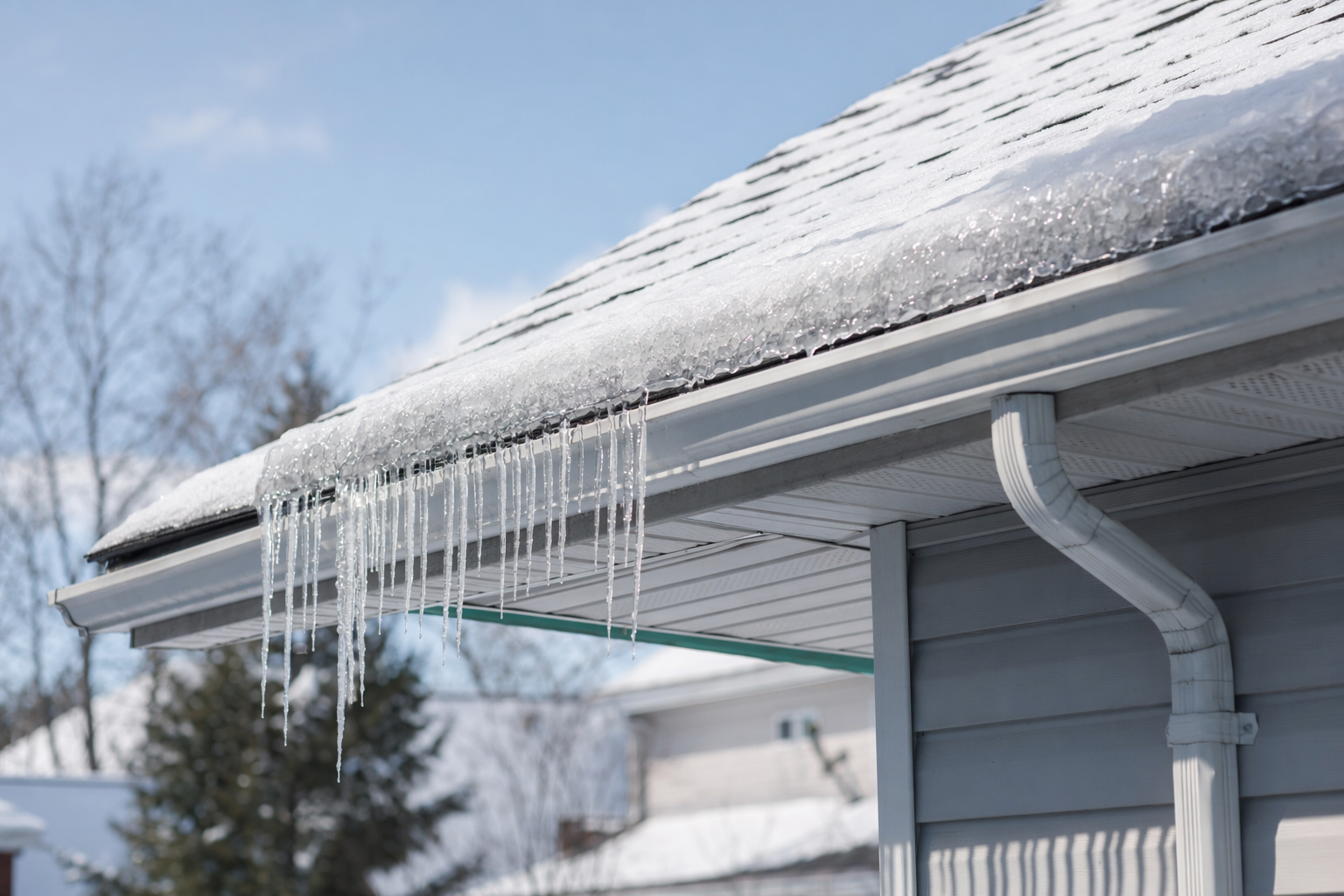
What ice dams are (and why they happen)
An ice dam is a ridge of ice that builds up along the edge of your roof. It usually forms because heat from inside the home warms the roof surface, snow melts, and the meltwater runs down—but then refreezes near the colder roof edge.
When that dam blocks the flow, water can back up under shingles and into the roof system. That’s why ice dams are not just “a winter nuisance.” They can lead to interior leaks and ceiling damage if they persist.

How gutters and drainage can contribute
Gutters and downspouts don’t cause ice dams by themselves, but they can make winter drainage worse when they’re blocked.
Common gutter issues in winter include overflowing water, ice forming in the gutter, and downspouts that can’t move meltwater away. If water can’t drain, it may refreeze around the roof edge and under the gutter line, adding to the ice buildup.
If you suspect a blockage, consider getting a winter check from a licensed gutter pro. For general maintenance timing, many homeowners plan gutter cleaning before peak winter weather, but real timing depends on your local climate and roof details.
Clues you may have an ice-dam problem
You may notice clear signs at the roof edge, including thick ice along the gutter line, “icicles” that keep growing, or water stains near ceilings and attic areas after a thaw.
Sometimes the first clue is overflow during a rain-on-snow or quick warm spell. Water that spills from gutters near the roof edge can indicate the drainage path is blocked.
If you’re not sure what you’re seeing, we can help you find out what to ask about. A local pro can explain what’s contributing in your specific setup—without guessing.
Safety risks: when winter roof work is urgent
Ice dams can be more urgent because they involve water that may reach areas you can’t see, plus the hazards of snow and ice near roof edges.
Also, ladders and roofs are genuinely dangerous in winter conditions (slippery surfaces, limited footing, and heavy ice). Even “small” roof-edge work can lead to serious falls. For safety, homeowners should avoid climbing or walking on a roof and should rely on a licensed, insured pro.
If you see active interior leaks, bubbling paint, new ceiling staining, or water coming from the attic area, consider acting sooner rather than later. While gutter work is helpful, the full ice-dam situation may involve multiple factors across the roof and home envelope—so it’s best to get qualified inspection guidance from professionals.
What a gutter pro can and can’t do (and why you should ask)
A licensed, insured local gutter professional can help with gutter-related items that affect winter drainage, such as cleaning and clearing debris, checking gutter alignment and slope, assessing downspouts and reroutes, and installing or adjusting gutter protection systems.
They can also discuss options like seamless gutter replacement, downspout repair, or downspout re-routing so water moves away from the foundation. In many areas, keeping meltwater directed properly helps reduce the chance of repeated overflow.
However, gutter pros are not the same as roofing contractors for roof structure or insulation decisions. It’s okay to ask what is within their scope and what may require an additional specialist. You can also review typical budgeting basics in our costs guide.
Gutter guards for winter: what they help (and trade-offs)
Gutter guards can reduce how often gutters need cleaning, which may help keep drainage paths clearer during the season. But they do not eliminate maintenance. Fine debris, seed material, and ice buildup can still happen depending on guard type, roof trees, and local weather.
Here are common trade-offs, in plain terms:
- Mesh or screen guards: Often good at blocking leaves, but they can still collect smaller debris and may require periodic cleaning.
- Micro-mesh guards: Smaller openings can catch more fine debris, but like any guard, they still need occasional attention.
- Foam or brush-style guards: Can be easier to maintain in some setups, but performance varies with debris type and can still need cleaning underneath.
- Reverse-curve guards: Designed to send water into the gutter while letting debris fall off the edge; they can reduce leaf blockages, but improper fit or heavy debris can still reduce flow.
If you’re considering guards specifically for winter drainage, ask your matched pro how your roof edge and downspout flow work today, and whether guards would reduce—but not remove—winter gutter maintenance.

Ice dams form when meltwater refreezes at the roof edge, and clogged gutters or blocked downspouts can worsen drainage—so get safe, licensed, insured help and plan gutter maintenance with a winter-friendly approach.
Common questions
If my gutters are overflowing, does that always mean an ice dam is to blame?
Not always. Overflow can come from clogged gutters, downspout blockages, or poor gutter pitch, and it can happen during thaws when meltwater can’t drain. Ice dams are one possible cause, but a local gutter pro can check where the water is backing up and why.
Should I try to chip ice off my roof edge or gutters myself?
It’s risky. Roof edges and gutters can become very slippery during freeze-thaw cycles, and ladders are especially dangerous in winter. For anything off the ground or near roof surfaces, hire a licensed, insured pro.
Will installing gutter guards stop ice dams completely?
Usually not. Guards can help reduce debris clogs, which may improve drainage, but they don’t change how heat and meltwater behave on the roof. Ice dams depend on roof temperature and melt/refreeze conditions, so treat guards as maintenance reduction—not a guaranteed fix.
How do downspouts affect winter drainage?
Downspouts move water from the gutters to an outlet away from the home. If they’re blocked, frozen, poorly routed, or discharging too close to the foundation, water may back up. A gutter pro can inspect downspout flow and recommend repairs or re-routing.
What should I tell a gutter pro when I request help?
Share what you’re seeing (ice at the gutter line, overflow, interior ceiling stains, and when it started), your ZIP code, and any recent gutter issues. If you’re not sure, just describe the pattern during warm spells. We’ll help you get matched with a pro to assess the gutter/drainage side of the problem.