Warning signs
Sagging or pulled-away gutters
If your gutters are sagging in the middle or pulling away from the wood behind them, they are usually too full, poorly supported, or both. Here’s what that often means, what to check from the ground, and how we help you find a licensed local gutter pro.
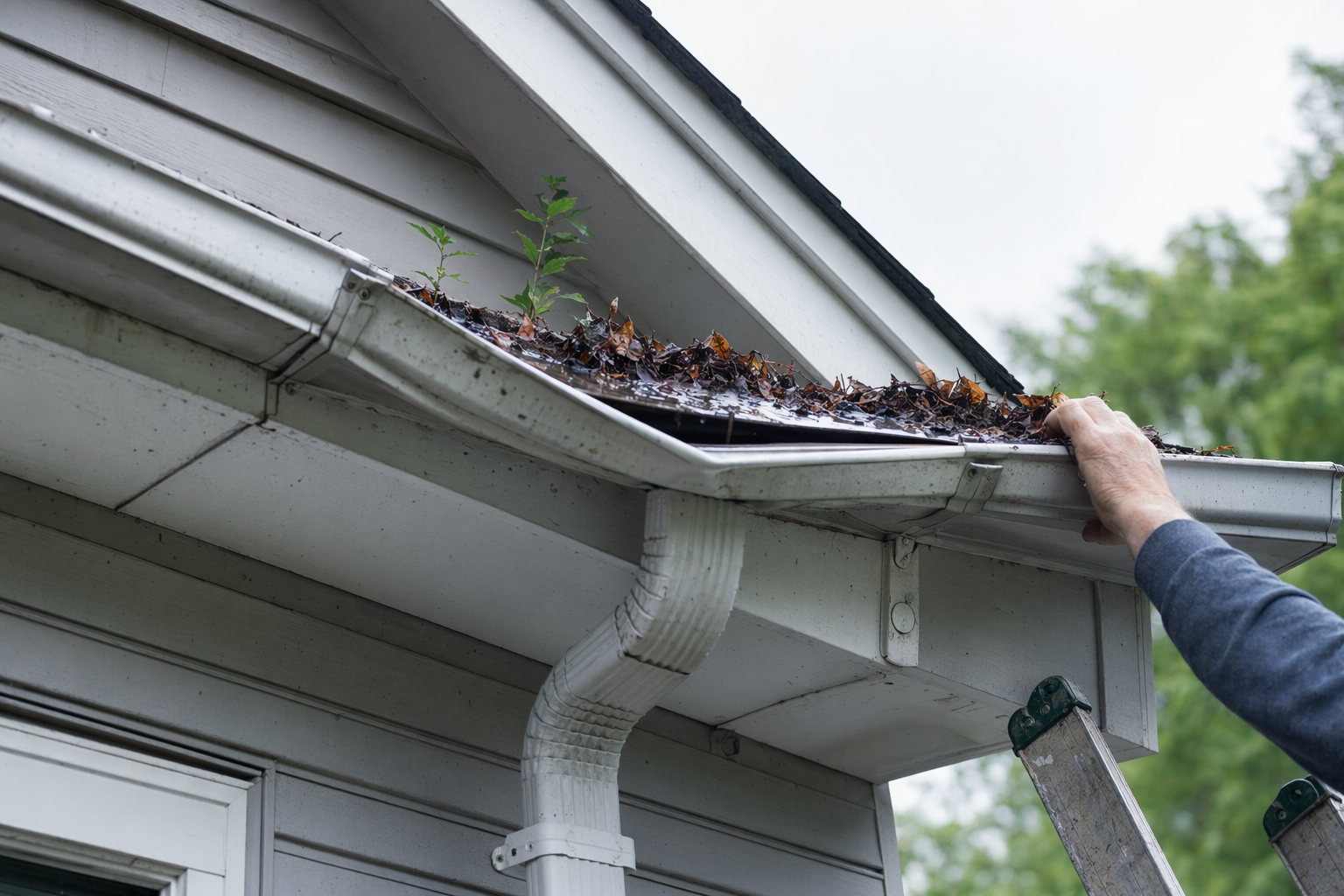
What sagging or pulled-away gutters usually mean
A gutter should sit close to the fascia, which is the long board along the roof edge where the gutter is attached. If the gutter droops, bows in the middle, or separates from that board, it usually means the system is carrying too much weight or the fasteners are no longer holding well.
The most common cause is simple buildup. Wet leaves, grit, roof shingle debris, and standing water add weight over time. In some homes, the gutter was also installed with too few hangers, the wrong slope, or aging spikes and ferrules that have loosened.
Sometimes the gutter itself is still usable and only needs to be cleaned and re-hung. In other cases, the metal is bent, seams have opened, or the wood behind it has softened from long-term moisture. A licensed, insured gutter pro can inspect the whole run and explain whether a repair makes sense or whether replacement is the better value.
If you are comparing issues, our problems hub can help you understand other common gutter symptoms in plain language.
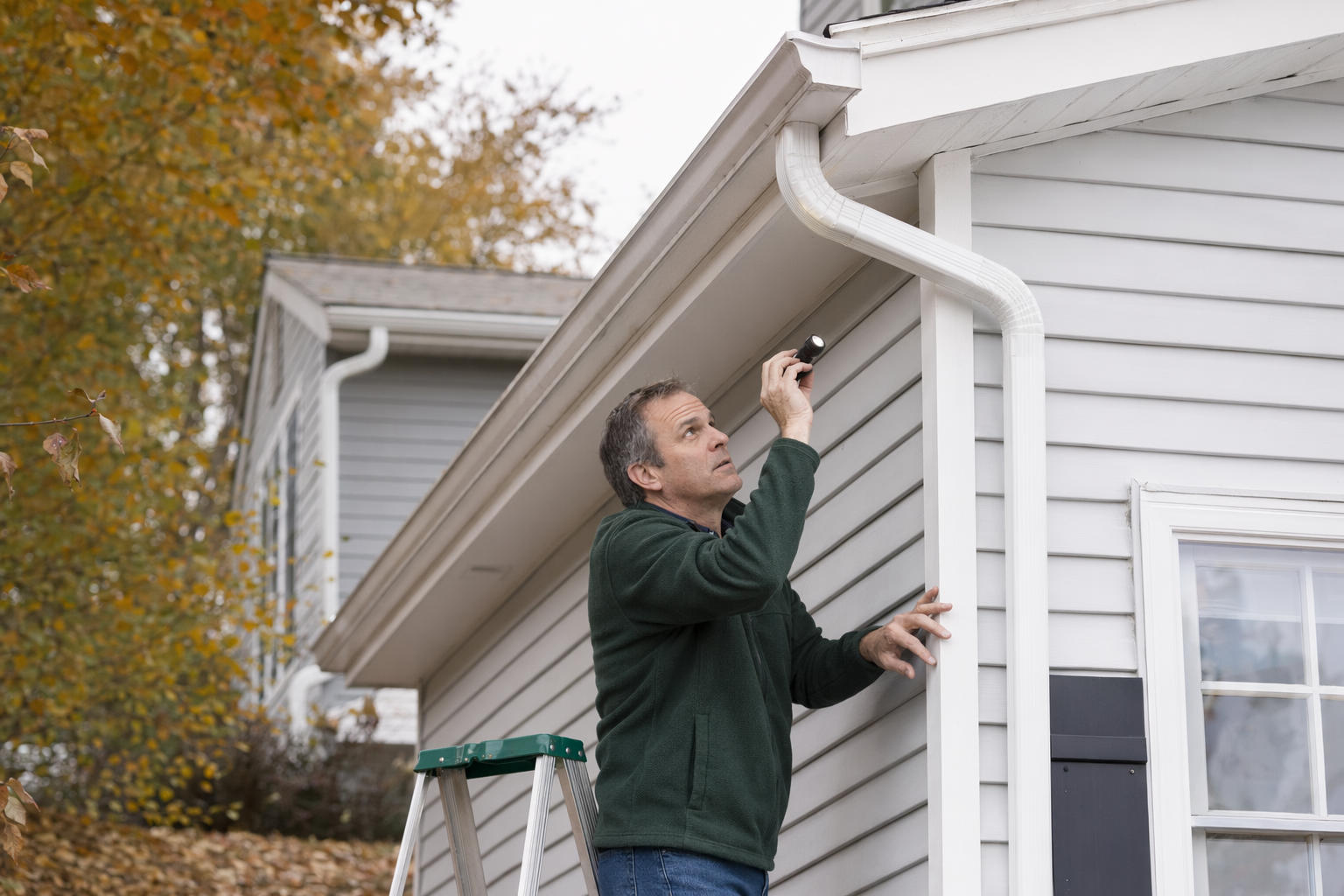
Why it matters, without panic
Sagging gutters are usually a maintenance issue, not a crisis. But they are worth handling before the next heavy rain. When water cannot move correctly to the downspouts, it can spill over the front or back edge instead of draining away from the house.
That overflow can leave muddy splash marks, wet the soil next to the foundation, stain siding, and damage flower beds. In colder areas, trapped water can also add weight and contribute to ice buildup. If water is pouring near the foundation or you already see ice dam problems, it is more urgent to get a pro involved soon.
There is also a safety issue. A pulled-away section can eventually twist further or drop more under load. That is one reason we suggest avoiding ladder work and getting help from a licensed local pro for anything off the ground.
What you can safely check from the ground
You do not need to climb up to notice the basic signs. Walk around the home and look up from the ground. Check whether the gutter line looks straight or whether one section dips low in the middle. Look for places where the back edge has separated from the fascia.
During rain, notice whether water runs to the downspout or spills over the side. After rain, look for standing water that stays in one section, dark streaks on siding, or washed-out soil below a low spot. If you can see plants growing in the gutter, heavy buildup is likely part of the problem.
You can also look at the downspouts, which are the vertical pipes that carry water down from the gutter. If the gutter is sagging near a downspout, the outlet may be clogged and holding water in the run. A pro can sort out whether the issue is blockage, poor slope, weak fastening, damaged fascia, or a mix of problems.