Services
Downspout repair and rerouting — keeping water away from the house
Downspouts help move rainwater away from your home. If yours are leaking, clogged, or pointed the wrong way, we help you find a licensed, insured local gutter pro for repair and rerouting—free to you.
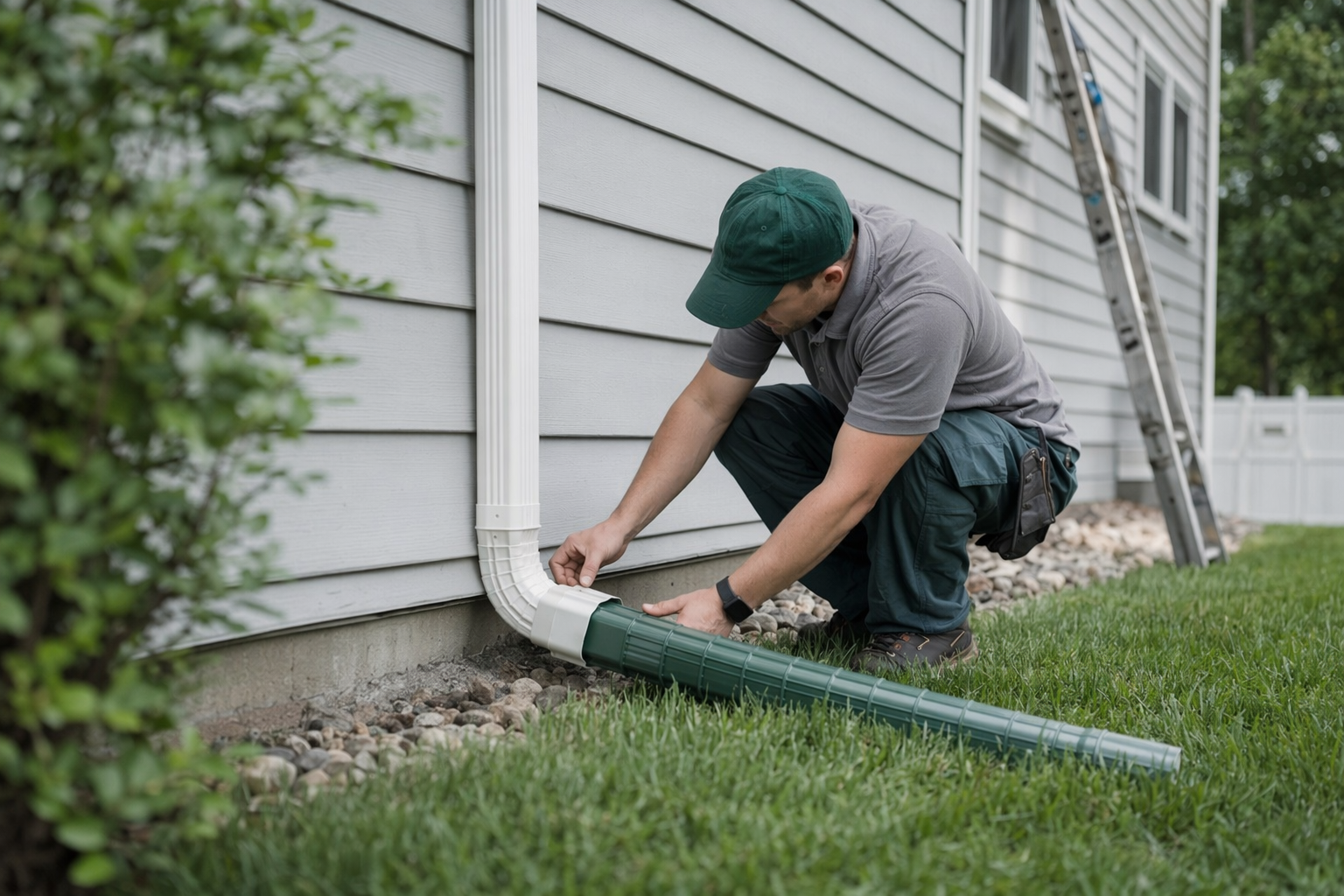
What downspout repair and rerouting means (in plain terms)
Downspouts are the vertical pipes that carry rainwater from gutters to the ground. When they don’t work correctly, water can splash near your foundation, soak soil, or run onto walkways and landscaping.
Downspout repair usually focuses on leaks and loose connections—like joints that separate, sections that pull away, or parts that corrode. Rerouting means changing the path so water leaves your home more safely, often farther away from the foundation.
If you’re unsure what’s going on, that’s normal. Many homeowners first notice signs like pooling near the house, damp spots in the crawl space, water running where it shouldn’t, or visible stains along the foundation wall. A local pro can look at how your downspouts connect to gutters, where they discharge, and how the slope around your home behaves.

Common issues we see (and what a pro typically checks)
Most downspout problems fall into a few common buckets. You might notice one issue—or several at once—especially after heavy storms or seasonal freeze-thaw cycles.
A gutter pro typically checks downspout alignment, the connection points to gutters (sometimes called the “drop” connection), the condition of fasteners, and whether the downspout discharges in the right direction. They may also look for splashback, gaps at seams, or sections that sag so water overflows.
Here are practical items they often evaluate:
• Discharge location: Water ideally lands on a safe area (not right against the foundation) and follows the site’s drainage.
• Downspout clogs: Leaves, debris, and small nesting material can build up, especially at the top where it connects to the gutter.
• Leaking joints: Small leaks can create ongoing dampness even if the gutter is draining “most of the time.”
• Routing changes needed: If the discharge ends too close to the house, rerouting may include extending the run, adding an elbow, or directing flow toward an appropriate discharge point.
What rerouting can involve (choices depend on your home)
Rerouting isn’t one-size-fits-all. The right plan depends on your roofline, gutter layout, soil slope, existing drains, and local weather patterns.
A local pro might:
• Extend the downspout so it discharges farther away from the foundation.
• Reposition an elbow or add a discharge extension to reduce splashback.
• Reroute around landscaping features where water is getting trapped.
• Repair or replace sections so joints fit tightly and stay aligned.
Sometimes homeowners also ask about underground drainage tie-ins. That can be useful in some cases, but it must be coordinated carefully with what’s already on the property. We can’t advise on the best structural drainage approach, but we can help you connect with a licensed, insured gutter pro who can assess the downspout system and discuss options.
Costs: what downspout repair and rerouting typically run
Costs vary by your home’s size, how many downspouts are involved, the material type (aluminum, steel, vinyl, etc.), how much rerouting is needed, and whether there’s hidden damage at connections.
As a typical range, many homeowners pay more for rerouting than for a simple repair. Cleaning or clearing minor clogs may be part of the visit, but downspout work often centers on fixing leaks, adjusting connections, and changing where water discharges.
If you want a quick overview before you request matches, see our Downspout repair and rerouting costs and our Gutter services guide so you can compare what “repair” versus “reroute” usually includes. Your final price can’t be guaranteed until a pro sees your home and measures the layout.
Downspout guards: do they help, and what’s the trade-off?
Some homeowners consider gutter guards to reduce what gets into gutters and, indirectly, into downspouts. It’s important to know that guards usually reduce cleaning—but they don’t eliminate it.
Different guard types filter debris in different ways:
• Mesh / micro-mesh / screen: Good for keeping leaves out, but fine debris can build up and still require periodic cleaning.
• Foam or brush styles: Can help with larger debris, but some styles trap sediment or need replacement over time.
• Reverse-curve types: Designed to guide water in while shedding debris, but performance depends on roof pitch, wind patterns, and how well they’re installed.
If you’re trying to prevent downspout clogs, ask the pro to explain how guards would affect maintenance for your specific gutter shape and tree coverage. For a deeper, honest comparison, read Are gutter guards worth it?.
- Guards reduce cleaning frequency, not guaranteed maintenance-free gutters.
- Even with guards, downspouts can still need occasional clearing.
How to get matched (free) with a licensed local gutter pro
We’re not a gutter company—we don’t install or repair. We help you get matched with a licensed, insured local gutter pro for downspout repair and rerouting (and related gutter work if it’s part of the fix).
Getting matched is free. Share a few details about what you’re seeing and where your home is located, and we’ll connect you with suitable pros who can evaluate your downspout system.
Before you submit, gather a simple note for yourself: Which downspout(s) seem to leak or overflow? Is the discharge too close to the foundation or splashing onto a walkway? Have you noticed pooling after rain?
To start, visit Get matched and include your ZIP code and a short story of what’s going on. If you prefer, you can also tell us what language you’re most comfortable with so we can route you to someone who can communicate clearly.
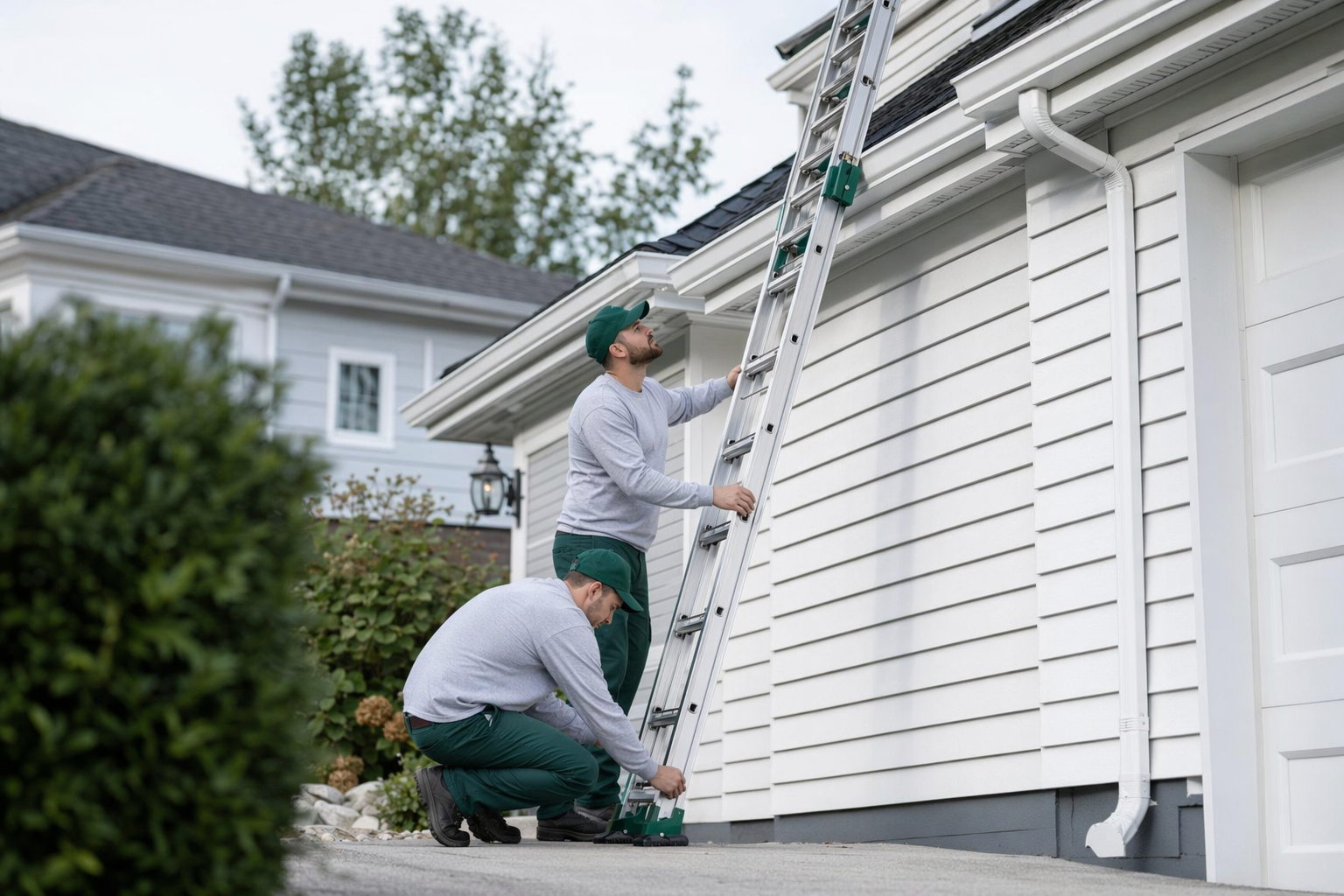
We help you find a licensed, insured local pro to repair and reroute leaking or misdirected downspouts so rainwater moves away from your home.
Common questions
How do I tell if my downspout is leaking versus just overflowing?
Look for water trails near the downspout joints, seams, or brackets after rain. Overflow usually shows water spilling out from the top connection area or around the gutter-to-downspout connection. If you’re not sure, a pro can inspect from the ground and check the discharge path.
Should I fix downspout problems right away?
Downspout clogs and leaks are usually not emergencies, but they are best addressed before they cause repeating moisture near the foundation. If you’re seeing significant pooling close to the foundation after storms, or you have active water intrusion concerns, treat it as more urgent and get a professional assessment sooner.
Can I reroute a downspout without replacing the whole system?
Often, yes. Many rerouting needs can be handled by adjusting elbows, adding extensions, repairing leaking sections, or re-securing brackets. The right approach depends on what’s already installed and how far the water needs to be moved.
Do gutter guards automatically prevent downspout clogs?
They can reduce the amount of debris that reaches the downspouts, but they don’t eliminate clogs in every home. Fine debris, wind-blown material, and partial coverage can still lead to buildup. You should still plan periodic maintenance.
Is it safe for a homeowner to inspect downspouts from a ladder?
Ladders and roofs are genuinely dangerous. For safety, it’s best to avoid climbing and instead describe what you see from the ground—like where water lands, whether joints look separated, and any damp stains you’ve noticed. Hire a licensed, insured pro for off-the-ground inspection and any work.