Services
Ice dam prevention — gutters, downspouts, and winter water
Ice dams often happen when winter meltwater can’t drain away, then refreezes along the roof edge. Learn how gutters and downspouts play a role, what to do before cold weather, and how we help you find a local licensed gutter pro—for free.
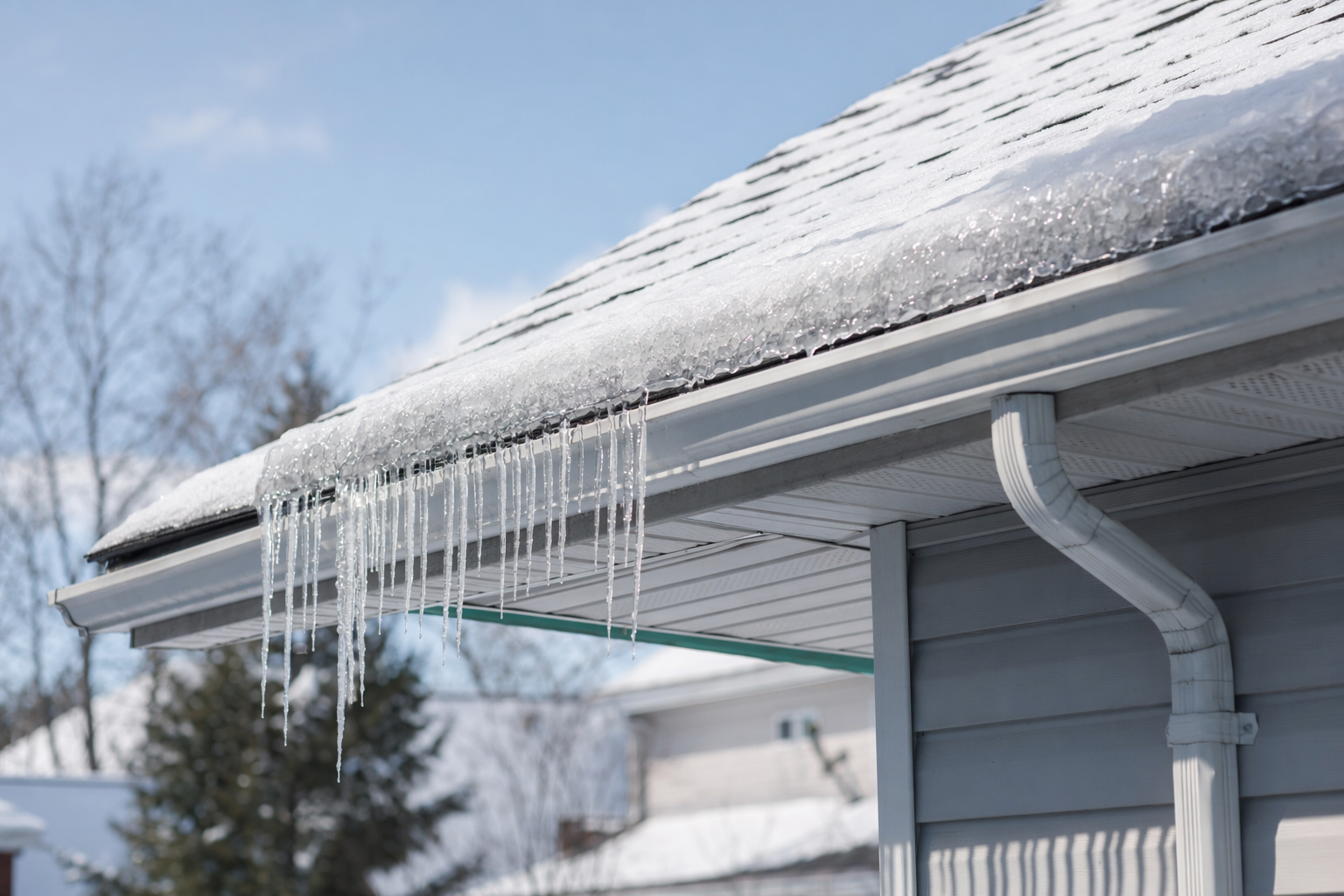
How ice dams form (and why gutters matter)
An ice dam is a ridge of ice that builds up along the edge of a roof. It can trap meltwater behind it, letting water seep where it shouldn’t.
Ice dams are influenced by roof heat loss, attic ventilation, and snow/temperature patterns—but your gutter and downspout system can also affect what happens at the roof edge. When gutters are clogged, or downspouts don’t drain well, water may back up and spill near the fascia (the board under the roof edge) and into places you don’t want wet.
Important: this page is general education. For any signs of interior leaks, major ceiling staining, or active water intrusion, contact a qualified professional right away, because those situations can be more urgent than routine gutter care.

What to check before winter (from the ground)
Before the first hard freeze, plan a simple “ground check.” You’re not climbing or going on the roof. You’re looking for signs of overflow risk and weak drainage.
Look at your gutters and downspouts during dry weather and after a light rain (or melting snow). If you see water spilling over the sides, overflowing near corners, or frequent icicles forming low near the downspout outlet, that’s a sign the system may be restricted or the downspout may not be sending water away effectively.
If your gutters are often full of leaves, pine needles, or debris, consider staged cleanings rather than one rushed job. In many homes, seasonal maintenance in late fall helps reduce blockages just when they matter most.
Clean gutters + clear downspouts = better drainage
Gutters are designed to collect roof runoff and guide it safely to downspouts. Downspouts then direct water away from the house foundation—ideally with splash blocks and proper routing.
When gutters are clogged, water can pool or back up. When that happens near the roof edge, meltwater may overflow and refreeze as ice. A local gutter pro can also check whether downspout lines are draining properly and whether sections need repair or rerouting.
If you’re preparing your home for winter, it’s reasonable to ask the pro about: (1) debris removal and flow, (2) downspout placement and discharge distance, and (3) whether any parts are sagging or pulling away from the fascia.
Ice dam prevention with gutter guards: what they help—and what they don’t
Gutter guards can reduce how often debris gets into your gutters. That can help keep water moving during rain and melting periods. However, guards do not automatically stop all clogs.
Trade-offs depend on the guard type:
- Mesh, screen, and micro-mesh: often block leaves, but smaller debris can still collect on top. Some require more occasional vacuuming/clearing.
- Foam and brush styles: may help with larger debris but can collect grime or fail when exposed to heavy debris load.
- Reverse-curve designs (water flows over the hood): can work well in many homes, but they can still need upkeep, and performance can vary with roof edge geometry and debris conditions.
In short: guards reduce cleaning, not eliminate it. If you’re exploring guards, we suggest discussing maintenance expectations and checking that the product matches your gutter size, roof edge shape, and local debris patterns. For a deeper look, read Are gutter guards worth it?.
Winter-ready downspouts: routing and drainage distance
Even with clean gutters, ice and water issues can worsen when downspouts don’t discharge far enough from the home or when they discharge into areas that don’t drain well. A typical goal is to route water away from the foundation so it can disperse safely.
If you’re seeing water run down the side of the house, freeze near the foundation, or pool near the base during melt events, it may be worth asking a pro to evaluate downspout rerouting or repairs.
Common related items to mention (so the pro can assess them): downspout extensions, underground drain connections (if present), and whether downspouts are being blocked by landscaping, grading, or surface obstructions.
When ice dams are more urgent (and what to do next)
Some situations are more urgent than routine winter gutter maintenance. If you notice ceiling stains, bubbling paint, wet drywall, or water coming in during storms or melt cycles, treat it as an active leak—not just a clogged-gutter problem.
If you’re not sure whether what you’re seeing is part of an ice dam or something else, the safest move is to document what you observe from inside and outside (photos can help) and contact qualified pros. Because ladders and roof work are genuinely dangerous, avoid climbing or walking on roofs. A licensed, insured gutter pro can help with gutter and downspout items; other specialists may be needed for roof/attic causes.
To get help planning your winter maintenance, you can get matched with a licensed local gutter pro for cleaning, gutter-guard installation, downspout repair and rerouting, seamless gutter installation, and gutter repair or re-hanging. The matching service is free.
How EaveWise helps you find the right local gutter pro (for free)
EaveWise is not a gutter company. We help you find a licensed, insured LOCAL gutter pro for the gutter and downspout parts of winter prep.
Tell us what’s happening (for example: clogged gutters, overflow, frequent icicles near the downspout, or downspouts that don’t drain away). We’ll connect you with pros in your area who can review your situation and talk options with you.
If you’re budgeting, explore typical expenses in gutter costs before you reach out. And to understand the range of work available, browse services.

Ice dams are often worsened by drainage problems—so focus on clean, flowing gutters and downspouts, consider guards cautiously, and use our free matching to connect with a local licensed pro.
Common questions
Will cleaning my gutters alone prevent ice dams?
Cleaning can help if debris or overflow is contributing to water backing up near the roof edge. But ice dams can also come from roof/attic heat loss and ventilation issues, so gutter care is one helpful part of prevention, not the only factor.
Do gutter guards stop ice dams completely?
No. Gutter guards can reduce how often leaves and debris get into gutters, which may help water flow. However, snow melt still happens and small debris or ice can still collect, so periodic maintenance is usually still needed.
Why do I get icicles under the gutter edge?
Icicles often form when meltwater reaches the cold gutter area and refreezes. If gutters or downspouts are restricted, overflow can worsen the situation. A pro can check for blockages, proper flow, and downspout discharge.
Is it safe to check my gutters on a ladder in winter?
Ladders and icy surfaces are risky, even for experienced homeowners. For safety, avoid climbing in winter and have a licensed, insured pro inspect and handle off-ground work.
What should I ask a gutter pro for an ice-dam-related problem?
Ask them to focus on gutter and downspout flow: whether the gutters and downspouts are clear, if there are signs of sagging or improper pitch, whether downspouts drain far enough from the foundation, and whether any repair or rerouting is needed. If there are signs of interior leaks, ask about next steps and the need for other specialists.