How we've helped
A first-time homeowner avoided an overpriced guard upsell
A first-time homeowner used EaveWise to compare local gutter quotes, ask better questions, and skip a pricey guard upgrade that did not fit the house. We did not do the work — we helped them find licensed local gutter pros to evaluate it.

The situation
A first-time buyer moved into an older home with mature trees nearby. After the first heavy rain, they noticed water spilling over one corner of the gutters and a downspout that seemed to dump water too close to the foundation.
They were new to home maintenance and were not sure what was normal. They had also heard that gutter guards could "solve" cleaning forever, which sounded appealing. But the first estimate they received focused almost entirely on a premium guard system instead of starting with the basics: cleaning, checking slope, and making sure the downspout carried water away from the house.
That is where EaveWise came in. We are not a gutter company, and we do not install, clean, or repair gutters. We help homeowners understand the options and get matched, for free, with licensed, insured local gutter pros.
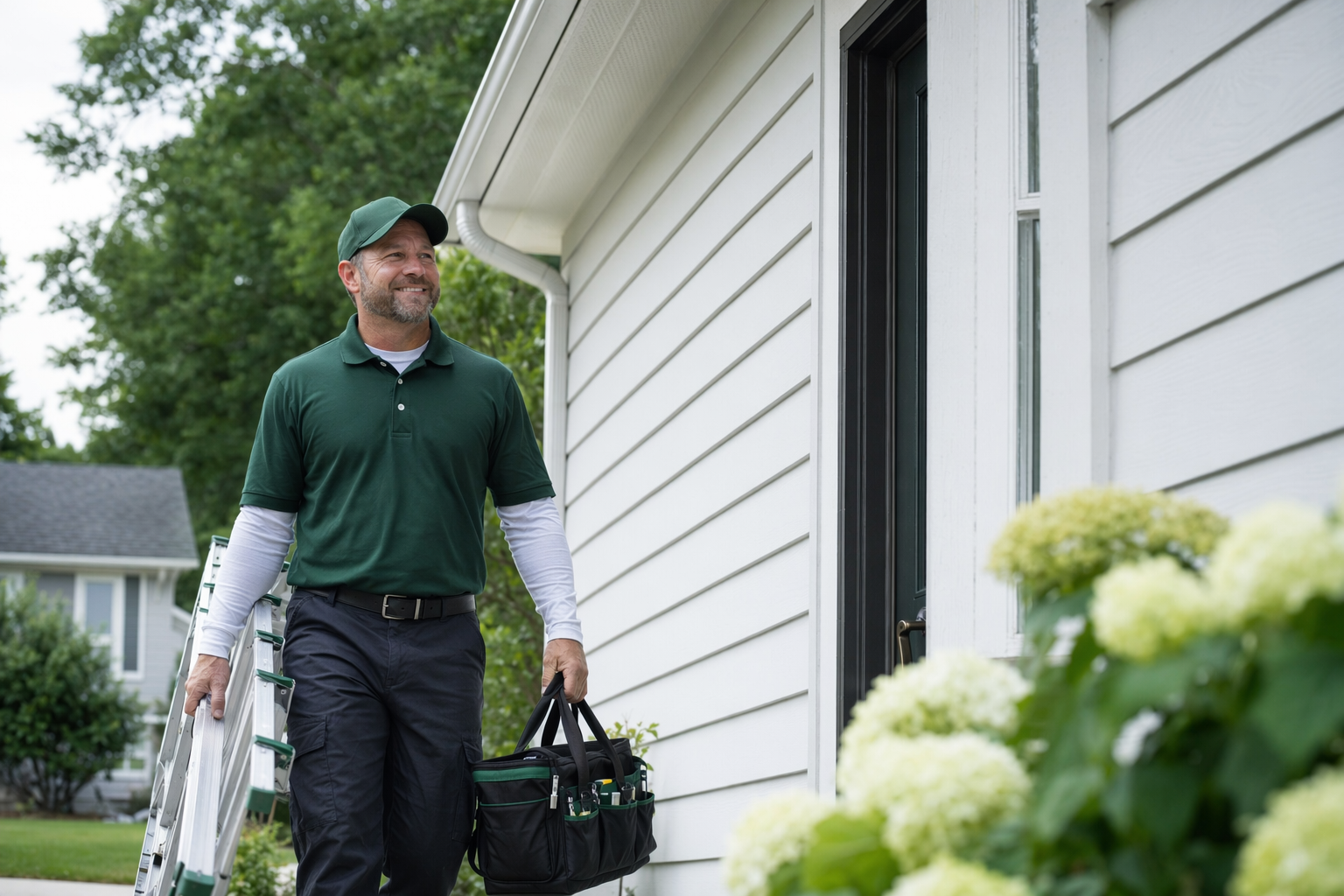
What made the first quote feel off
The homeowner's main concern was simple: was the overflow caused by clogged gutters, a loose section, poor pitch, or a bigger drainage problem? Instead of walking through those possibilities in plain language, the first sales visit quickly turned into a push for an expensive guard package.
That does not mean guards are always a bad idea. In the right setting, they can reduce how often gutters need to be cleaned. But they do not eliminate maintenance, and they are not the first answer to every problem. If a gutter is loose, misaligned, undersized, or draining badly, a guard on top does not fix the root issue.
For a new homeowner, this can be confusing. Terms like pitch, fascia, seamless, and downspout rerouting are not always explained clearly. Pitch means the slight angle that helps water flow toward the downspout. Fascia is the board along the roof edge where gutters are often attached. A downspout is the vertical pipe that carries water from the gutter down to the ground.
How comparing quotes helped
Through get matched, the homeowner connected with local gutter pros who could look at the same house and explain the problem in a more practical way. The goal was not to hunt for the lowest number. It was to compare scope: what each pro believed actually needed to be done first.
Two of the pros started with ground-level observations and a routine maintenance mindset. They noted that the gutters appeared serviceable overall, but likely needed cleaning, a minor re-hang in one sagging section, and a downspout extension or reroute so runoff moved farther from the foundation. One also pointed out that any inspection involving height should be done by a licensed, insured pro, since ladders and roofs are dangerous.
That changed the conversation. Instead of jumping straight to a full guard package, the homeowner could separate immediate needs from optional upgrades. A basic service plan made more sense: restore proper drainage first, then decide whether guards were worth it after seeing how the system performed through a season.
The guard decision: useful, but not magical
One of the most helpful parts of the process was hearing honest trade-offs about guard types. Mesh and micro-mesh guards can do a good job keeping out many leaves, but fine debris can still collect on top or in places where water flow is heavy. Screen guards are often simpler and may cost less, but larger openings can let in smaller debris. Foam and brush styles can be easy to understand, yet they can trap debris over time and may need earlier replacement. Reverse-curve designs can work in some setups, but they are not ideal for every roofline or debris type.
The homeowner's property had some leaf drop, but not the kind of constant debris load that automatically justified the most expensive option. Since the immediate issue looked more like overdue cleaning plus minor correction, paying a high premium for guards right away did not seem necessary.
In the end, the homeowner chose to handle the basics first and postpone any guard installation. That was not because guards are bad. It was because the house did not clearly need that upgrade yet. For this property, a measured approach was more sensible than a one-size-fits-all sales pitch.
What the homeowner actually chose
They selected a local licensed, insured gutter pro for a straightforward scope: clean the gutters, correct the sagging area, and improve how the downspout discharged water away from the home. That addressed the symptoms they could see from the ground without turning a maintenance issue into a much larger project.
This did not come with any promises from us about outcome, cost, or future performance. Costs vary a lot by region, home height, gutter length, debris level, and access. But in many areas, basic cleaning and minor repair work is far less than a full premium guard install, which is exactly why comparing the actual scope matters.
After the work, the homeowner planned to monitor the gutters during the next storms from the ground. If leaves became a repeat problem, they could revisit guard options later with better information and less pressure.
Why this story matters for other homeowners
This case is a good reminder that gutter care is usually planned, seasonal maintenance. Overflow in one area does not always mean you need a whole new system or the highest-end add-on. Sometimes the right first step is much simpler: cleaning, a small repair, or better water direction at the bottom of the downspout.
It is also a reminder that new homeowners should feel comfortable asking basic questions. What problem are we fixing first? Is this repair necessary now, or optional? Will guards reduce cleaning, or is someone implying they eliminate it completely? A good local pro should be able to explain the difference in plain English.
If you are sorting through similar quotes, EaveWise can help you compare options without pressure. Learn how it works, read more stories, or use our free service to get matched with a licensed local gutter pro.

This homeowner avoided paying for guards too soon by comparing quotes and fixing the real drainage issues first.
Common questions
Do gutter guards mean I never have to clean gutters again?
No. Guards can reduce cleaning, but they do not eliminate maintenance. Debris can still collect on top, around openings, or in parts of the system.
How do I know if I need guards or just a cleaning?
Start with the actual problem. If gutters are clogged, sagging, or draining poorly, a licensed local gutter pro can help determine whether cleaning and minor repair come first before any guard upgrade.
Should I inspect the gutters myself?
It is safer to check from the ground for visible overflow, leaning sections, or downspouts dumping water too close to the house. Ladders and roofs are dangerous, so anything off the ground is best handled by a licensed, insured pro.
Is overflow ever urgent?
Usually gutter care is routine seasonal maintenance. But if water is pooling near the foundation or ice dams are forming, it is smart to have a local pro look sooner.
What does EaveWise do?
We do not clean, install, or repair gutters. We help you find and compare licensed, insured local gutter pros at no cost to you.