How we've helped
Stopping basement seepage by fixing the downspouts
A simple downspout change can make a big difference. This anonymized story shows how one homeowner reduced basement seepage by having a local gutter pro extend and reroute water farther from the house.
A common problem after heavy rain
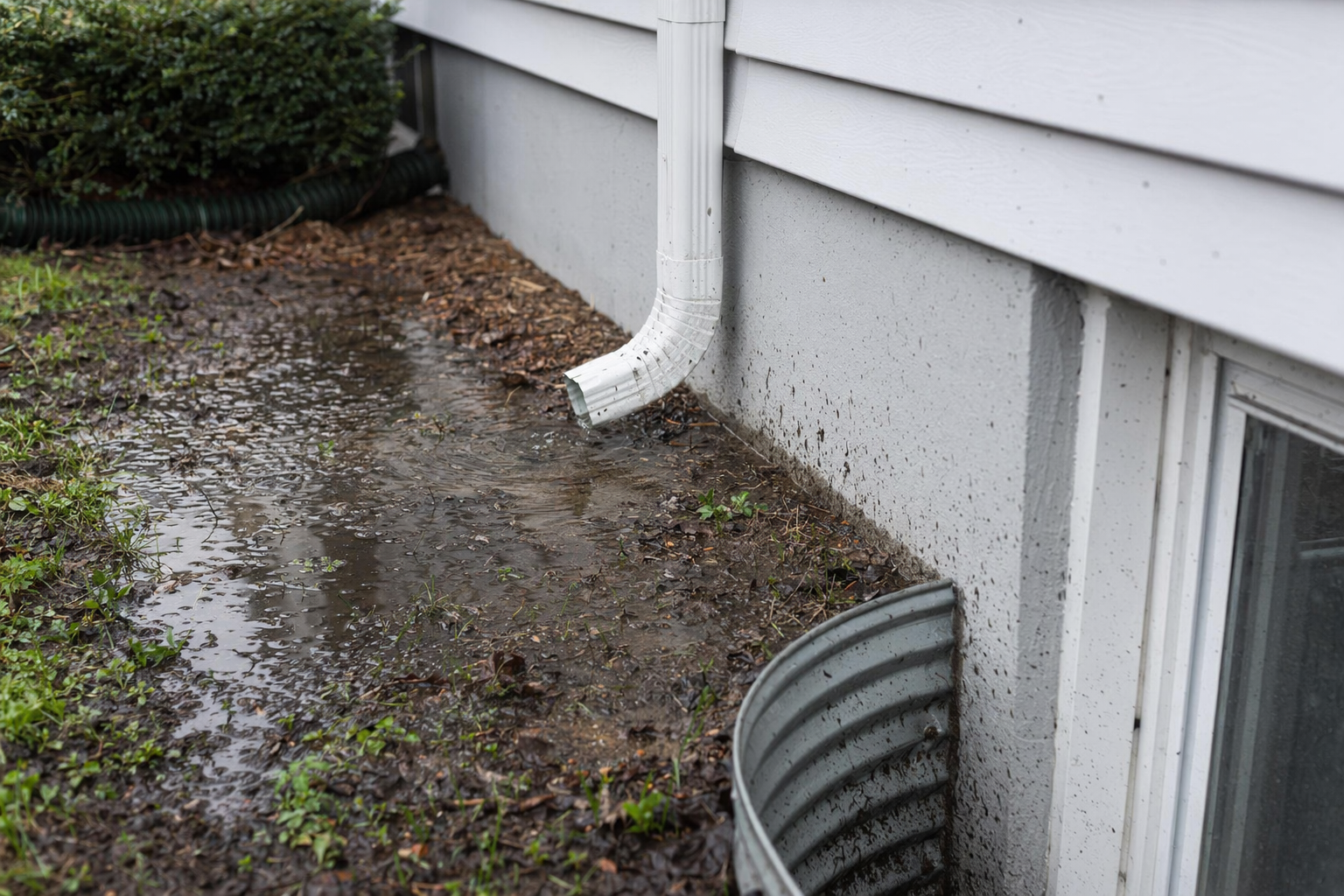
A homeowner contacted us after noticing a damp basement wall and small puddles near one corner of the floor after storms. The problem was not dramatic, but it kept coming back. They wanted to understand whether the gutters and downspouts could be part of it.
From the ground, the pattern was pretty clear. One downspout emptied close to the foundation, and another sent water toward a walkway that sloped back toward the house. The gutters themselves were not falling off or visibly broken, but the water was not being carried far enough away.
This is a common issue. Gutters catch roof runoff, and downspouts are supposed to move that water away from the home. If the discharge point is too close, water can soak the soil next to the foundation and sometimes show up as seepage in a basement or crawl space.
What the local gutter pro found
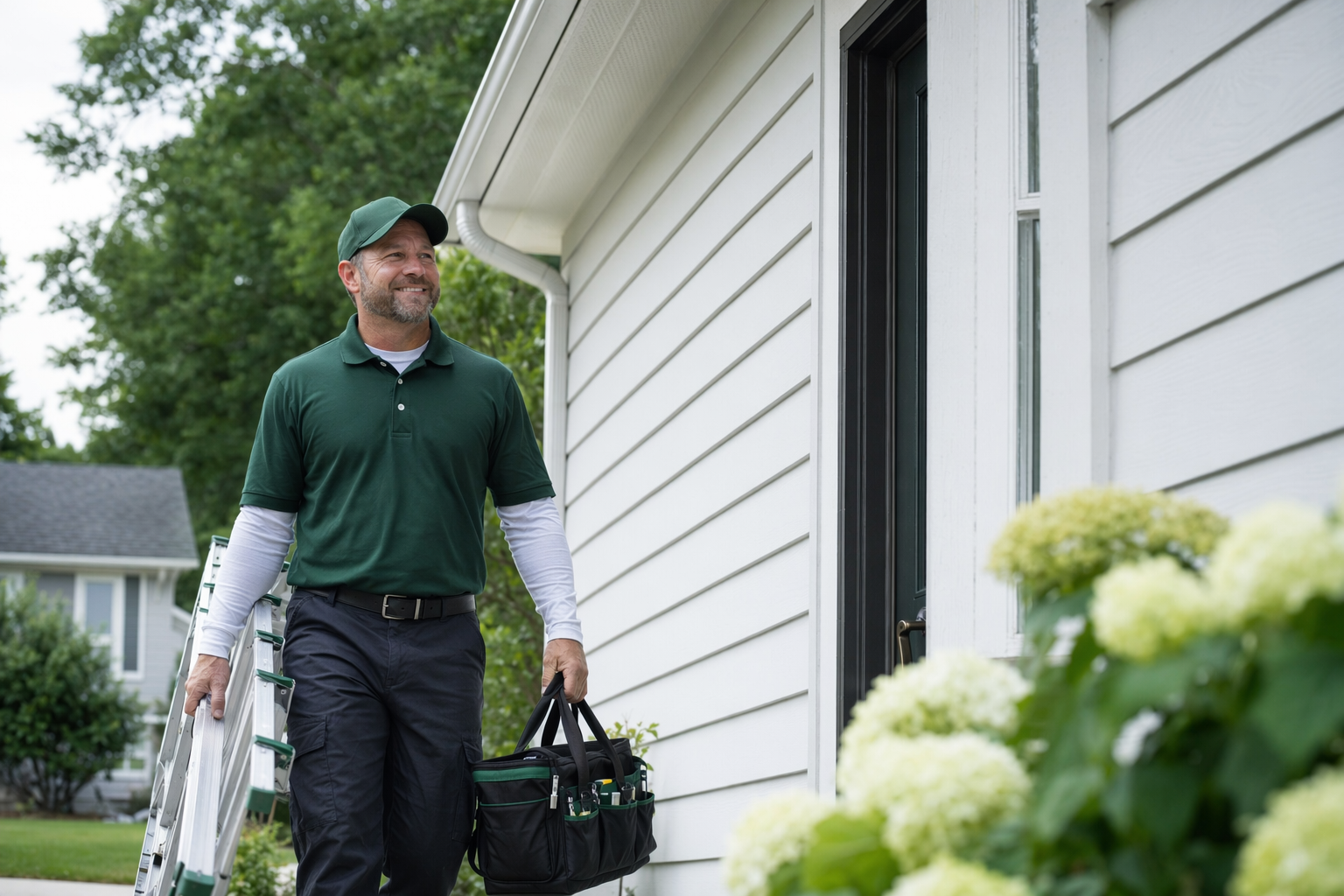
Because ladders and roof edges are dangerous, we encouraged the homeowner to have a licensed, insured local gutter pro inspect the system rather than try to fix it alone. We help homeowners get matched for that kind of evaluation at no cost.
The pro found a few practical issues. One downspout elbow was directing water into a short splash area that did not carry it far enough from the home. Another section was clogged with debris, so water was slowing down before it reached the bottom. There were also signs that one gutter run had a weak pitch, meaning it was not sloped quite enough to move water efficiently toward the downspout.
Nothing here suggested a dramatic roof failure. It looked more like overdue exterior drainage maintenance. That is often the good news with gutter-related moisture issues: sometimes the fix is about improving water control, not replacing everything.
The changes that helped
The homeowner chose to have the downspouts cleaned, adjusted, and rerouted so water discharged farther from the foundation. One outlet was extended to send runoff into a better drainage path away from the house. Another was re-aimed so it no longer emptied toward a surface that pushed water back toward the wall.
The pro also corrected the pitch on part of the gutter run. In plain English, pitch is the slight slope that helps water flow toward the downspout instead of sitting in the gutter. A small adjustment can improve how the whole system drains.
This was not presented as a universal cure for every wet basement. Basement moisture can have more than one cause, including grading, cracks, or underground drainage issues. But in this case, improving where the roof water went was a logical first step.
What happened afterward
After later rains, the homeowner reported that the usual damp spot did not return in the same way. The area around the problem corner stayed drier, and the basement seepage they had been seeing after storms improved.
That does not mean every similar home will get the same result. Soil type, lot slope, rainfall, and foundation details vary a lot by area. Still, this case is a good example of why downspout placement matters more than many homeowners realize.
If water is pooling near your home or a downspout ends right by the wall, it is worth having a pro take a look. Calm, seasonal maintenance can often prevent bigger headaches later.
What homeowners can learn from this example
You do not need to climb a ladder to notice early signs. A safe ground-level check after rain can tell you a lot. Look for water emptying right next to the house, soil washing out under a downspout, puddles near the foundation, or staining where water repeatedly spills over.
Some homeowners ask whether gutter guards would have solved this by themselves. Guards can reduce the amount of leaves and debris that get into the gutter, but they do not eliminate cleaning and they do not fix poor downspout placement. Mesh and micro-mesh styles can be effective for small debris, but they can cost more and still need maintenance. Screen styles are simpler but may let in smaller debris. Foam and brush inserts are easy to understand, but they can hold debris over time. Reverse-curve designs can work in some setups, but they are not right for every home and still need inspection.
In short, guards may help reduce clogs, but they are not a substitute for good drainage design. If the real issue is that water ends too close to the foundation, the discharge path still needs attention.
If you want to compare your situation to other homeowners, you can read more stories or see how it works if you want help finding a local pro.

This story shows how moving roof runoff farther from the house helped one homeowner reduce basement seepage.
Common questions
Can a bad downspout setup really cause basement seepage?
It can contribute, yes. If roof runoff is released too close to the foundation, the soil near the home can get saturated and moisture may show up in a basement or crawl space. It is not the only possible cause, but it is a practical thing to check.
How far should downspouts carry water away from the house?
The right setup depends on the lot, slope, and local conditions. A licensed local gutter pro can look at where the water lands now and whether it should be extended or redirected farther away.
Will gutter guards solve water near my foundation?
Not by themselves in many cases. Guards can reduce clogs, but they do not eliminate maintenance and they do not fix a downspout that empties in the wrong place.
Should I inspect the gutters myself?
It is safest to check from the ground. Look for overflow, puddling near the foundation, or downspouts that dump water too close to the house, then hire a licensed, insured pro for anything off the ground.
Can EaveWise fix my downspouts?
We do not do gutter work ourselves. EaveWise is a free service that helps you get matched with a licensed, insured local gutter pro who can inspect the issue and explain your options.